Brassicaceae
Radishes (genus Raphanus)
Raphanus
Radishes like cool weather, sun and loose soil. They grow fast: small varieties are ready in 3 to 6 weeks.
Every 3 days
Direct sun
10° - 18°C
% - %
Categories
What is Radishes?
Radishes (Raphanus) is a easy-care plant from the Brassicaceae family. Raphanus is the genus of the garden radish (Raphanus sativus) and wild radish (Raphanus raphanistrum), and it sits in the mustard family with cabbage and broccoli. These plants live one or two years. In cultivated forms the taproot swells into a round or long root in red, white, purple or black. Flo...
Radishes grows up to 90cm, spread of 60cm, watering every 3 days, 10°C – 18°C. It is not suitable for indoor environments and safe for pets.
Unlike many tropical plants, Radishes tolerates watering mistakes. Best for beginners. Unlike many popular species, Radishes is safe to keep around pets.
How to Care for Radishes?
TLDR: Radishes needs Direct sun, watering every 3 days, and temperatures between 10-18°C with 40-70% humidity.
How Often Should You Water Radishes?
Keep the soil evenly moist. Dry spells make the roots tough and harsh tasting.
How Much Light Does Radishes Need?
Full sun is best. With 4 to 5 hours of sun they still grow, but the roots take longer.
What Is the Best Soil for Radishes?
Light, loose, sandy soil works best. Loosen it 6 inches down, or a foot or more for long types.
What Pot Should You Use for Radishes?
Small varieties grow in a 2-quart container at least 4 to 6 inches deep. Long types need a raised bed.
What Is Radishes and Where Does It Come From?
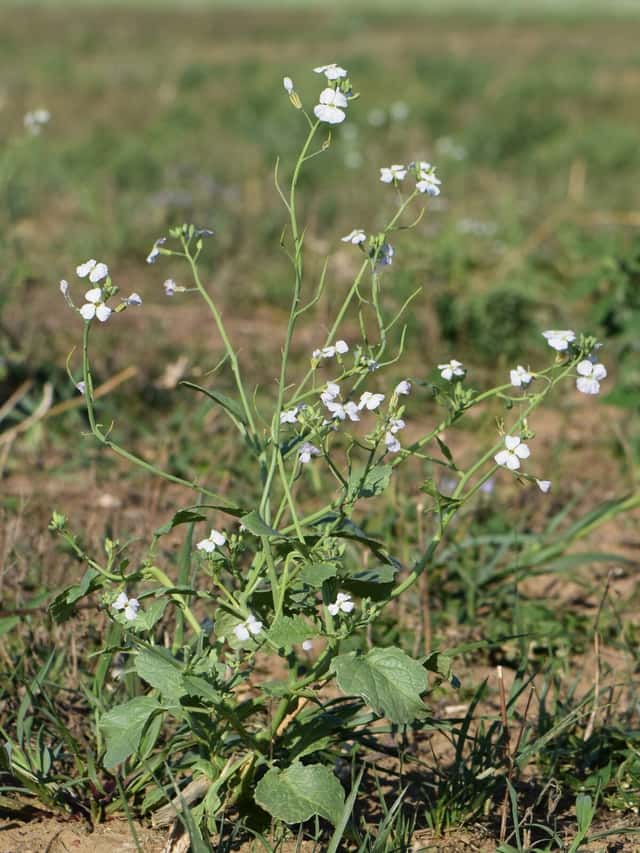
Raphanus is the genus of the garden radish (Raphanus sativus) and wild radish (Raphanus raphanistrum), and it sits in the mustard family with cabbage and broccoli. These plants live one or two years. In cultivated forms the taproot swells into a round or long root in red, white, purple or black. Flowers have four petals, and the seed pods stay closed when dry. If one came up on its own in your yard, the rough lobed leaves and white, pink or pale yellow flowers are good clues, and a photo can tell you which one you have.
How to Propagate Radishes?
Direct sowing
Sow in cool weather, spring or fall. Heat makes the plant bolt and the root turn woody.
- 1 Sow directly in the ground, 1/4 to 1/2 inch deep for small varieties and up to 1 inch for large ones.
- 2 Keep the soil moist until seedlings appear.
- 3 Thin small varieties to 1 to 3 inches apart and large ones to 4 to 6 inches.
- 4 Sow again every 2 weeks for a longer harvest.
Materials needed:
How Big Does Radishes Grow?
TLDR: Radishes can reach up to 90cm tall with Fast growth rate.
Max height
90cm
Spread
60cm
Growth rate
Fast
Plant Uses
Edible
Can be consumed
Culinary Uses
- Roots raw in salads, cooked or pickled
- Leaves cooked
- Flowers raw in salads
- Young pods raw or pickled
Is your plant showing symptoms?
Click on the symptom to discover possible causes:
What Diseases Commonly Affect Radishes?
TLDR: Radishes is susceptible to 3 known diseases. Monitor regularly for early detection.
Damping Off
Damping off is a soil-borne fungal disease that affects seeds and young seedlings, causing rotting of stem and root tissues at and below the soil line. It is caused by several fungi including Pythium, Rhizoctonia, Fusarium, and Phytophthora. The disease thrives in cold, wet conditions with poor air circulation.
Flea beetle damage
Flea beetles are small, jumping insects that feed on the leaves of many vegetable crops. They chew numerous small, circular holes, creating a characteristic 'shothole' appearance. While established plants can often tolerate the damage, young seedlings are highly susceptible and can be stunted or killed if the infestation is severe.
Caterpillars
Caterpillars are the larval stage of moths and butterflies that feed voraciously on plant foliage, stems, flowers, and fruits. Common species include cabbage loopers, tomato hornworms, armyworms, and cutworms. These pests can cause extensive damage by consuming large amounts of plant tissue in a short time. They vary in size from small (1/4 inch) to large (5 inches), with colors ranging from green to brown, often featuring stripes or spots. Caterpillars are highly mobile and can quickly spread throughout gardens, making them one of the most destructive common pests.
Fun Facts
Raphanus comes from the Ancient Greek word for radish.
Unlike most plants in the mustard family, Raphanus pods do not split open to release their seeds.
The genomes of both cultivated and wild radish have been sequenced.
Frequently asked questions
How long do radishes take to grow?
Why did my radish turn tough and too hot?
What pests go after radishes?
Is wild radish bad for animals?
Compare with similar plants
| Attribute | Difficulty | Light | Watering | Pet Safe |
|---|---|---|---|---|
| Field Maple | Easy | Bright indirect | 14d | ✓ |
| Iberian Houseleek | Easy | Direct sun | 14d | ✓ |
| Silver Birch | Easy | Direct sun | 14d | ✓ |
| Common Blanketflower | Easy | Direct sun | 10d | ✓ |





