Vitaceae
Red Leea: Best for Low Light
Leea guineensis
Red Leea is a relatively easy-care plant when its basic needs are met: indirect light or partial shade, rich and well-drained soil, regular watering to keep the soil uniformly moist, and high humidity. It tolerates indoor environments well, provided it is not exposed to intense cold, drafts, or direct sun for long periods.
Every 5 days
Low light
18° - 30°C
60% - 80%
Categories
What is Red Leea?
Red Leea (Leea guineensis) is a easy-care plant from the Vitaceae family. Leea guineensis, commonly known as Red Leea or West African Leea, is a lush tropical shrub belonging to the Vitaceae family, native to the tropical rainforests of West Africa and tropical Asia. It grows in a compact and upright manner, reaching up to 3 meters in height in cultivation. Its dense and...
Red Leea grows up to 3.0m, spread of 150cm, watering every 5 days, 18°C – 30°C, 60–80% humidity. It is suitable for indoor environments and not safe for pets.
Unlike many tropical plants, Red Leea tolerates watering mistakes. Best for beginners. Without precautions, ingestion can cause irritation in pets. Keep out of reach of cats and dogs. Without adequate drainage, root rot can develop within 10 days.
How to Care for Red Leea?
TLDR: Red Leea needs Low light, watering every 5 days, and temperatures between 18-30°C with 60-80% humidity.
How Often Should You Water Red Leea?
Water the Red Leea every 5 to 7 days, always checking if the top 2 to 3 centimeters of soil have dried out before watering again. Keep the soil uniformly moist but never waterlogged. Avoid wetting the leaves during watering to prevent leaf spots. In warmer months, the frequency may increase slightly; in winter or cooler environments, reduce watering. Preferably use room-temperature water.
How Much Light Does Red Leea Need?
Red Leea thrives in bright indirect light or partial shade, being one of the few ornamental plants that tolerates shadier environments well. An east- or west-facing window is ideal. Avoid exposure to intense direct sun during the summer, which can burn the leaves and cause discoloration. In very dark environments, the plant tends to lose its foliage vigor and experience slower growth.
What Is the Best Soil for Red Leea?
Plant Red Leea in a substrate rich in organic matter, well-drained, and slightly acidic, with a pH between 5.5 and 6.5. An ideal mix combines fertile potting soil, organic compost, perlite or coarse sand for drainage, and a bit of peat moss. Avoid compacted or poorly drained soils, which promote root rot. Ensure the pot or garden bed has adequate drainage holes.
What Pot Should You Use for Red Leea?
Prefer terracotta or ceramic pots with generous drainage holes, which allow for better root aeration and prevent excessive moisture buildup. For indoor cultivation, choose a pot size proportional to the plant—about 5 cm larger than the root ball. In humid tropical climates, plastic pots also work well as they retain more moisture.
Care Schedule
Fertilize
Every 30 days
Misting
Every 3 days
Repot
Every 730 days
What Is Red Leea and Where Does It Come From?
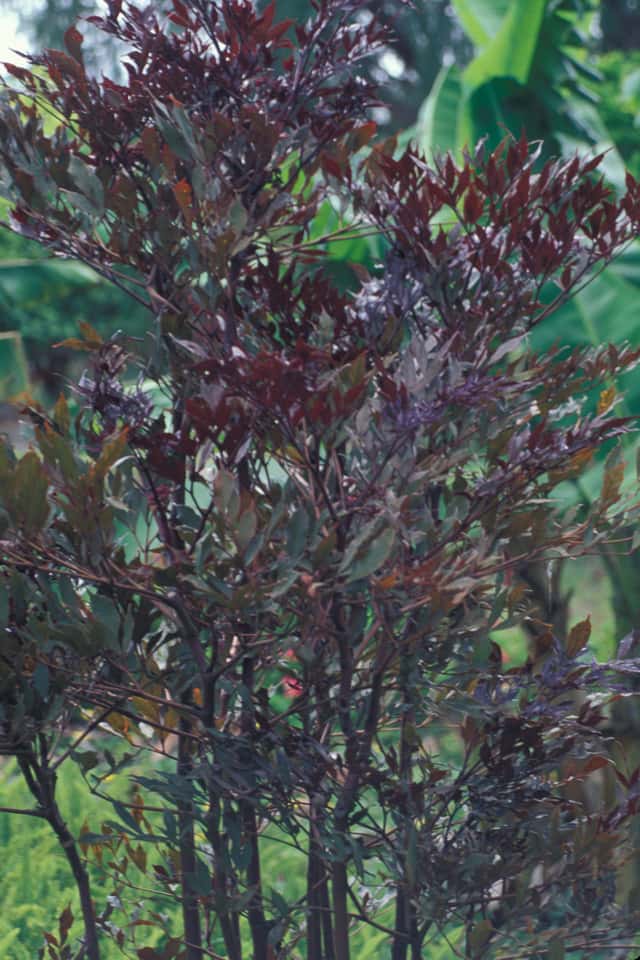
Leea guineensis, commonly known as Red Leea or West African Leea, is a lush tropical shrub belonging to the Vitaceae family, native to the tropical rainforests of West Africa and tropical Asia. It grows in a compact and upright manner, reaching up to 3 meters in height in cultivation. Its dense and glossy foliage often features shades of bronze, dark green, or deep burgundy, especially in the 'Rubra' variety. Under ideal conditions, it produces characteristic umbrella-shaped (umbel) inflorescences with small flowers ranging from red to orange and yellow, followed by rounded fruits that ripen from purple to scarlet red. It is an understory plant adapted to partial or full shade, making it excellent for spacious interiors, shaded tropical gardens, and as an ornamental specimen in pots.
How to Propagate Red Leea?
Stem cutting
- 1 Cut a healthy 10 to 15 cm cutting with at least 2 nodes, preferably in late spring or early summer.
- 2 Remove the lower leaves, leaving only 2 to 3 leaves at the top.
- 3 Dip the base of the cutting in rooting hormone powder or gel.
- 4 Plant in a moist substrate of perlite and peat moss (1:1 ratio).
- 5 Cover with a clear plastic bag or place in a propagator to maintain high humidity.
- 6 Keep in a location with indirect light and a temperature between 22 and 28°C.
- 7 Roots develop in 4 to 8 weeks; transplant when the root system is well-formed.
Seed
- 1 Collect ripe seeds from the red fruits or buy from reliable suppliers.
- 2 Soak the seeds in warm water for 24 hours to break dormancy.
- 3 Sow in a light, moist substrate at a depth of 1 cm.
- 4 Keep the substrate moist and the temperature between 24 and 28°C.
- 5 Germination occurs in 3 to 6 weeks under ideal conditions.
How Big Does Red Leea Grow?
TLDR: Red Leea can reach up to 3.0m tall with Medium growth rate.
Max height
3.0m
Spread
1.5m
Growth rate
Medium
Foliage
Evergreen
Warning: Toxic Plant
This plant can be toxic if ingested. Keep out of reach of:
Plant Uses
Ornamental
Great for decoration
Medicinal
Medicinal properties
Medicinal Uses
- Traditional medicinal use in West Africa: leaves and bark used in preparations to treat fevers, rheumatic pains, and inflammation
- Plant extracts demonstrate antimicrobial and anti-inflammatory properties in ethnobotanical studies
Is your plant showing symptoms?
Click on the symptom to discover possible causes:
What Diseases Commonly Affect Red Leea?
TLDR: Red Leea is susceptible to 7 known diseases. Monitor regularly for early detection.
Leaf Spot
Leaf spot is a common fungal disease caused by various pathogens including Alternaria, Ascochyta, Colletotrichum, Septoria, and Venturia. It primarily affects leaves, causing discolored spots that can lead to premature leaf drop if left untreated.
Root Rot
Root rot is a serious fungal disease that affects the root system of plants, causing them to decay and die. It is primarily caused by overwatering, poor drainage, or soil-borne fungi such as Pythium, Phytophthora, Rhizoctonia, and Fusarium. The disease thrives in waterlogged conditions where roots are deprived of oxygen, making them susceptible to fungal infection.
Overwatering
Overwatering occurs when plants receive too much water, depriving roots of oxygen and causing root rot. This environmental stress is one of the most common causes of houseplant death, as waterlogged soil prevents roots from breathing and functioning properly.
Scale Insects
Scale insects are small sap-sucking pests that appear as brown, shell-like bumps on plant stems and leaves. There are over 25 species, divided into armored (hard) and unarmored (soft) scales. They feed by piercing plant tissue and extracting sap, which weakens the plant and can lead to yellowing, stunted growth, and even death if left untreated. They also excrete honeydew, which attracts ants and promotes sooty mold growth.
Compare with similar plants
| Attribute | Difficulty | Light | Watering | Pet Safe |
|---|---|---|---|---|
| Field Maple | Easy | Bright indirect | 14d | ✓ |
| Silver Birch | Easy | Direct sun | 14d | ✓ |
| Common Blanketflower | Easy | Direct sun | 10d | ✓ |
| Cushion Bush | Easy | Direct sun | 14d | ✓ |





