Cactaceae
Red Mistletoe Cactus: Pet-Safe Plant
Pseudorhipsalis ramulosa
An easy-to-medium care epiphytic plant that thrives in bright, indirect light, well-draining soil, and high humidity. It should be watered regularly, while avoiding waterlogged soil which promotes root rot.
Every 7 days
Bright indirect
10° - 32°C
50% - 80%
Categories
What is Red Mistletoe Cactus?
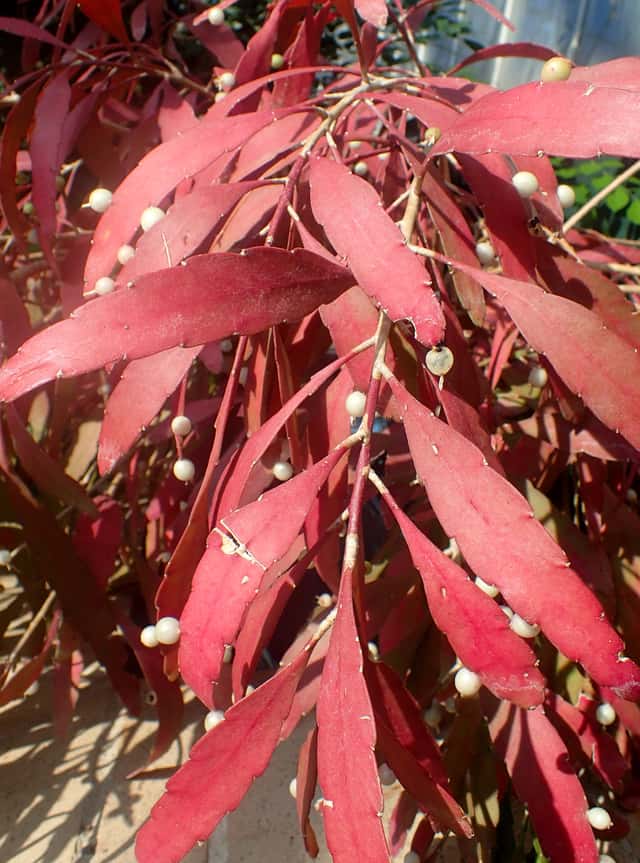
Red Mistletoe Cactus (Pseudorhipsalis ramulosa) is a medium-care plant from the Cactaceae family. Pseudorhipsalis ramulosa, known as the Red Mistletoe Cactus, is an epiphytic cactus native to the humid rainforests of Central and South America, where it grows clinging to tree trunks and rocks. Its flat, ribbon-like stems cascade downwards and can reach several feet in length, taking on shades ran...
Red Mistletoe Cactus grows up to 30cm, spread of 180cm, watering every 7 days, 10°C – 32°C, 50–80% humidity. It is suitable for indoor environments and safe for pets.
Unlike many popular species, Red Mistletoe Cactus is safe to keep around pets. Without adequate drainage, root rot can develop within 14 days.
How to Care for Red Mistletoe Cactus?
TLDR: Red Mistletoe Cactus needs Bright indirect, watering every 7 days, and temperatures between 10-32°C with 50-80% humidity.
How Often Should You Water Red Mistletoe Cactus?
Water when the top 1 inch (2-3 cm) of the substrate feels dry to the touch, keeping the soil slightly moist but never soggy; reduce frequency during autumn and winter.
How Much Light Does Red Mistletoe Cactus Need?
Place in a bright spot with intense indirect light, such as near an east-facing window; avoid direct afternoon sun which can scorch the stems.
What Is the Best Soil for Red Mistletoe Cactus?
Use a light, well-draining substrate, such as a mix for cacti and epiphytes enriched with bark, perlite, or coarse sand, to ensure root aeration.
What Pot Should You Use for Red Mistletoe Cactus?
Ideal for hanging baskets or pots with plenty of drainage holes, allowing the stems to cascade freely as they do in nature.
Care Schedule
Fertilize
Every 60 days
Misting
Every 3 days
Rotate
Every 30 days
Repot
Every 365 days
What Is Red Mistletoe Cactus and Where Does It Come From?
Pseudorhipsalis ramulosa, known as the Red Mistletoe Cactus, is an epiphytic cactus native to the humid rainforests of Central and South America, where it grows clinging to tree trunks and rocks. Its flat, ribbon-like stems cascade downwards and can reach several feet in length, taking on shades ranging from deep green to ruby red when exposed to brighter light. In summer, it produces small greenish-white flowers followed by white or reddish berries, making it a highly prized ornamental plant for hanging baskets.
How Big Does Red Mistletoe Cactus Grow?
TLDR: Red Mistletoe Cactus can reach up to 30cm tall with Medium growth rate.
Max height
30cm
Spread
1.8m
Growth rate
Medium
Foliage
Evergreen
Plant Uses
Ornamental
Great for decoration
Is your plant showing symptoms?
Click on the symptom to discover possible causes:
What Diseases Commonly Affect Red Mistletoe Cactus?
TLDR: Red Mistletoe Cactus is susceptible to 8 known diseases. Monitor regularly for early detection.
Root Rot
Root rot is a serious fungal disease that affects the root system of plants, causing them to decay and die. It is primarily caused by overwatering, poor drainage, or soil-borne fungi such as Pythium, Phytophthora, Rhizoctonia, and Fusarium. The disease thrives in waterlogged conditions where roots are deprived of oxygen, making them susceptible to fungal infection.
Powdery Mildew
Powdery mildew is a common fungal disease caused by various fungi species including Erysiphe, Podosphaera, Oïdium, and Leveillula. It affects over 10,000 plant species worldwide. The disease thrives in warm, dry climates with high humidity and appears as a distinctive white powdery coating on plant surfaces.
Bacterial Leaf Spot
Bacterial leaf spot is a plant disease caused by bacteria in the Xanthomonas and Pseudomonas genera that affects various ornamental and edible plants. The bacteria infect leaves through wounds or natural openings, causing characteristic lesions that can lead to premature leaf drop and plant weakening.
Spider Mites
Spider mites are tiny arachnids (less than 1/20 inch long) related to spiders and ticks that feed on plant sap. They thrive in hot, dry conditions and can cause significant damage to ornamental and vegetable plants. During severe infestations, crop losses can reach 14% or higher as these pests disrupt vital plant processes including photosynthesis, carbon dioxide absorption, and transpiration.
Meaning & Symbolism
As an epiphytic plant that lives suspended without rooting in the ground, the Red Mistletoe Cactus is often associated with adaptability, resilience, and the ability to thrive in unconventional conditions.
Compare with similar plants
| Attribute | Difficulty | Light | Watering | Pet Safe |
|---|---|---|---|---|
| Dark Fieldcap | Medium | Low light | 2d | ⚠️ |
| Azalea | Medium | Partial shade | 3d | ⚠️ |
| Muriel's Bamboo | Medium | Partial shade | 3d | ✓ |
| Bougainvillea | Medium | Direct sun | 7d | ⚠️ |




