Cactaceae
Red Pitaya: How to Grow the Red-Fleshed Dragon Fruit Cactus
Hylocereus costaricensis
Easy to grow for anyone comfortable with cacti: infrequent watering, strong light (with partial shade in very hot climates), fast-draining soil, and a sturdy support for its climbing stems. Grows quickly in warm climates and rewards growers with striking, flavorful fruit.
Every 14 days
Bright indirect
15° - 35°C
40% - 70%
Categories
What is Red Pitaya?
Red Pitaya (Hylocereus costaricensis) is a easy-care plant from the Cactaceae family. Red Pitaya (Hylocereus costaricensis) is a climbing cactus native to Costa Rica and Central America, prized for its intensely red, sweeter-tasting flesh compared to the white-fleshed variety. This succulent vine has triangular, fleshy stems that climb using aerial roots and needs a trellis or suppor...
Red Pitaya grows up to 3.0m, spread of 200cm, watering every 14 days, 15°C – 35°C, 40–70% humidity. It is suitable for indoor environments and safe for pets.
Unlike many tropical plants, Red Pitaya tolerates watering mistakes. Best for beginners. Unlike many popular species, Red Pitaya is safe to keep around pets. Without adequate drainage, root rot can develop within 28 days.
How to Care for Red Pitaya?
TLDR: Red Pitaya needs Bright indirect, watering every 14 days, and temperatures between 15-35°C with 40-70% humidity.
How Often Should You Water Red Pitaya?
Water only when the top layer of soil is completely dry, typically every 10-14 days. Cut back watering significantly in winter to prevent root and stem-base rot.
How Much Light Does Red Pitaya Need?
Thrives in strong, direct sunlight for several hours a day; in very intense-sun climates, about 30% partial shade prevents stem scorching. Indoors, place near a bright window.
What Is the Best Soil for Red Pitaya?
Use sandy or sandy-loam soil rich in organic matter with excellent drainage. Slightly acidic to neutral pH (5.5 to 7.0). Avoid heavy or clay soils that retain water and encourage rot.
What Pot Should You Use for Red Pitaya?
A wide, not overly deep pot with multiple drainage holes and a bottom drainage layer (expanded clay or gravel); porous material like terracotta helps prevent excess moisture retention.
Care Schedule
Fertilize
Every 60 days
Repot
Every 730 days
What Is Red Pitaya and Where Does It Come From?
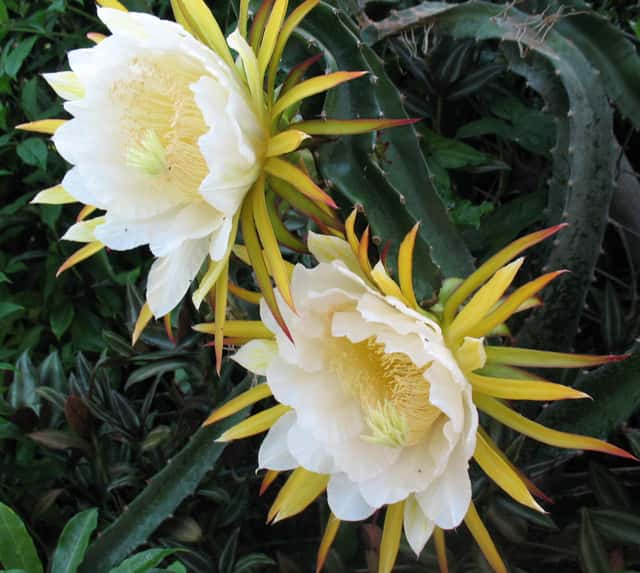
Red Pitaya (Hylocereus costaricensis) is a climbing cactus native to Costa Rica and Central America, prized for its intensely red, sweeter-tasting flesh compared to the white-fleshed variety. This succulent vine has triangular, fleshy stems that climb using aerial roots and needs a trellis or support to thrive. It produces enormous white flowers that bloom only at night and wilt by morning, followed by pink-skinned fruit covered in leathery scales that reveal a vivid ruby pulp dotted with tiny edible black seeds.
How to Propagate Red Pitaya?
Stem cutting
Always use sterilized tools to avoid fungal contamination; wait for the cut to fully callus before planting to prevent base rot.
- 1 Cut a healthy stem segment 20-30 cm long using a clean, sharp tool
- 2 Let the cut end callus over in a dry, shaded spot for 3 to 7 days
- 3 Plant the cutting about 5 cm deep in well-draining sandy soil
- 4 Keep the soil lightly moist, never soggy, until roots establish
- 5 Once rooted, provide a trellis or support for vertical growth
Materials needed:
How Big Does Red Pitaya Grow?
TLDR: Red Pitaya can reach up to 3.0m tall with Fast growth rate.
Max height
3.0m
Spread
2.0m
Growth rate
Fast
Foliage
Evergreen
Plant Uses
Edible
Can be consumed
Ornamental
Great for decoration
Medicinal Uses
- Antioxidant support (rich in betalains and vitamin C)
- Digestive aid (dietary fiber)
Culinary Uses
- Eaten fresh, scooped with a spoon
- Juices and smoothies
- Fruit salads
- Ice cream and smoothie bowls
- Jams and preserves
Is your plant showing symptoms?
Click on the symptom to discover possible causes:
What Diseases Commonly Affect Red Pitaya?
TLDR: Red Pitaya is susceptible to 7 known diseases. Monitor regularly for early detection.
Anthracnose
Anthracnose is a fungal disease caused by fungi in the genus Colletotrichum that affects many plants, including vegetables, fruits, and trees. The disease thrives in cool, wet conditions, causing dark, sunken lesions on leaves, stems, flowers, and fruits.
Root Rot
Root rot is a serious fungal disease that affects the root system of plants, causing them to decay and die. It is primarily caused by overwatering, poor drainage, or soil-borne fungi such as Pythium, Phytophthora, Rhizoctonia, and Fusarium. The disease thrives in waterlogged conditions where roots are deprived of oxygen, making them susceptible to fungal infection.
Overwatering
Overwatering occurs when plants receive too much water, depriving roots of oxygen and causing root rot. This environmental stress is one of the most common causes of houseplant death, as waterlogged soil prevents roots from breathing and functioning properly.
Bacterial Soft Rot
Bacterial soft rot is a destructive plant disease caused primarily by bacteria from the genera Pectobacterium (formerly Erwinia) and Dickeya. These bacteria produce enzymes that break down plant cell walls, causing rapid and foul-smelling tissue decomposition. It mainly affects succulent tissues such as tubers, fruits, stems, and bulbs, being especially problematic in warm and humid conditions.
Meaning & Symbolism
A symbol of resilience and exotic beauty: its giant flowers that bloom for only a single night represent fleeting beauty and transformation, and it is associated with prosperity and fertility in some Central American traditions.
Fun Facts
Its giant white flowers bloom for only one night and wilt by the next morning, pollinated by bats and moths in the wild.
The deep red color of the flesh comes from betalains, the same pigments found in beets.
It is a climbing/epiphytic cactus that can reach several meters in length when supported by trees or trellises.
It is also known scientifically as Selenicereus costaricensis, following a recent taxonomic reclassification.
Frequently asked questions
How long does Red Pitaya take to fruit?
Does Red Pitaya need a trellis?
Can I grow Red Pitaya in a pot?
Why is my Red Pitaya not flowering?
Is red-fleshed pitaya sweeter than white-fleshed?
Compare with similar plants
| Attribute | Difficulty | Light | Watering | Pet Safe |
|---|---|---|---|---|
| Field Maple | Easy | Bright indirect | 14d | ✓ |
| Silver Birch | Easy | Direct sun | 14d | ✓ |
| Common Blanketflower | Easy | Direct sun | 10d | ✓ |
| Cushion Bush | Easy | Direct sun | 14d | ✓ |
Choose & Compare
Sources & References
- World of Succulents - Selenicereus costaricensis
- PlantIn - Hylocereus costaricensis Care Guide
- APS Journals - First Report of Colletotrichum tropicale Anthracnose on Pitaya (H. costaricensis) in Brazil
- Infoagro - El cultivo de la Pitahaya
- Jornada de Agroecologia - Aprenda a Plantar Pitaya, a Fruta-Dragão
- Wikipedia - Selenicereus costaricensis
- ScienceDirect - Diseases of dragon fruit (Hylocereus species): Etiology and current management options





