Escalloniaceae
Redclaws (Escallonia rubra)
Escallonia rubra
Easy hedge shrub: sun, well-drained soil, water until established and one trim a year right after flowering.
Every 7 days
Bright indirect
-10° - °C
% - %
Categories
What is Redclaws?
Redclaws (Escallonia rubra) is a easy-care plant from the Escalloniaceae family. Escallonia rubra is an evergreen shrub from Chile and southern Argentina, widely used as a hedge in mild and seaside gardens. It grows fast to 3 to 4.5 m and has small, thick, glossy leaves with toothed edges that smell resinous when crushed and can be sticky. In summer and fall it covers itself in...
Redclaws grows up to 4.5m, spread of 450cm, watering every 7 days. It is not suitable for indoor environments and safe for pets.
Unlike many tropical plants, Redclaws tolerates watering mistakes. Best for beginners. Unlike many popular species, Redclaws is safe to keep around pets.
How to Care for Redclaws?
TLDR: Redclaws needs Bright indirect, watering every 7 days, and temperatures between -10-30°C with 40-70% humidity.
How Often Should You Water Redclaws?
Water once a week during the first year. Once established it handles dry spells and only needs water in long droughts.
How Much Light Does Redclaws Need?
Full sun or part shade. It flowers more in sun.
What Is the Best Soil for Redclaws?
Any well-drained soil, from clay loam to sand. It does not like waterlogged ground.
What Pot Should You Use for Redclaws?
Best in the ground. In a container, use a large pot of 40 cm or more with drainage and keep it trimmed.
Care Schedule
Fertilize
Every 365 days
What Is Redclaws and Where Does It Come From?
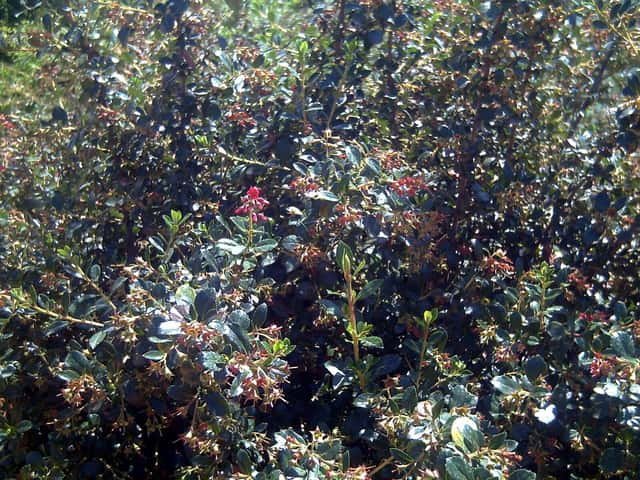
Escallonia rubra is an evergreen shrub from Chile and southern Argentina, widely used as a hedge in mild and seaside gardens. It grows fast to 3 to 4.5 m and has small, thick, glossy leaves with toothed edges that smell resinous when crushed and can be sticky. In summer and fall it covers itself in clusters of red or pink tubular flowers that bees and butterflies visit. New stems are reddish and hairy.
How to Propagate Redclaws?
Semi-ripe cutting
Cuttings taken right after flowering root well and give hedge plants by the following year.
- 1 In late summer, take 8 to 10 cm cuttings from this year's growth, firm at the base
- 2 Strip the lower leaves and dip the base in rooting hormone
- 3 Plant in a mix of potting soil and sand
- 4 Keep moist in bright shade until rooted
Materials needed:
How Big Does Redclaws Grow?
TLDR: Redclaws can reach up to 4.5m tall with Fast growth rate.
Max height
4.5m
Spread
4.5m
Growth rate
Fast
Foliage
Evergreen
Plant Uses
Ornamental
Great for decoration
Is your plant showing symptoms?
Click on the symptom to discover possible causes:
What Diseases Commonly Affect Redclaws?
TLDR: Redclaws is susceptible to 4 known diseases. Monitor regularly for early detection.
Scale Insects
Scale insects are small sap-sucking pests that appear as brown, shell-like bumps on plant stems and leaves. There are over 25 species, divided into armored (hard) and unarmored (soft) scales. They feed by piercing plant tissue and extracting sap, which weakens the plant and can lead to yellowing, stunted growth, and even death if left untreated. They also excrete honeydew, which attracts ants and promotes sooty mold growth.
Leaf Spot
Leaf spot is a common fungal disease caused by various pathogens including Alternaria, Ascochyta, Colletotrichum, Septoria, and Venturia. It primarily affects leaves, causing discolored spots that can lead to premature leaf drop if left untreated.
Aphids
Aphids are small, soft-bodied, pear-shaped insects (1/16 to 1/8 inch long) that feed by sucking nutrient-rich sap from plants. They reproduce rapidly and can quickly weaken plants, causing distorted growth and transmitting plant viruses. Aphids come in various colors including green, black, red, yellow, brown, and gray. They secrete honeydew, a sticky substance that attracts ants and encourages sooty mold growth.
Phytophthora Root Rot
Disease caused by fungus-like organisms (oomycetes) that live in soil and can survive for years. It affects roots, stem, and crown of plants, being especially severe in waterlogged or poorly drained soils. It is the second most common cause of root rot in trees and shrubs.
Fun Facts
The leaves smell resinous when crushed
In Chile it is called siete camisas, seven shirts
Escallonia is named after Antonio Escallón, an 18th-century Spanish botanist
Frequently asked questions
When should I prune escallonia?
Is it good for a seaside hedge?
How cold-hardy is it?
Why are there spots on the leaves?
Compare with similar plants
| Attribute | Difficulty | Light | Watering | Pet Safe |
|---|---|---|---|---|
| Field Maple | Easy | Bright indirect | 14d | ✓ |
| Iberian Houseleek | Easy | Direct sun | 14d | ✓ |
| Silver Birch | Easy | Direct sun | 14d | ✓ |
| Common Blanketflower | Easy | Direct sun | 10d | ✓ |





