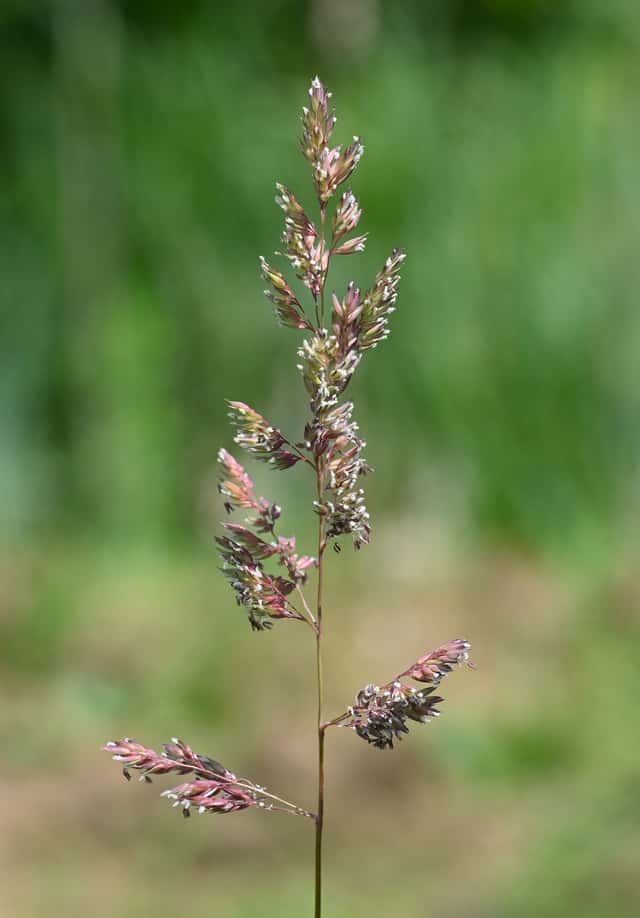
Poaceae
Ribbon Grass: Complete Care Guide
Phalaris arundinacea
Plant in full sun to partial shade in consistently moist, well-draining soil. Water regularly every 4–6 days. No regular fertilization required. Cut back to the ground in fall or late winter to encourage fresh, vibrant spring growth.
Every 5 days
Bright indirect
-35° - 38°C
30% - 50%
Categories
What is Ribbon Grass?
Ribbon Grass (Phalaris arundinacea) is a easy-care plant from the Poaceae family. Ribbon grass (Phalaris arundinacea 'Picta') is a vigorous ornamental perennial grass prized for its striking green-and-white striped foliage. Native to Eurasia, it thrives in moist soils, water margins, and partly shaded borders. Its rapid-spreading rhizomes make it excellent for erosion control and...
Ribbon Grass grows up to 1.2m, spread of 150cm, watering every 5 days, -35°C – 38°C, 30–50% humidity. It is not suitable for indoor environments and safe for pets.
Unlike many tropical plants, Ribbon Grass tolerates watering mistakes. Best for beginners. Unlike many popular species, Ribbon Grass is safe to keep around pets.
How to Care for Ribbon Grass?
TLDR: Ribbon Grass needs Bright indirect, watering every 5 days, and temperatures between -35-38°C with 30-50% humidity.
How Often Should You Water Ribbon Grass?
Keep soil consistently moist. Water every 4–6 days, or whenever the top layer of soil feels slightly dry. Ribbon grass tolerates brief waterlogging and is well-suited to rain gardens and pond margins.
How Much Light Does Ribbon Grass Need?
Thrives in full sun (6+ hours) but appreciates partial shade in hot climates. Afternoon shade in warm regions prevents leaf scorch and preserves the white variegation on the foliage.
What Is the Best Soil for Ribbon Grass?
Adaptable to loam, clay, and sandy soils with pH 5.5–8.0. Prefers moisture-retentive soil rich in organic matter but tolerates periodically flooded conditions.
What Pot Should You Use for Ribbon Grass?
Wide terracotta or plastic containers with drainage holes; for water garden use, bottomless marginal aquatic baskets work best.
What Is Ribbon Grass and Where Does It Come From?
Ribbon grass (Phalaris arundinacea 'Picta') is a vigorous ornamental perennial grass prized for its striking green-and-white striped foliage. Native to Eurasia, it thrives in moist soils, water margins, and partly shaded borders. Its rapid-spreading rhizomes make it excellent for erosion control and mass plantings, though containment is recommended in garden settings to prevent invasive spread.
How to Propagate Ribbon Grass?
Clump Division
Divide in spring or fall for best results. Keep new divisions shaded and moist until established.
- 1 Dig up the entire clump with a sharp spade
- 2 Divide rhizomes into sections with 3–5 shoots each
- 3 Replant divisions 30 cm apart in moist, prepared soil
- 4 Water thoroughly until new growth emerges
Materials needed:
How Big Does Ribbon Grass Grow?
TLDR: Ribbon Grass can reach up to 1.2m tall with Fast growth rate.
Max height
1.2m
Spread
1.5m
Growth rate
Fast
Foliage
Deciduous
Plant Uses
Ornamental
Great for decoration
Ground Cover
Soil coverage
Is your plant showing symptoms?
Click on the symptom to discover possible causes:
What Diseases Commonly Affect Ribbon Grass?
TLDR: Ribbon Grass is susceptible to 7 known diseases. Monitor regularly for early detection.
Root Rot
Root rot is a serious fungal disease that affects the root system of plants, causing them to decay and die. It is primarily caused by overwatering, poor drainage, or soil-borne fungi such as Pythium, Phytophthora, Rhizoctonia, and Fusarium. The disease thrives in waterlogged conditions where roots are deprived of oxygen, making them susceptible to fungal infection.
Rust
Rust is a common fungal disease caused by fungi in the order Pucciniales that affects a wide variety of plants. The disease gets its name from the characteristic orange, yellow, or reddish-brown pustules that appear on leaves, resembling metal rust. This obligate fungal parasite requires living plants to survive and can cause significant economic losses in agricultural crops.
Leaf Spot
Leaf spot is a common fungal disease caused by various pathogens including Alternaria, Ascochyta, Colletotrichum, Septoria, and Venturia. It primarily affects leaves, causing discolored spots that can lead to premature leaf drop if left untreated.
Heat Stress
Heat stress occurs when plants are exposed to excessively high temperatures, typically above 85-90°F (29-32°C), causing physiological damage and compromising vital processes such as photosynthesis and transpiration.
Meaning & Symbolism
Resilience and harmony; ribbon grass symbolizes the balance between wild nature and cultivated beauty.
Fun Facts
Ribbon grass rhizomes can survive temperatures as low as -35°C (-31°F), making it one of the hardiest ornamental grasses.
The cultivar name 'Picta' means 'painted' in Latin, a nod to its distinctive striped leaves.
It has been used in phytoremediation projects to remove heavy metals from contaminated soils.
A single plant can spread several feet in a single growing season through its vigorous rhizome network.
Frequently asked questions
How often should I water ribbon grass?
Does ribbon grass need full sun?
Is ribbon grass invasive?
When should I cut back ribbon grass?
Is ribbon grass toxic to pets?
Compare with similar plants
| Attribute | Difficulty | Light | Watering | Pet Safe |
|---|---|---|---|---|
| Field Maple | Easy | Bright indirect | 14d | ✓ |
| Muriel's Bamboo | Medium | Partial shade | 3d | ✓ |
| Silver Birch | Easy | Direct sun | 14d | ✓ |
| Common Blanketflower | Easy | Direct sun | 10d | ✓ |





