Cactaceae
Rice Cactus: How to Care for Rhipsalis cereuscula
Rhipsalis cereuscula
Grow in medium indirect light, water only when the substrate dries out, and use a well-draining, organically rich soil mix. It is a low-maintenance, slow-growing plant tolerant of typical indoor conditions.
Every 10 days
Partial shade
15° - 27°C
40% - 60%
Categories
What is Rice Cactus?
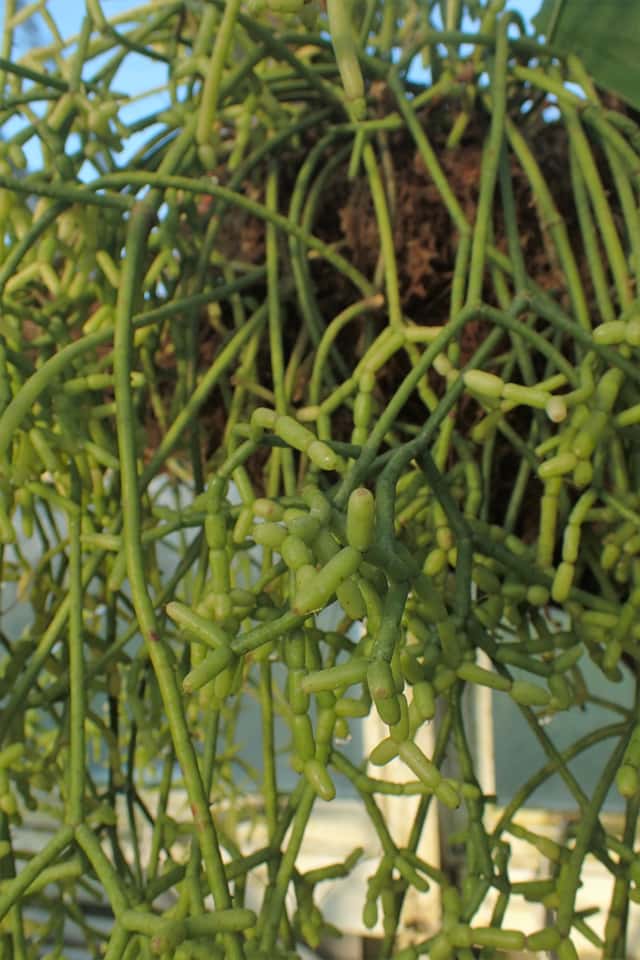
Rice Cactus (Rhipsalis cereuscula) is a easy-care plant from the Cactaceae family. Rhipsalis cereuscula, commonly known as Rice Cactus or Coral Cactus, is an epiphytic cactus native to the Brazilian Atlantic Forest. It features thin, segmented stems that branch profusely into small cylindrical segments resembling grains of rice or coral, giving the plant a delicate, cascading appe...
Rice Cactus grows up to 60cm, spread of 60cm, watering every 10 days, 15°C – 27°C, 40–60% humidity. It is suitable for indoor environments and safe for pets.
Unlike many tropical plants, Rice Cactus tolerates watering mistakes. Best for beginners. Unlike many popular species, Rice Cactus is safe to keep around pets. Without adequate drainage, root rot can develop within 20 days.
How to Care for Rice Cactus?
TLDR: Rice Cactus needs Partial shade, watering every 10 days, and temperatures between 15-27°C with 40-60% humidity.
How Often Should You Water Rice Cactus?
Water when the top inch of soil feels dry to the touch, reducing frequency in winter. Avoid waterlogging, as roots rot easily in soggy soil.
How Much Light Does Rice Cactus Need?
Prefers bright to medium filtered indirect light or partial shade; avoid intense direct sun, which can scorch and redden the stems.
What Is the Best Soil for Rice Cactus?
Use a light, well-draining mix such as a cactus/epiphyte blend with added perlite or coarse sand.
What Pot Should You Use for Rice Cactus?
Hanging pot or basket, preferably with drainage holes and a porous material like terracotta.
Care Schedule
Fertilize
Every 30 days
Rotate
Every 14 days
Repot
Every 730 days
What Is Rice Cactus and Where Does It Come From?
Rhipsalis cereuscula, commonly known as Rice Cactus or Coral Cactus, is an epiphytic cactus native to the Brazilian Atlantic Forest. It features thin, segmented stems that branch profusely into small cylindrical segments resembling grains of rice or coral, giving the plant a delicate, cascading appearance ideal for hanging baskets.
How to Propagate Rice Cactus?
Stem cutting
Avoid watering immediately after planting; wait for the first signs of rooting.
- 1 Cut a healthy stem segment with at least 2 segments
- 2 Let the cut end callus over for 1-2 days in a dry, airy spot
- 3 Plant in a light, slightly moist substrate
- 4 Keep in indirect light until rooted
Materials needed:
How Big Does Rice Cactus Grow?
TLDR: Rice Cactus can reach up to 60cm tall with Slow growth rate.
Max height
60cm
Spread
60cm
Growth rate
Slow
Foliage
Evergreen
Plant Uses
Ornamental
Great for decoration
Is your plant showing symptoms?
Click on the symptom to discover possible causes:
What Diseases Commonly Affect Rice Cactus?
TLDR: Rice Cactus is susceptible to 9 known diseases. Monitor regularly for early detection.
Powdery Mildew
Powdery mildew is a common fungal disease caused by various fungi species including Erysiphe, Podosphaera, Oïdium, and Leveillula. It affects over 10,000 plant species worldwide. The disease thrives in warm, dry climates with high humidity and appears as a distinctive white powdery coating on plant surfaces.
Root Rot
Root rot is a serious fungal disease that affects the root system of plants, causing them to decay and die. It is primarily caused by overwatering, poor drainage, or soil-borne fungi such as Pythium, Phytophthora, Rhizoctonia, and Fusarium. The disease thrives in waterlogged conditions where roots are deprived of oxygen, making them susceptible to fungal infection.
Gray Mold (Botrytis Blight)
Gray mold, caused by the fungus Botrytis cinerea, is a widespread necrotrophic pathogen affecting over 1,400 plant species. It thrives in cool, humid conditions and attacks weakened or aging plant tissues, causing soft rot and characteristic gray fuzzy growth.
Bacterial Leaf Spot
Bacterial leaf spot is a plant disease caused by bacteria in the Xanthomonas and Pseudomonas genera that affects various ornamental and edible plants. The bacteria infect leaves through wounds or natural openings, causing characteristic lesions that can lead to premature leaf drop and plant weakening.
Meaning & Symbolism
Symbolizes lightness, delicacy, and quiet prosperity, often associated with harmony in indoor spaces.
Fun Facts
It is native to the Brazilian Atlantic Forest, where it grows epiphytically on trees.
Its segments resemble grains of rice, giving rise to the common name Rice Cactus.
Despite being a cactus, it has no spines, making it safe to handle.
Frequently asked questions
Does Rice Cactus need direct sunlight?
How often should I water my Rice Cactus?
Is Rhipsalis cereuscula toxic to cats and dogs?
How do you propagate Rhipsalis cereuscula?
Compare with similar plants
| Attribute | Difficulty | Light | Watering | Pet Safe |
|---|---|---|---|---|
| Field Maple | Easy | Bright indirect | 14d | ✓ |
| Silver Birch | Easy | Direct sun | 14d | ✓ |
| Common Blanketflower | Easy | Direct sun | 10d | ✓ |
| Cushion Bush | Easy | Direct sun | 14d | ✓ |





