Fabaceae
Rosary Pea: Medicinal Uses & Care Tips
Abrus precatorius
The Rosary Pea prefers a bright to full sun location and moderately moist, well-drained, nutrient-rich soil with a pH value of 6.0 to 7.5. It grows as a vigorous climber and requires a stable support structure as well as regular pruning. Waterlogging must be avoided at all costs, as the plant is sensitive to root rot. Due to the highly toxic abrin in all plant parts, extreme caution is required when handling – wear gloves and cultivate out of reach of children and pets.
Every 4 days
Bright indirect
20° - 35°C
% - %
Categories
What is Rosary Pea?
Rosary Pea (Abrus precatorius) is a hard-care plant from the Fabaceae family. The Rosary Pea (Abrus precatorius) is a perennial, woody climbing vine from the legume family (Fabaceae) that can reach heights of 6 to 10 meters. The alternate, pinnately compound leaves grow 5 to 15 cm long, while the small butterfly-like flowers appear in summer in shades of white, pink, to purpl...
Rosary Pea grows up to 10.0m, watering every 4 days, 20°C – 35°C. It is suitable for indoor environments and not safe for pets.
Unlike easy-care plants, Rosary Pea demands constant attention to humidity and light. Not recommended for beginners. Without precautions, ingestion can cause irritation in pets. Keep out of reach of cats and dogs. Without adequate drainage, root rot can develop within 8 days.
How to Care for Rosary Pea?
TLDR: Rosary Pea needs Bright indirect, watering every 4 days, and temperatures between 20-35°C with 40-70% humidity.
How Often Should You Water Rosary Pea?
Water moderately every 3 to 4 days and allow the soil to dry out slightly between waterings. Avoid waterlogging at all costs, as the roots are sensitive to permanently wet soil and rot quickly.
How Much Light Does Rosary Pea Need?
A sunny to full sun location best promotes growth and flowering; however, the plant also tolerates partial shade. It thrives best in a sun-drenched south-facing window or outdoors in a protected, warm spot.
What Is the Best Soil for Rosary Pea?
A loose, well-drained substrate made of loamy to sandy-loam soil with a high proportion of organic matter and a pH value between 6.0 and 7.5 is ideal.
What Pot Should You Use for Rosary Pea?
A stable, deep container with good drainage and space for a trellis or support is recommended, as the Rosary Pea climbs vigorously. The pot should be placed out of reach of children and pets, ideally in an elevated position or in a separate, secured area.
Care Schedule
Fertilize
Every 30 days
What Is Rosary Pea and Where Does It Come From?
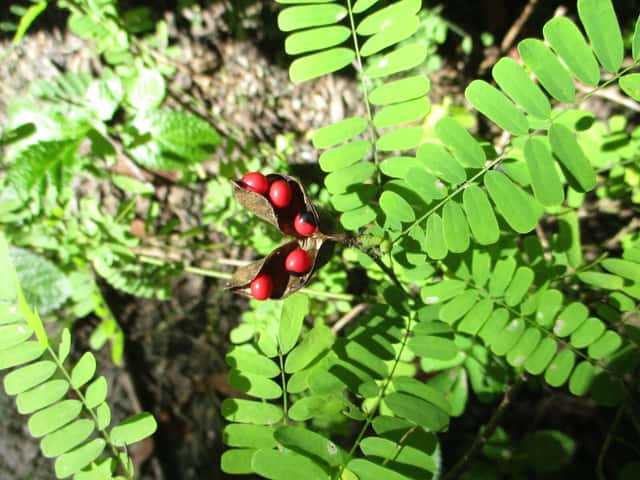
The Rosary Pea (Abrus precatorius) is a perennial, woody climbing vine from the legume family (Fabaceae) that can reach heights of 6 to 10 meters. The alternate, pinnately compound leaves grow 5 to 15 cm long, while the small butterfly-like flowers appear in summer in shades of white, pink, to purple. The leathery pods contain 2 to 7 strikingly shiny, red-and-black colored seeds, which were traditionally used to make necklaces and rosaries. Originally likely native to India, the species is now widespread throughout the tropics as a neophyte. Warning: All parts of the plant, especially the seeds, contain the highly toxic abrin – even a single damaged seed coat can be fatal to humans and animals.
How to Propagate Rosary Pea?
Propagation by seed
- Always wear gloves; never put seeds in your mouth.
- Wash hands thoroughly after working with the seeds.
- 1 Scarify the seed coat
Carefully roughen the hard seed coat with sandpaper (scarification) to facilitate germination. It is essential to wear gloves as the seeds are highly toxic.
- 2 Soaking
Soak the scarified seeds in warm water for 24 hours.
- 3 Sowing
Place seeds 2-3 cm deep in well-drained, moist seed-starting substrate and keep in a warm (above 20°C) and bright location.
- 4 Seedling care
Keep the substrate evenly moist; germination usually occurs within 2 to 4 weeks.
Materials needed:
Propagation by cuttings
- High humidity around the cutting promotes rooting.
- 1 Take the cutting
Cut a 10-15 cm long, semi-hardwood shoot just below a leaf node.
- 2 Apply rooting hormone
Dip the cut end into rooting hormone.
- 3 Planting
Insert the cutting into moist, well-drained substrate and allow it to root in a warm, bright place, but not in full sun.
Materials needed:
How Big Does Rosary Pea Grow?
TLDR: Rosary Pea can reach up to 10.0m tall with Fast growth rate.
Max height
10.0m
Growth rate
Fast
Foliage
Deciduous
Warning: Toxic Plant
This plant can be toxic if ingested. Keep out of reach of:
Plant Uses
Ornamental
Great for decoration
Medicinal
Medicinal properties
Medicinal Uses
- Traditional application in Ayurvedic medicine: Roots and leaves were used externally and highly diluted for skin conditions, hair loss, and ulcers after extensive detoxification.
- Any self-application is strongly discouraged – the seeds contain the deadly poison abrin, and there is no known antidote.
Culinary Uses
- The leaves taste slightly sweet due to a glycyrrhizin-like ingredient and were used regionally as a licorice substitute ('Indian Licorice') for teas.
- The seeds themselves are highly toxic and must not be consumed under any circumstances.
Is your plant showing symptoms?
Click on the symptom to discover possible causes:
What Diseases Commonly Affect Rosary Pea?
TLDR: Rosary Pea is susceptible to 3 known diseases. Monitor regularly for early detection.
Aphids
Aphids are small, soft-bodied, pear-shaped insects (1/16 to 1/8 inch long) that feed by sucking nutrient-rich sap from plants. They reproduce rapidly and can quickly weaken plants, causing distorted growth and transmitting plant viruses. Aphids come in various colors including green, black, red, yellow, brown, and gray. They secrete honeydew, a sticky substance that attracts ants and encourages sooty mold growth.
Spider Mites
Spider mites are tiny arachnids (less than 1/20 inch long) related to spiders and ticks that feed on plant sap. They thrive in hot, dry conditions and can cause significant damage to ornamental and vegetable plants. During severe infestations, crop losses can reach 14% or higher as these pests disrupt vital plant processes including photosynthesis, carbon dioxide absorption, and transpiration.
Root Rot
Root rot is a serious fungal disease that affects the root system of plants, causing them to decay and die. It is primarily caused by overwatering, poor drainage, or soil-borne fungi such as Pythium, Phytophthora, Rhizoctonia, and Fusarium. The disease thrives in waterlogged conditions where roots are deprived of oxygen, making them susceptible to fungal infection.
Meaning & Symbolism
The shiny red-and-black seeds were traditionally crafted into rosaries, prayer beads, and jewelry, and historically served in India as a unit of weight ('Ratti') for weighing gold and gemstones. Despite their beauty, the seeds also symbolize the danger that can arise from nature, as they are among the most poisonous plant seeds in existence.
Compare with similar plants
| Attribute | Difficulty | Light | Watering | Pet Safe |
|---|---|---|---|---|
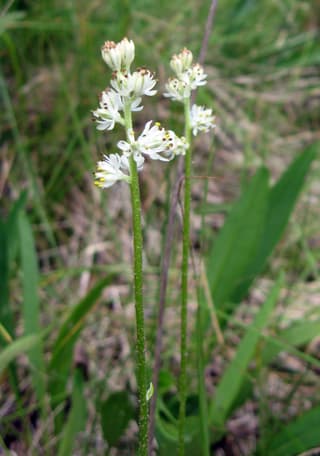
| Sticky false asphodel | Hard | Bright indirect | 1d | ✓ |
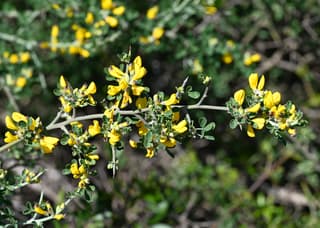
| Hairy Thorny Broom | Easy | Direct sun | 14d | ✓ |
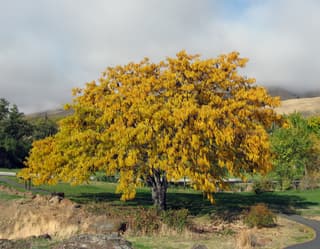
| Honey Locust | Medium | Direct sun | 14d | ✓ |
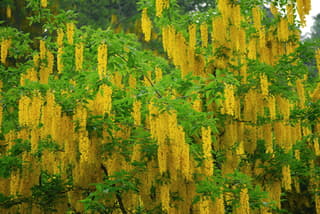
| Scotch laburnum | Medium | Bright indirect | 10d | ⚠️ |
Choose & Compare
Sources & References
- Paternostererbse – Wikipedia
- Rosary Pea (Abrus Precatorius) Care Guide: Water, Soil & Propagation - Plantiary
- Toxic and Non-toxic Plants: Rosary Pea | ASPCA
- Abrin: Biotoxin | NIOSH | CDC
- Rosary Pea (Abrus precatorius): Beautiful but Deadly
- Complete Guide to Abrus precatorius: Uses, Growing, Care & Safety