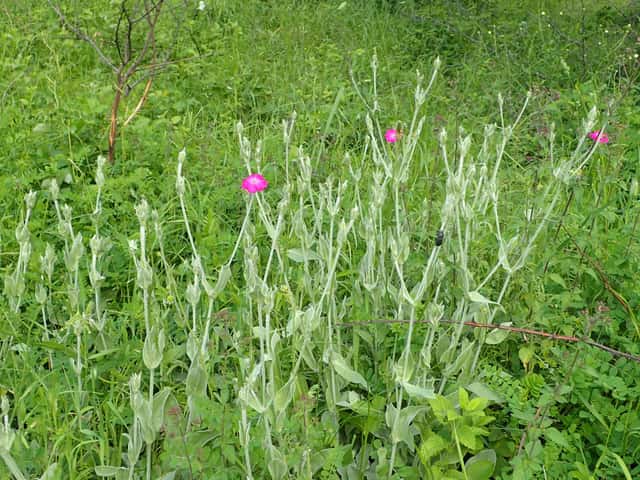
Caryophyllaceae
Rose Campion: Full Sun Plant
Silene coronaria
Rose Campion is a very low-maintenance plant, ideal for beginners. It requires full sun and well-draining, rather poor soil – it quickly rots in heavy, waterlogged substrates. It is notably drought-tolerant thanks to its silvery, felted leaves, which minimize evaporation. Limit watering to a minimum; overwatering is the primary cause of demise. Fertilization is not necessary; over-fertilizing with nitrogen leads to lush but dull growth with fewer flowers. Plant in airy, sunny locations.
Every 12 days
Direct sun
-34° - 35°C
30% - 60%
Categories
What is Rose Campion?
Rose Campion (Silene coronaria) is a easy-care plant from the Caryophyllaceae family. Rose Campion (Silene coronaria, syn. Lychnis coronaria) is a low-maintenance, short-lived perennial or biennial from the carnation family (Caryophyllaceae), native to the Mediterranean region and Southwest Asia. The plant is renowned for the striking contrast between its silvery-grey, felted leaves...
Rose Campion grows up to 90cm, spread of 60cm, watering every 12 days, -34°C – 35°C, 30–60% humidity. It is not suitable for indoor environments and not safe for pets.
Unlike many tropical plants, Rose Campion tolerates watering mistakes. Best for beginners. Without precautions, ingestion can cause irritation in pets. Keep out of reach of cats and dogs.
How to Care for Rose Campion?
TLDR: Rose Campion needs Direct sun, watering every 12 days, and temperatures between -34-35°C with 30-60% humidity.
How Often Should You Water Rose Campion?
Water thoroughly, but only when the soil has completely dried out – Rose Campion tolerates long dry spells better than overwatering. As a guideline, watering once every 10–14 days in summer is sufficient; less in cooler weather. Never let the roots sit in water; prevent root rot with loose, permeable soil.
How Much Light Does Rose Campion Need?
Rose Campion needs at least 6–8 hours of direct sunlight daily. In full sun, it blooms most profusely and maintains a compact growth habit. Partial shade is tolerated but leads to sparser flowering and weaker stems. Avoid full shade – the plant will languish there.
What Is the Best Soil for Rose Campion?
It thrives best in poor, sandy or stony, well-draining soil with a pH of 6.5–8.0. In dense clayey or nutrient-rich garden soil, add coarse sand or gravel to improve drainage. Over-fertilized or waterlogged soil leads to rot and shortens the plant's lifespan.
What Pot Should You Use for Rose Campion?
Rose Campion is grown almost exclusively outdoors in garden beds or rockeries. If growing it in a container, choose a terracotta or ceramic pot with ample drainage holes and use a very permeable substrate mixed with sand or perlite. The container must ensure perfect water drainage to prevent rot.
Care Schedule
Fertilize
Every 90 days
What Is Rose Campion and Where Does It Come From?
Rose Campion (Silene coronaria, syn. Lychnis coronaria) is a low-maintenance, short-lived perennial or biennial from the carnation family (Caryophyllaceae), native to the Mediterranean region and Southwest Asia. The plant is renowned for the striking contrast between its silvery-grey, felted leaves and vibrant magenta, pink, red, or white flowers, approximately 2–3 cm in diameter. In its first year, it forms a basal rosette of velvety leaves; in the second year, upright, branched stems emerge, reaching a height of 60–90 cm. Thanks to its ability to self-seed, it reliably maintains its presence in the garden for many years.
How to Propagate Rose Campion?
Seed Sowing
Division
How Big Does Rose Campion Grow?
TLDR: Rose Campion can reach up to 90cm tall with Medium growth rate.
Max height
90cm
Spread
60cm
Growth rate
Medium
Foliage
Semi-evergreen
Warning: Toxic Plant
This plant can be toxic if ingested. Keep out of reach of:
Plant Uses
Ornamental
Great for decoration
Is your plant showing symptoms?
Click on the symptom to discover possible causes:
What Diseases Commonly Affect Rose Campion?
TLDR: Rose Campion is susceptible to 6 known diseases. Monitor regularly for early detection.
Root Rot
Root rot is a serious fungal disease that affects the root system of plants, causing them to decay and die. It is primarily caused by overwatering, poor drainage, or soil-borne fungi such as Pythium, Phytophthora, Rhizoctonia, and Fusarium. The disease thrives in waterlogged conditions where roots are deprived of oxygen, making them susceptible to fungal infection.
Overwatering
Overwatering occurs when plants receive too much water, depriving roots of oxygen and causing root rot. This environmental stress is one of the most common causes of houseplant death, as waterlogged soil prevents roots from breathing and functioning properly.
Aphids
Aphids are small, soft-bodied, pear-shaped insects (1/16 to 1/8 inch long) that feed by sucking nutrient-rich sap from plants. They reproduce rapidly and can quickly weaken plants, causing distorted growth and transmitting plant viruses. Aphids come in various colors including green, black, red, yellow, brown, and gray. They secrete honeydew, a sticky substance that attracts ants and encourages sooty mold growth.
Powdery Mildew
Powdery mildew is a common fungal disease caused by various fungi species including Erysiphe, Podosphaera, Oïdium, and Leveillula. It affects over 10,000 plant species worldwide. The disease thrives in warm, dry climates with high humidity and appears as a distinctive white powdery coating on plant surfaces.
Compare with similar plants
| Attribute | Difficulty | Light | Watering | Pet Safe |
|---|---|---|---|---|
| Field Maple | Easy | Bright indirect | 14d | ✓ |
| Silver Birch | Easy | Direct sun | 14d | ✓ |
| Common Blanketflower | Easy | Direct sun | 10d | ✓ |
| Cushion Bush | Easy | Direct sun | 14d | ✓ |





