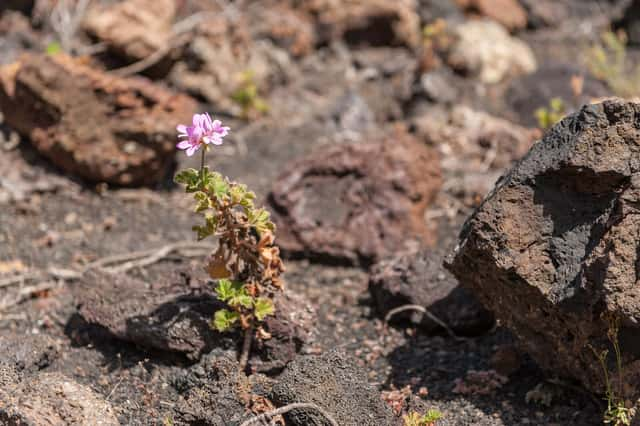
Geraniaceae
Rose-scented Pelargonium (Pelargonium capitatum)
Pelargonium capitatum
An easy, fast-growing shrub: full sun, sandy, well-drained soil and moderate watering. It handles drought and coastal wind but not soggy soil or hard frost. Prune each season to keep it compact.
Every 7 days
Direct sun
0° - 35°C
% - %
Categories
What is Rose-scented Pelargonium?
Rose-scented Pelargonium (Pelargonium capitatum) is a easy-care plant from the Geraniaceae family. Rose-scented pelargonium (Pelargonium capitatum) is a low, sprawling shrub in the Geraniaceae family, native to coastal dunes and hillsides of South Africa from Lamberts Bay to KwaZulu-Natal. It reaches about 1 m tall and 1.5 m wide, with soft stems covered in glandular hairs. The lobed, velvety lea...
Rose-scented Pelargonium grows up to 1.0m, spread of 150cm, watering every 7 days, 0°C – 35°C. It is suitable for indoor environments and not safe for pets.
Unlike many tropical plants, Rose-scented Pelargonium tolerates watering mistakes. Best for beginners. Without precautions, ingestion can cause irritation in pets. Keep out of reach of cats and dogs. Without adequate drainage, root rot can develop within 14 days.
How to Care for Rose-scented Pelargonium?
TLDR: Rose-scented Pelargonium needs Direct sun, watering every 7 days, and temperatures between 0-35°C with 40-70% humidity.
How Often Should You Water Rose-scented Pelargonium?
Water when the top few centimetres of soil are dry, roughly once a week in warm weather, less in winter. Avoid wetting the leaves and never leave water standing in the saucer.
How Much Light Does Rose-scented Pelargonium Need?
Full sun is best; indoors, give it your sunniest window. In low light it gets leggy and flowers poorly.
What Is the Best Soil for Rose-scented Pelargonium?
Sandy, well-drained soil; in pots, general potting mix with coarse sand or perlite. It copes with poor soil.
What Pot Should You Use for Rose-scented Pelargonium?
A 25–30 cm terracotta pot with drainage holes; clay keeps the roots from staying too wet.
Care Schedule
Fertilize
Every 30 days
Repot
Every 365 days
What Is Rose-scented Pelargonium and Where Does It Come From?
Rose-scented pelargonium (Pelargonium capitatum) is a low, sprawling shrub in the Geraniaceae family, native to coastal dunes and hillsides of South Africa from Lamberts Bay to KwaZulu-Natal. It reaches about 1 m tall and 1.5 m wide, with soft stems covered in glandular hairs. The lobed, velvety leaves release a rose scent when brushed. Pink to mauve flowers are packed into tight heads, which gives the plant its name "capitatum". It is one of the species grown commercially for oil of geranium.
How to Propagate Rose-scented Pelargonium?
Stem cuttings
Cuttings can be taken any time of year. Do not cover them; too much humidity makes them rot.
- 1 Cut soft shoot tips 8–10 cm long
- 2 Strip the lower leaves
- 3 Dip the base in rooting hormone
- 4 Insert in a light, well-drained mix and keep in a bright, sheltered spot
Materials needed:
Seed sowing
Seedlings are more vigorous than cuttings but take longer to flower.
- 1 Sow in late summer or early autumn in a light mix
- 2 Scatter seed evenly and cover with a thin layer of clean sand
- 3 Water gently and keep in light shade
Materials needed:
How Big Does Rose-scented Pelargonium Grow?
TLDR: Rose-scented Pelargonium can reach up to 1.0m tall with Fast growth rate.
Max height
1.0m
Spread
1.5m
Growth rate
Fast
Foliage
Evergreen
Warning: Toxic Plant
This plant can be toxic if ingested. Keep out of reach of:
Plant Uses
Ornamental
Great for decoration
Aromatic
Pleasant fragrance
Medicinal
Medicinal properties
Medicinal Uses
- A leaf tea was a traditional Cape remedy for kidney and bladder complaints, cramps, nausea and diarrhoea
- Leaves rubbed on the skin soften calluses and cracked heels; not a substitute for medical advice
Is your plant showing symptoms?
Click on the symptom to discover possible causes:
What Diseases Commonly Affect Rose-scented Pelargonium?
TLDR: Rose-scented Pelargonium is susceptible to 6 known diseases. Monitor regularly for early detection.
Gray Mold (Botrytis Blight)
Gray mold, caused by the fungus Botrytis cinerea, is a widespread necrotrophic pathogen affecting over 1,400 plant species. It thrives in cool, humid conditions and attacks weakened or aging plant tissues, causing soft rot and characteristic gray fuzzy growth.
Root Rot
Root rot is a serious fungal disease that affects the root system of plants, causing them to decay and die. It is primarily caused by overwatering, poor drainage, or soil-borne fungi such as Pythium, Phytophthora, Rhizoctonia, and Fusarium. The disease thrives in waterlogged conditions where roots are deprived of oxygen, making them susceptible to fungal infection.
Rust
Rust is a common fungal disease caused by fungi in the order Pucciniales that affects a wide variety of plants. The disease gets its name from the characteristic orange, yellow, or reddish-brown pustules that appear on leaves, resembling metal rust. This obligate fungal parasite requires living plants to survive and can cause significant economic losses in agricultural crops.
Whiteflies
Whiteflies are small, soft-bodied, winged insects closely related to aphids and mealybugs. They are moth-like in appearance, about 1/16 inch long, triangular in shape, and gray-white in color. These sap-sucking pests feed on plant tissue, causing yellowing, stunted growth, and wilting. They also excrete honeydew, which attracts ants and promotes sooty mold growth. Whiteflies can transmit serious plant viruses.
Fun Facts
Pelargonium comes from the Greek pelargos, stork, because the fruit looks like a stork's bill
It was introduced to Britain in 1690
Its seeds have a spiral tail that twists and drills them into the soil
Crossed with Pelargonium radens it produced the hybrid most used in perfumery
Frequently asked questions
Why do the leaves smell like roses?
Is it toxic to cats and dogs?
How do I propagate it?
Why are the leaves grey and mouldy?
Compare with similar plants
| Attribute | Difficulty | Light | Watering | Pet Safe |
|---|---|---|---|---|
| Field Maple | Easy | Bright indirect | 14d | ✓ |
| Iberian Houseleek | Easy | Direct sun | 14d | ✓ |
| Silver Birch | Easy | Direct sun | 14d | ✓ |
| Common Blanketflower | Easy | Direct sun | 10d | ✓ |





