Tamaricaceae
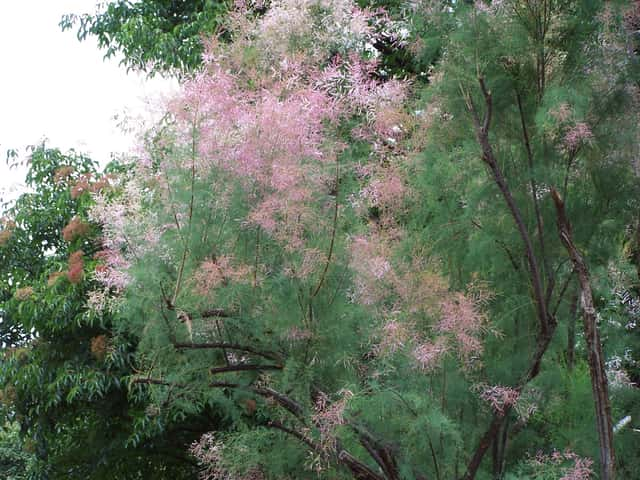
Saltcedar (Tamarix ramosissima)
Tamarix ramosissima
A tough plant for full sun in almost any well-drained soil, including sandy, poor or salty ground. Once established it tolerates drought, wind and salt spray; water only in long dry spells. It needs no fertilizer. Prune in late winter, cutting hard if you want it compact. Before planting, check it is not banned or invasive where you live: its seed spreads by wind and water.
Every 14 days
Bright indirect
° - °C
% - %
Categories
What is Saltcedar?
Saltcedar (Tamarix ramosissima) is a easy-care plant from the Tamaricaceae family. Tamarix ramosissima is a deciduous shrub or small tree in the tamarisk family (Tamaricaceae), native to Europe and Asia. It has arching reddish stems and tiny scale-like, pale green leaves that give it a feathery look. From late summer into early autumn it is covered in slender sprays of pink flower...
Saltcedar grows up to 8.0m, spread of 500cm, watering every 14 days. It is not suitable for indoor environments and safe for pets.
Unlike many tropical plants, Saltcedar tolerates watering mistakes. Best for beginners. Unlike many popular species, Saltcedar is safe to keep around pets.
How to Care for Saltcedar?
TLDR: Saltcedar needs Bright indirect, watering every 14 days, and temperatures between 15-30°C with 40-70% humidity.
How Often Should You Water Saltcedar?
Water regularly the first year. After that, only in long droughts: it reaches deep water and tolerates both dry and wet ground.
How Much Light Does Saltcedar Need?
Full sun, at least 6 hours a day. In shade it flowers poorly and gets sparse.
What Is the Best Soil for Saltcedar?
Any well-drained soil: sand, clay, poor or salty, acid or alkaline. It does not need fertile ground.
What Pot Should You Use for Saltcedar?
Not well suited to pots because of its size; if you try, use a large, deep pot with drainage holes and sandy soil.
What Is Saltcedar and Where Does It Come From?
Tamarix ramosissima is a deciduous shrub or small tree in the tamarisk family (Tamaricaceae), native to Europe and Asia. It has arching reddish stems and tiny scale-like, pale green leaves that give it a feathery look. From late summer into early autumn it is covered in slender sprays of pink flowers for 4 to 6 weeks. It can reach 8 m tall and 5 m wide. Its leaves have glands that excrete salt, which lets it grow in salty ground. A warning: it is highly invasive in hot, dry regions such as the southwestern United States and South Africa, where it takes over riverbanks and uses a lot of water; in many places it should not be planted.
How to Propagate Saltcedar?
Hardwood cutting
Only propagate it where it is not invasive or banned.
- 1 In winter, cut 20 to 30 cm pieces of ripe stem
- 2 Push two thirds of each cutting into moist, sandy soil
- 3 Keep moist until it leafs out in spring
Materials needed:
How Big Does Saltcedar Grow?
TLDR: Saltcedar can reach up to 8.0m tall with Fast growth rate.
Max height
8.0m
Spread
5.0m
Growth rate
Fast
Foliage
Deciduous
Plant Uses
Ornamental
Great for decoration
Is your plant showing symptoms?
Click on the symptom to discover possible causes:
Fun Facts
The leaves push out salt through special glands, and you can sometimes see white crystals on them.
A single plant can release thousands of seeds carried by wind and water.
In the US it became one of the most fought-against invasive plants along desert rivers.
Frequently asked questions
Is saltcedar invasive?
When should I prune tamarisk?
Does it tolerate salt spray and salty soil?
Does it need much water?
Compare with similar plants
| Attribute | Difficulty | Light | Watering | Pet Safe |
|---|---|---|---|---|
| Field Maple | Easy | Bright indirect | 14d | ✓ |
| Iberian Houseleek | Easy | Direct sun | 14d | ✓ |
| Silver Birch | Easy | Direct sun | 14d | ✓ |
| Common Blanketflower | Easy | Direct sun | 10d | ✓ |





