Cupressaceae
Savin Juniper (Juniperus sabina)
Juniperus sabina
Savin Juniper is an easy-care, drought-tolerant evergreen shrub best suited to full sun and well-draining soil. It requires minimal watering once established, tolerates poor and rocky soils, and needs little to no fertilizing. Occasional pruning keeps its spreading habit in check. Its main vulnerabilities are fungal issues such as Phomopsis tip blight, cedar-apple rust, and Phytophthora root rot in soils that stay too wet.
Every 14 days
Direct sun
-34° - °C
% - %
Categories
What is Savin Juniper?
Savin Juniper (Juniperus sabina) is a easy-care plant from the Cupressaceae family. Juniperus sabina, commonly known as Savin Juniper, is a low-growing, spreading evergreen conifer in the cypress family (Cupressaceae), native to the mountains of central and southern Europe, the Caucasus, and parts of western Asia and Siberia. It typically forms a dense, sprawling shrub reaching abo...
Savin Juniper grows up to 1.8m, spread of 250cm, watering every 14 days. It is not suitable for indoor environments and not safe for pets.
Unlike many tropical plants, Savin Juniper tolerates watering mistakes. Best for beginners. Without precautions, ingestion can cause irritation in pets. Keep out of reach of cats and dogs.
How to Care for Savin Juniper?
TLDR: Savin Juniper needs Direct sun, watering every 14 days, and temperatures between -34-30°C with 40-70% humidity.
How Often Should You Water Savin Juniper?
Water regularly during the first growing season to help roots establish, then reduce to occasional deep watering only during extended drought; established plants tolerate dry spells well and are sensitive to overly wet, waterlogged soil.
How Much Light Does Savin Juniper Need?
Provide at least 6 hours of direct sun daily for the densest, healthiest growth; Savin Juniper tolerates light shade but becomes sparse and more disease-prone in low light.
What Is the Best Soil for Savin Juniper?
Plant in well-draining soil; it adapts to sandy, loamy, clay, or rocky soils and a wide pH range from acidic to alkaline, but consistently soggy soil promotes root rot.
What Pot Should You Use for Savin Juniper?
Savin Juniper is grown almost exclusively in the ground as a landscape shrub rather than as a container plant. If grown in a pot for a period (e.g., for a bonsai project or before transplanting), use a wide, shallow, unglazed container with generous drainage holes and a fast-draining, gritty mix.
What Is Savin Juniper and Where Does It Come From?
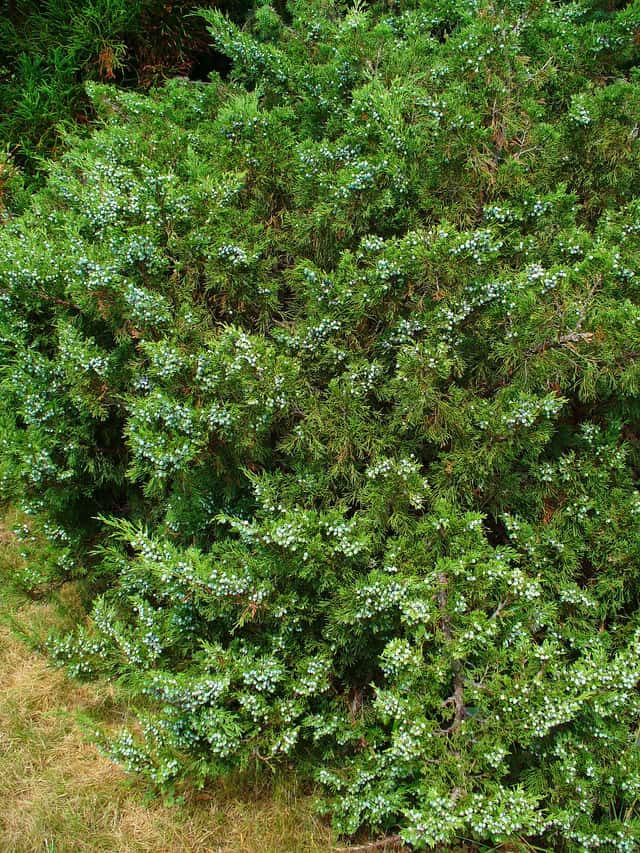
Juniperus sabina, commonly known as Savin Juniper, is a low-growing, spreading evergreen conifer in the cypress family (Cupressaceae), native to the mountains of central and southern Europe, the Caucasus, and parts of western Asia and Siberia. It typically forms a dense, sprawling shrub reaching about 1 to 2 meters in height with a spread of 2 to 3 meters or more, though some forms can become semi-erect. The scale-like, blue-green foliage is aromatic when crushed, releasing a strong resinous scent from the essential oil sabinene. As a dioecious species, individual plants are either male or female; female plants produce small, berry-like blue-black seed cones. Extremely hardy and drought-tolerant once established, Savin Juniper is widely planted as a groundcover, on slopes, and in rock gardens for its low maintenance and tolerance of poor, rocky, or alkaline soils. All parts of the plant are toxic if ingested, so it should be sited away from children and pets.
How to Propagate Savin Juniper?
Semi-hardwood cutting
Bottom heat around 18-21C speeds rooting; check for root resistance after 6 weeks by gently tugging the cutting.
- 1 Take a 10-15 cm semi-hardwood cutting from a healthy side branch in late summer or fall
- 2 Strip the needles from the lower third of the cutting and wound the base lightly
- 3 Dip the cut end in rooting hormone
- 4 Insert the cutting into a well-draining mix of perlite and peat or sand
- 5 Keep the mix consistently moist but not wet, in bright indirect light, until roots form
Materials needed:
Seed propagation
Germination is slow and often erratic, sometimes taking more than a year, so cuttings are the preferred propagation method for gardeners.
- 1 Collect ripe blue-black seed cones (berries) from female plants in fall
- 2 Remove the pulp and clean the seeds
- 3 Stratify seeds in moist sand in a refrigerator for 3-4 months to break dormancy
- 4 Sow stratified seeds in well-draining seed-starting mix in fall or early spring
- 5 Keep outdoors or in a cold frame, as many seeds need a second winter chill to germinate
Materials needed:
How Big Does Savin Juniper Grow?
TLDR: Savin Juniper can reach up to 1.8m tall with Slow growth rate.
Max height
1.8m
Spread
2.5m
Growth rate
Slow
Foliage
Evergreen
Warning: Toxic Plant
This plant can be toxic if ingested. Keep out of reach of:
Plant Uses
Ornamental
Great for decoration
Ground Cover
Soil coverage
Aromatic
Pleasant fragrance
Medicinal Uses
- Historically used in folk medicine as an abortifacient, now considered extremely dangerous and not recommended
- Traditionally applied externally in small amounts for skin parasites, though modern use is discouraged due to toxicity
Is your plant showing symptoms?
Click on the symptom to discover possible causes:
What Diseases Commonly Affect Savin Juniper?
TLDR: Savin Juniper is susceptible to 6 known diseases. Monitor regularly for early detection.
Phomopsis Tip Blight
A disease caused by the Phomopsis fungus that kills young shoots and causes brown spots on leaves. It thrives in humid conditions and spreads through water splashes.
Rust
Rust is a common fungal disease caused by fungi in the order Pucciniales that affects a wide variety of plants. The disease gets its name from the characteristic orange, yellow, or reddish-brown pustules that appear on leaves, resembling metal rust. This obligate fungal parasite requires living plants to survive and can cause significant economic losses in agricultural crops.
Phytophthora Root Rot
Disease caused by fungus-like organisms (oomycetes) that live in soil and can survive for years. It affects roots, stem, and crown of plants, being especially severe in waterlogged or poorly drained soils. It is the second most common cause of root rot in trees and shrubs.
Spider Mites
Spider mites are tiny arachnids (less than 1/20 inch long) related to spiders and ticks that feed on plant sap. They thrive in hot, dry conditions and can cause significant damage to ornamental and vegetable plants. During severe infestations, crop losses can reach 14% or higher as these pests disrupt vital plant processes including photosynthesis, carbon dioxide absorption, and transpiration.
Meaning & Symbolism
In many European folk traditions, juniper species including Savin Juniper were seen as protective plants, burned or hung to ward off evil spirits and purify homes. Because of its toxicity, Savin Juniper also carries a darker historical association: it was infamously used, at great risk, as an abortifacient in folk medicine, a practice now recognized as extremely dangerous. Today it more commonly symbolizes resilience and endurance, reflecting its ability to thrive in harsh, rocky, drought-prone mountain terrain across Europe and Asia.
Fun Facts
The species name sabina gave rise to the old English word savin, and its essential oil, sabinene, is named after the plant itself.
Savin Juniper is dioecious, meaning individual plants are either male or female, with only females producing the blue-black berry-like cones.
Despite being toxic to humans and animals, Savin Juniper has been cultivated for centuries as a hardy, low-maintenance landscape shrub across Europe and North America.
Frequently asked questions
Is Savin Juniper toxic to pets?
How much sun does Savin Juniper need?
How often should I water Savin Juniper?
What diseases commonly affect Savin Juniper?
Compare with similar plants
| Attribute | Difficulty | Light | Watering | Pet Safe |
|---|---|---|---|---|
| Field Maple | Easy | Bright indirect | 14d | ✓ |
| Silver Birch | Easy | Direct sun | 14d | ✓ |
| Common Blanketflower | Easy | Direct sun | 10d | ✓ |
| Cushion Bush | Easy | Direct sun | 14d | ✓ |
Choose & Compare
Sources & References
- Savin juniper (Juniperus sabina) Care Guide: Pests, Diseases, Watering, Fertilizing & Toxicity
- Savin juniper | The Morton Arboretum
- Juniperus sabina Monna (Calgary Carpet Juniper) | NC State Extension
- Juniper Diseases and Insect Pests in South Carolina | Clemson HGIC
- Is Savin juniper Poisonous - Toxic





