Asteraceae
Sea Aster: Edible Plant
Tripolium pannonicum
An easy plant for a sunny, open garden, even when exposed to wind and sea spray. It grows in clay, loamy, or sandy soils—whether acidic, neutral, or alkaline—provided they remain moist without being waterlogged, and it tolerates salt and occasional flooding. Hardy to approximately 5°F (-15°C). No mandatory pruning is required: simply cut back the stems in late autumn or early spring. Since it is short-lived, allow it to self-seed or sow new seeds regularly.
Every 4 days
Direct sun
-15° - °C
% - %
Categories
What is Sea Aster?
Sea Aster (Tripolium pannonicum) is a easy-care plant from the Asteraceae family. The Sea Aster (Tripolium pannonicum, formerly Aster tripolium) is an herbaceous plant in the Asteraceae family, a short-lived perennial or biennial typical of salt marshes, estuaries, and coastal mudflats across Europe, North Africa, and Asia. It is found along all coastlines and, more rarely, in in...
Sea Aster grows up to 1.0m, spread of 50cm, watering every 4 days. It is not suitable for indoor environments and safe for pets.
Unlike many tropical plants, Sea Aster tolerates watering mistakes. Best for beginners. Unlike many popular species, Sea Aster is safe to keep around pets.
How to Care for Sea Aster?
TLDR: Sea Aster needs Direct sun, watering every 4 days, and temperatures between -15-30°C with 40-70% humidity.
How Often Should You Water Sea Aster?
Keep the soil moist: in the ground, water every 3 to 5 days during hot, dry weather, and more frequently in pots. It tolerates slightly brackish water but does not like to sit in completely dried-out soil.
How Much Light Does Sea Aster Need?
Full sun, preferably with a south or west-facing exposure in an open area. In the shade, the stems tend to stretch and produce few flowers.
What Is the Best Soil for Sea Aster?
Ordinary garden soil—clay, loam, or sand—that is moist but well-drained; pH is not a major factor. Its tolerance for saline soils makes it an excellent choice for seaside gardens.
What Pot Should You Use for Sea Aster?
A deep pot at least 10 inches in diameter with drainage holes, using garden potting soil mixed with a bit of sand. A saucer helps keep the substrate moist during the summer.
What Is Sea Aster and Where Does It Come From?
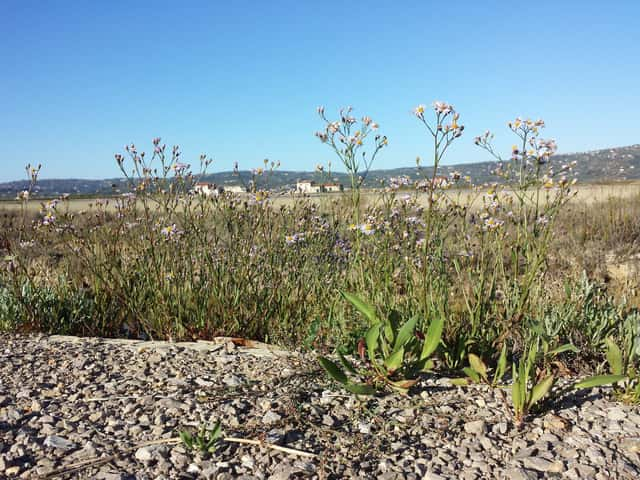
The Sea Aster (Tripolium pannonicum, formerly Aster tripolium) is an herbaceous plant in the Asteraceae family, a short-lived perennial or biennial typical of salt marshes, estuaries, and coastal mudflats across Europe, North Africa, and Asia. It is found along all coastlines and, more rarely, in inland saline areas. Its erect stems, ranging from 20 to 40 inches, bear narrow, fleshy, and somewhat succulent leaves rich in salt content. From July to September, and often into autumn, it is covered with flower heads featuring yellow centers surrounded by pale mauve to pinkish ray florets; some forms lack these ray florets entirely. The late blooms provide nectar for the season's last butterflies, and the silvery, fluffy seed heads decorate the autumn landscape. The young leaves, which are salty and slightly sweet, are edible and are notably harvested in Zeeland (Netherlands).
How to Propagate Sea Aster?
Sowing
The plant is short-lived: regular sowing or allowing spontaneous self-seeding maintains the clump. It hybridizes easily with other asters.
- 1 In spring, surface-sow on moist potting soil in a cold frame without covering the seeds
- 2 To improve germination, place seeds in the cold (refrigerator) for 2 weeks before sowing
- 3 Keep the soil moist; germination occurs in about 2 weeks at around 68°F (20°C)
- 4 Prick out seedlings into individual pots as soon as they are large enough to handle, then plant out in summer
Materials needed:
Division
Perform on vigorous plants before the start of the growing season.
- 1 In early spring, dig up the clump
- 2 Separate it into sections provided with roots and buds
- 3 Replant immediately and water thoroughly
Materials needed:
How Big Does Sea Aster Grow?
TLDR: Sea Aster can reach up to 1.0m tall with Medium growth rate.
Max height
1.0m
Spread
50cm
Growth rate
Medium
Foliage
Deciduous
Plant Uses
Ornamental
Great for decoration
Edible
Can be consumed
Culinary Uses
- Young fleshy leaves eaten raw in salads for their salty and slightly sweet flavor
- Leaves steamed for a few minutes or sautéed as a side vegetable
- Leaves and young stems preserved as pickles (in vinegar)
Is your plant showing symptoms?
Click on the symptom to discover possible causes:
What Diseases Commonly Affect Sea Aster?
TLDR: Sea Aster is susceptible to 3 known diseases. Monitor regularly for early detection.
Powdery Mildew
Powdery mildew is a common fungal disease caused by various fungi species including Erysiphe, Podosphaera, Oïdium, and Leveillula. It affects over 10,000 plant species worldwide. The disease thrives in warm, dry climates with high humidity and appears as a distinctive white powdery coating on plant surfaces.
Rust
Rust is a common fungal disease caused by fungi in the order Pucciniales that affects a wide variety of plants. The disease gets its name from the characteristic orange, yellow, or reddish-brown pustules that appear on leaves, resembling metal rust. This obligate fungal parasite requires living plants to survive and can cause significant economic losses in agricultural crops.
sap-sucking pests
Group of pests including aphids and scales, feeding on sugary sap on leaves, twigs, and branches. These pests often produce honeydew, which can later be infected by a fungal disease
Compare with similar plants
| Attribute | Difficulty | Light | Watering | Pet Safe |
|---|---|---|---|---|
| Field Maple | Easy | Bright indirect | 14d | ✓ |
| Iberian Houseleek | Easy | Direct sun | 14d | ✓ |
| Silver Birch | Easy | Direct sun | 14d | ✓ |
| Common Blanketflower | Easy | Direct sun | 10d | ✓ |





