Oleaceae
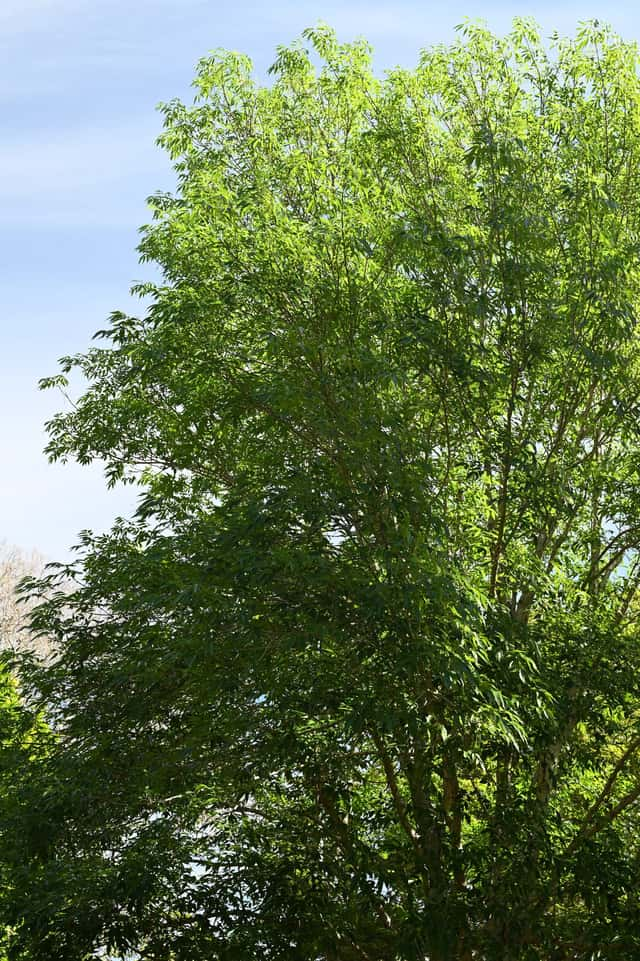
Shamel ash (Fraxinus uhdei)
Fraxinus uhdei
A full-sun, fast-growing tree that is not fussy about soil and likes regular water all year. Young trees can't take hard frost. It needs room: the surface roots lift paving and the big canopy casts deep shade, so it is not suited to small yards.
Every 7 days
Direct sun
° - °C
% - %
Categories
What is Shamel ash?
Shamel ash (Fraxinus uhdei) is a easy-care plant from the Oleaceae family. Shamel ash (Fraxinus uhdei) is a tree in the olive family (Oleaceae), native to the mountains of western and southern Mexico, Guatemala and Honduras, where it grows in moist forests on volcanic soils. It grows fast and can top 20 m, with a broad, rounded crown. The leaves are compound, with 5-9 toot...
Shamel ash grows up to 24.0m, spread of 1800cm, watering every 7 days. It is not suitable for indoor environments and safe for pets.
Unlike many tropical plants, Shamel ash tolerates watering mistakes. Best for beginners. Unlike many popular species, Shamel ash is safe to keep around pets.
How to Care for Shamel ash?
TLDR: Shamel ash needs Direct sun, watering every 7 days, and temperatures between 15-30°C with 40-70% humidity.
How Often Should You Water Shamel ash?
Water regularly all year, usually once a week in dry weather, soaking deeply. Young trees need extra care for their first 2-3 years.
How Much Light Does Shamel ash Need?
Full sun. Plant it away from buildings and other trees so the crown can spread.
What Is the Best Soil for Shamel ash?
Tolerates sandy, clay and loamy soils, from acidic to slightly alkaline. In the wild it grows on moist, fertile volcanic soils.
What Pot Should You Use for Shamel ash?
Not a container plant. Young trees can stay in a large pot for a year or two before planting out.
What Is Shamel ash and Where Does It Come From?
Shamel ash (Fraxinus uhdei) is a tree in the olive family (Oleaceae), native to the mountains of western and southern Mexico, Guatemala and Honduras, where it grows in moist forests on volcanic soils. It grows fast and can top 20 m, with a broad, rounded crown. The leaves are compound, with 5-9 toothed leaflets, and drop briefly in winter or stay on almost all year, depending on the cold. The flowers are small and greenish with no showy petals, on separate male and female trees; the fruits are samaras, single seeds with a wing. It is widely planted as a street and shade tree in Mexico, the southwestern United States and Colombia (where it is called urapán), and has become invasive in Hawaii.
How to Propagate Shamel ash?
Seed
Fresh seed germinates best; to store it, keep it sealed in the fridge for a few months.
- 1 Collect ripe samaras from a female tree
- 2 Sow in a seed tray with light mix, barely covered
- 3 Keep moist and in part shade until they sprout
- 4 Pot up when seedlings have 2-3 pairs of leaves
Materials needed:
Cuttings
Nurseries also graft it to get single-sex trees (male trees don't drop seeds).
- 1 Take 20-30 cm cuttings from this year's growth
- 2 Dip the base in rooting hormone
- 3 Plant in moist, well-drained mix
- 4 Keep in part shade until rooted
Materials needed:
How Big Does Shamel ash Grow?
TLDR: Shamel ash can reach up to 24.0m tall with Fast growth rate.
Max height
24.0m
Spread
18.0m
Growth rate
Fast
Foliage
Semi-evergreen
Plant Uses
Ornamental
Great for decoration
Is your plant showing symptoms?
Click on the symptom to discover possible causes:
What Diseases Commonly Affect Shamel ash?
TLDR: Shamel ash is susceptible to 3 known diseases. Monitor regularly for early detection.
Armored Scale
Caterpillars
Caterpillars are the larval stage of moths and butterflies that feed voraciously on plant foliage, stems, flowers, and fruits. Common species include cabbage loopers, tomato hornworms, armyworms, and cutworms. These pests can cause extensive damage by consuming large amounts of plant tissue in a short time. They vary in size from small (1/4 inch) to large (5 inches), with colors ranging from green to brown, often featuring stripes or spots. Caterpillars are highly mobile and can quickly spread throughout gardens, making them one of the most destructive common pests.
Phytoplasma
Fun Facts
In Colombia it is called urapán and was planted in large numbers along the streets of Bogotá
Its wood has been used for baseball bats, paddles and tool handles
Each tree is either male or female; only female trees produce seeds
Frequently asked questions
Is Shamel ash evergreen?
Can I plant it near my house or sidewalk?
Is it frost hardy?
How fast does it grow?
Compare with similar plants
| Attribute | Difficulty | Light | Watering | Pet Safe |
|---|---|---|---|---|
| Field Maple | Easy | Bright indirect | 14d | ✓ |
| Iberian Houseleek | Easy | Direct sun | 14d | ✓ |
| Silver Birch | Easy | Direct sun | 14d | ✓ |
| Common Blanketflower | Easy | Direct sun | 10d | ✓ |





