Adoxaceae
Shiny Viburnum (Viburnum lucidum)
Viburnum lucidum
An easy, fast-growing evergreen for hedges, screens and borders. It grows in full sun or shade, though it flowers best in sun, and tolerates almost any well-drained soil, from chalk to clay, at any pH. It is hardy to about -10 C but appreciates a sheltered spot, as it is a little less hardy than common laurustinus. Water regularly while young; once established it copes with dry spells. Trim lightly after flowering.
Every 7 days
Bright indirect
-10° - °C
% - %
Categories
What is Shiny viburnum?
Shiny viburnum (Viburnum lucidum) is a easy-care plant from the Adoxaceae family. Viburnum lucidum, the shiny viburnum, is an evergreen shrub of the Adoxaceae family, today usually treated as a large-leaved form of laurustinus (Viburnum tinus) and sold as V. tinus 'Lucidum'. It was described by Philip Miller in 1768, and early botanists traced it to the Atlas Mountains of North A...
Shiny viburnum grows up to 4.0m, spread of 400cm, watering every 7 days. It is not suitable for indoor environments and not safe for pets.
Unlike many tropical plants, Shiny viburnum tolerates watering mistakes. Best for beginners. Without precautions, ingestion can cause irritation in pets. Keep out of reach of cats and dogs.
How to Care for Shiny viburnum?
TLDR: Shiny viburnum needs Bright indirect, watering every 7 days, and temperatures between -10-30°C with 40-70% humidity.
How Often Should You Water Shiny viburnum?
Water about once a week while the shrub is establishing, and more often in pots and hot weather. Once established in the ground it is fairly drought tolerant and only needs water during long dry spells. Avoid waterlogged soil, which leads to Phytophthora root rot.
How Much Light Does Shiny viburnum Need?
Full sun to partial or even full shade. It flowers most freely in full sun; in deep shade it grows more open and blooms less.
What Is the Best Soil for Shiny viburnum?
Any reasonably fertile, well-drained soil: chalk, clay, loam or sand, acid to alkaline. It likes soil that stays slightly moist but never wet.
What Pot Should You Use for Shiny viburnum?
A large, heavy container (at least 40-50 cm across) with drainage holes and a loam-based compost; terracotta or wood both work. Move it to shelter in hard frosts.
What Is Shiny viburnum and Where Does It Come From?
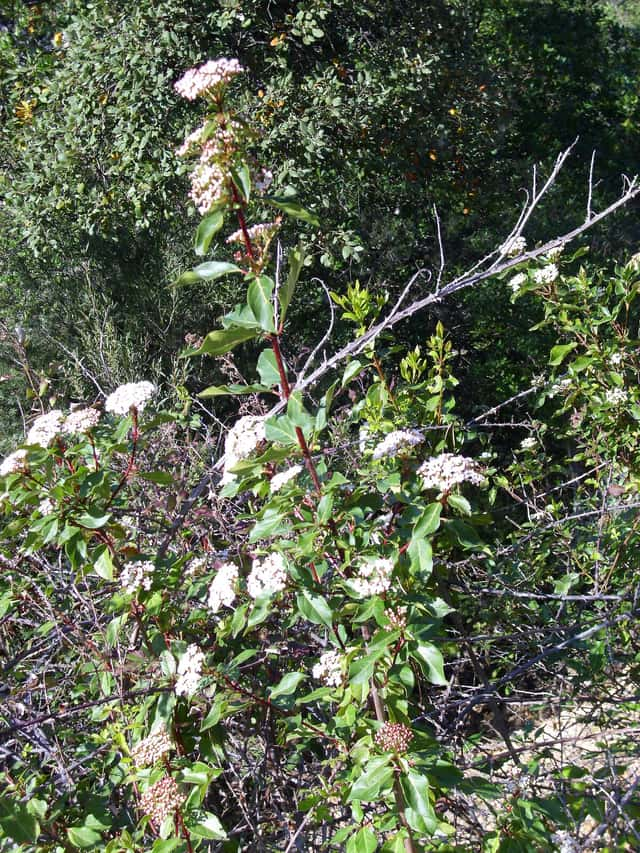
Viburnum lucidum, the shiny viburnum, is an evergreen shrub of the Adoxaceae family, today usually treated as a large-leaved form of laurustinus (Viburnum tinus) and sold as V. tinus 'Lucidum'. It was described by Philip Miller in 1768, and early botanists traced it to the Atlas Mountains of North Africa. It is more open and vigorous than ordinary laurustinus, reaching about 2.5-4 m tall and wide, with glossy, dark green, leathery leaves up to 10 cm long. From late winter into spring it carries flat heads, up to 10 cm across, of small creamy-white flowers, sometimes tinged pink, followed by blue-black berries that birds eat but people should not.
How to Propagate Shiny viburnum?
Semi-ripe cuttings
Use clean, sharp tools. Cuttings keep the glossy, large-leaved character of the parent, which seed may not.
- 1 In summer, cut 10-15 cm tips from this year's shoots that are firm at the base
- 2 Remove the lower leaves and dip the base in rooting hormone
- 3 Insert into a moist mix of compost and grit or perlite
- 4 Keep covered in bright light out of direct sun until rooted
- 5 Pot on individually once roots form
Materials needed:
Layering
Slow but very reliable; keep the buried part moist.
- 1 Bend a low, flexible branch to the ground
- 2 Wound the underside where it touches the soil
- 3 Pin it down and cover with soil
- 4 Sever and transplant once well rooted, usually the next year
Materials needed:
How Big Does Shiny viburnum Grow?
TLDR: Shiny viburnum can reach up to 4.0m tall with Fast growth rate.
Max height
4.0m
Spread
4.0m
Growth rate
Fast
Foliage
Evergreen
Warning: Toxic Plant
This plant can be toxic if ingested. Keep out of reach of:
Plant Uses
Ornamental
Great for decoration
Is your plant showing symptoms?
Click on the symptom to discover possible causes:
What Diseases Commonly Affect Shiny viburnum?
TLDR: Shiny viburnum is susceptible to 6 known diseases. Monitor regularly for early detection.
Aphids
Aphids are small, soft-bodied, pear-shaped insects (1/16 to 1/8 inch long) that feed by sucking nutrient-rich sap from plants. They reproduce rapidly and can quickly weaken plants, causing distorted growth and transmitting plant viruses. Aphids come in various colors including green, black, red, yellow, brown, and gray. They secrete honeydew, a sticky substance that attracts ants and encourages sooty mold growth.
Phytophthora Root Rot
Disease caused by fungus-like organisms (oomycetes) that live in soil and can survive for years. It affects roots, stem, and crown of plants, being especially severe in waterlogged or poorly drained soils. It is the second most common cause of root rot in trees and shrubs.
Gray Mold (Botrytis Blight)
Gray mold, caused by the fungus Botrytis cinerea, is a widespread necrotrophic pathogen affecting over 1,400 plant species. It thrives in cool, humid conditions and attacks weakened or aging plant tissues, causing soft rot and characteristic gray fuzzy growth.
Leaf Spot
Leaf spot is a common fungal disease caused by various pathogens including Alternaria, Ascochyta, Colletotrichum, Septoria, and Venturia. It primarily affects leaves, causing discolored spots that can lead to premature leaf drop if left untreated.
Fun Facts
Philip Miller described Viburnum lucidum in 1768, naming it for its glossy leaves.
Its leaves can reach 10 cm, among the largest of any laurustinus.
It flowers in the cold months, offering nectar to pollinators when little else is in bloom.
The berries turn metallic blue-black and are eaten by birds.
Frequently asked questions
Is Viburnum lucidum the same as Viburnum tinus?
When does shiny viburnum flower?
Is shiny viburnum hardy?
Are the berries poisonous?
When should I prune it?
Compare with similar plants
| Attribute | Difficulty | Light | Watering | Pet Safe |
|---|---|---|---|---|
| Field Maple | Easy | Bright indirect | 14d | ✓ |
| Iberian Houseleek | Easy | Direct sun | 14d | ✓ |
| Silver Birch | Easy | Direct sun | 14d | ✓ |
| Common Blanketflower | Easy | Direct sun | 10d | ✓ |





