Fabaceae
Siamese Cassia (Senna siamea)
Senna siamea
A fast-growing, low-maintenance tree for frost-free tropical climates. Plant in full sun in fertile, well-drained soil. It survives months of drought once its roots reach groundwater, but water young trees regularly for the first two years. It resprouts well after hard pruning.
Every 10 days
Direct sun
10° - 40°C
40% - 85%
Categories
What is Siamese Cassia?
Siamese Cassia (Senna siamea) is a easy-care plant from the Fabaceae family. Senna siamea, the Siamese cassia or kassod tree, is a medium-sized evergreen tree up to about 18 m tall, native to South and Southeast Asia and now planted throughout the tropics. It has pinnate leaves with 6 to 12 pairs of rounded leaflets and clusters of yellow flowers that bees love, followed by...
Siamese Cassia grows up to 18.0m, spread of 1000cm, watering every 10 days, 10°C – 40°C, 40–85% humidity. It is not suitable for indoor environments and not safe for pets.
Unlike many tropical plants, Siamese Cassia tolerates watering mistakes. Best for beginners. Without precautions, ingestion can cause irritation in pets. Keep out of reach of cats and dogs.
How to Care for Siamese Cassia?
TLDR: Siamese Cassia needs Direct sun, watering every 10 days, and temperatures between 10-40°C with 40-85% humidity.
How Often Should You Water Siamese Cassia?
For the first two years, water every 7-10 days in the dry season, soaking the soil. Established trees with roots in the water table rarely need watering. Avoid waterlogged soil.
How Much Light Does Siamese Cassia Need?
Needs full sun all day. In shade it grows leggy and flowers little. Seeds also germinate best in direct sun.
What Is the Best Soil for Siamese Cassia?
Grows best in fertile, loose, well-drained soil such as river banks, but tolerates many soil types. Compacted soil slows seedlings down.
What Pot Should You Use for Siamese Cassia?
Not a container plant. Plant it in the ground with plenty of room, away from buildings. Seedlings can stay in nursery bags or deep pots until about 30 cm tall.
What Is Siamese Cassia and Where Does It Come From?
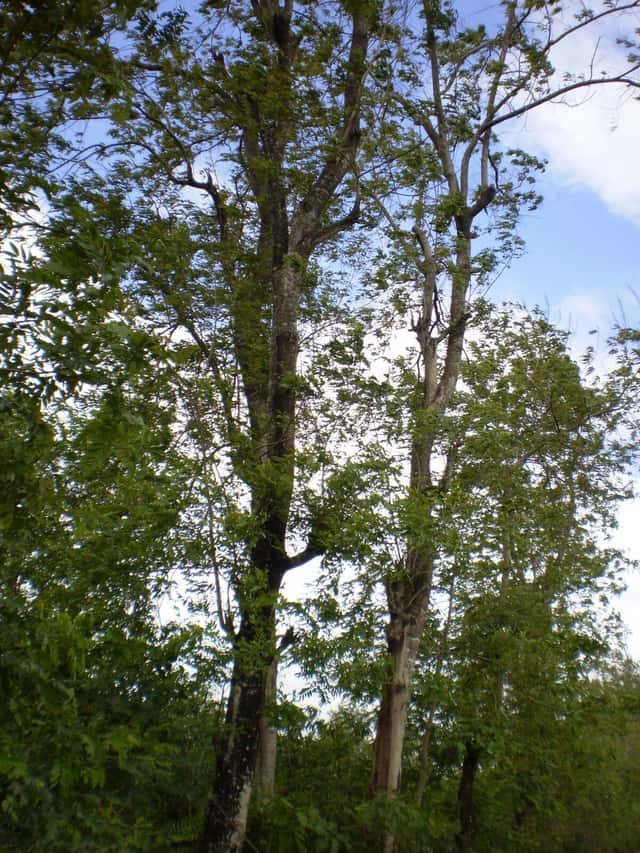
Senna siamea, the Siamese cassia or kassod tree, is a medium-sized evergreen tree up to about 18 m tall, native to South and Southeast Asia and now planted throughout the tropics. It has pinnate leaves with 6 to 12 pairs of rounded leaflets and clusters of yellow flowers that bees love, followed by flat pods. The dark, very hard wood goes into furniture, poles and charcoal, and the tree is widely used for shade in coffee and cocoa plantations, windbreaks and firewood. Roots, bark and leaves contain barakol and anthraquinones, and the sawdust irritates skin and eyes. In places like Hawaii it is rated a high invasion risk.
How to Propagate Siamese Cassia?
Seed
Fresh seeds germinate without treatment. Store seeds in an airtight container in a cool place for up to a year.
- 1 Collect mature pods once they turn yellow-brown and twist
- 2 Dry the pods in the sun until they release the seeds
- 3 Dip stored seeds in hot water for 1 minute and sow 24 hours later
- 4 Sow 0.5-1 cm deep in loose, moist soil in full sun
- 5 Transplant when seedlings are about 30 cm tall
Materials needed:
How Big Does Siamese Cassia Grow?
TLDR: Siamese Cassia can reach up to 18.0m tall with Fast growth rate.
Max height
18.0m
Spread
10.0m
Growth rate
Fast
Foliage
Evergreen
Warning: Toxic Plant
This plant can be toxic if ingested. Keep out of reach of:
Plant Uses
Ornamental
Great for decoration
Edible
Can be consumed
Medicinal
Medicinal properties
Medicinal Uses
- Barakol from the leaves has studied anti-anxiety effects and is sold in Asia as a sleep aid
- Traditionally used for constipation, and the seeds against intestinal worms
- Caution: barakol can cause hepatitis; a leaf capsule product was withdrawn in Thailand in 2003
Culinary Uses
- Young leaves, flower buds and tender pods are cooked in the Thai curry kaeng khilek
- Boil and discard the cooking water twice before eating
Is your plant showing symptoms?
Click on the symptom to discover possible causes:
What Diseases Commonly Affect Siamese Cassia?
TLDR: Siamese Cassia is susceptible to 2 known diseases. Monitor regularly for early detection.
Powdery Mildew
Powdery mildew is a common fungal disease caused by various fungi species including Erysiphe, Podosphaera, Oïdium, and Leveillula. It affects over 10,000 plant species worldwide. The disease thrives in warm, dry climates with high humidity and appears as a distinctive white powdery coating on plant surfaces.
Root Rot
Root rot is a serious fungal disease that affects the root system of plants, causing them to decay and die. It is primarily caused by overwatering, poor drainage, or soil-borne fungi such as Pythium, Phytophthora, Rhizoctonia, and Fusarium. The disease thrives in waterlogged conditions where roots are deprived of oxygen, making them susceptible to fungal infection.
Meaning & Symbolism
In Thailand, where it is called khilek, the tree is part of daily life and cooking. Its dark, iron-hard heartwood earned it names like ironwood and blackwood, a symbol of strength and endurance.
Fun Facts
A Thai curry, kaeng khilek, is named after the tree
Its wood, called jichimu, is used in Chinese furniture and in guitars and ukuleles
It resprouts vigorously even when cut to the ground
Each pod holds about 20 seeds
Frequently asked questions
Is Siamese cassia toxic?
Can you eat the leaves?
Does it tolerate cold?
How fast does it grow?
Compare with similar plants
| Attribute | Difficulty | Light | Watering | Pet Safe |
|---|---|---|---|---|
| Field Maple | Easy | Bright indirect | 14d | ✓ |
| Iberian Houseleek | Easy | Direct sun | 14d | ✓ |
| Silver Birch | Easy | Direct sun | 14d | ✓ |
| Common Blanketflower | Easy | Direct sun | 10d | ✓ |





