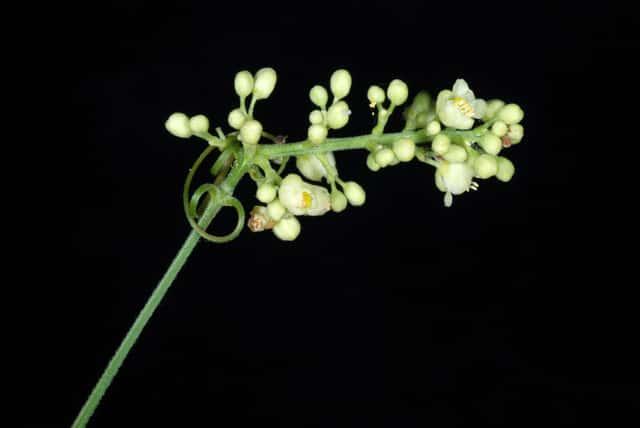
Sapindaceae
Slipplejack (Serjania): what to know
Serjania
A tough vine for sun or part shade that needs a fence, trellis or tree to climb. Once settled it wants little water and little care.
Every 7 days
Bright indirect
° - °C
% - %
Categories
What is Slipplejack?
Slipplejack (Serjania) is a easy-care plant from the Sapindaceae family. Serjania is a genus of about 250 species of vines in the soapberry family, native to the Americas from the southern United States to Argentina. They are woody-based climbers that hold on with tendrils, with compound leaves and clusters of small white or greenish-yellow flowers, often fragrant. The p...
Slipplejack grows up to watering every 7 days. It is not suitable for indoor environments and safe for pets.
Unlike many tropical plants, Slipplejack tolerates watering mistakes. Best for beginners. Unlike many popular species, Slipplejack is safe to keep around pets.
How to Care for Slipplejack?
TLDR: Slipplejack needs Bright indirect, watering every 7 days, and temperatures between 15-30°C with 40-70% humidity.
How Often Should You Water Slipplejack?
Water once a week while it establishes; after that it handles drought and only needs water in long dry spells.
How Much Light Does Slipplejack Need?
Full sun is best; it also grows in part shade, with fewer flowers.
What Is the Best Soil for Slipplejack?
Adapts to almost any soil, from sandy to clay, as long as it is not waterlogged for long.
What Pot Should You Use for Slipplejack?
Best in the ground beside a fence or trellis. In a container, use a large, deep pot with a sturdy support.
What Is Slipplejack and Where Does It Come From?
Serjania is a genus of about 250 species of vines in the soapberry family, native to the Americas from the southern United States to Argentina. They are woody-based climbers that hold on with tendrils, with compound leaves and clusters of small white or greenish-yellow flowers, often fragrant. The papery fruit has three wings and splits into pieces carried by the wind. In Brazil several species are called timbó and were used by Indigenous peoples to stun fish.
How to Propagate Slipplejack?
Seed
Plant the seedling next to the support it will climb.
- 1 Collect the winged fruit once dry
- 2 Separate the seeds from the wings
- 3 Sow in light mix and keep moist until they sprout
Materials needed:
How Big Does Slipplejack Grow?
TLDR: Slipplejack can reach up to ?cm tall with Medium growth rate.
Growth rate
Medium
Foliage
Evergreen
Plant Uses
Ornamental
Great for decoration
Is your plant showing symptoms?
Click on the symptom to discover possible causes:
Fun Facts
The genus honors the French friar Philippe Sergeant
The fruit has three wings and splits into pieces that float on the wind
S. brachycarpa leaves feed the caterpillars of a Texas butterfly
Frequently asked questions
Why is it linked to fish poison?
Is it related to guarana?
Can I grow it in the garden?
Compare with similar plants
| Attribute | Difficulty | Light | Watering | Pet Safe |
|---|---|---|---|---|
| Field Maple | Easy | Bright indirect | 14d | ✓ |
| Iberian Houseleek | Easy | Direct sun | 14d | ✓ |
| Silver Birch | Easy | Direct sun | 14d | ✓ |
| Common Blanketflower | Easy | Direct sun | 10d | ✓ |





