Anacardiaceae
Smoke Bush (Cotinus Genus)
Cotinus
A hardy shrub for temperate climates (USDA zones 5 to 8, some species to zone 4). Plant it in full sun in well-drained, ideally lean soil: in overly fertile soil it grows soft, lives shorter and is more prone to verticillium wilt. It tolerates drought and rocky soil once established. Prune in late winter; hard pruning (coppicing) gives larger, more colorful leaves but removes that year's "smoke".
Every 10 days
Bright indirect
-29° - °C
% - %
Categories
What is Smoke bush?
Smoke bush (Cotinus) is a easy-care plant from the Anacardiaceae family. Cotinus is a genus of seven species of large deciduous shrubs and small trees in the family Anacardiaceae, close relatives of the sumacs (Rhus), native to the warm temperate Northern Hemisphere. The two most grown species are Cotinus coggygria from Europe and Asia and Cotinus obovatus, the American...
Smoke bush grows up to 6.0m, spread of 450cm, watering every 10 days. It is not suitable for indoor environments and safe for pets.
Unlike many tropical plants, Smoke bush tolerates watering mistakes. Best for beginners. Unlike many popular species, Smoke bush is safe to keep around pets.
How to Care for Smoke bush?
TLDR: Smoke bush needs Bright indirect, watering every 10 days, and temperatures between -29-30°C with 40-70% humidity.
How Often Should You Water Smoke bush?
Water every 7-10 days during the first year. Once established it only needs water during long droughts. Avoid soggy soil.
How Much Light Does Smoke bush Need?
Full sun, 6 or more hours a day, for the best leaf color and the most plumes. It tolerates part shade but blooms less.
What Is the Best Soil for Smoke bush?
Well-drained soil, ideally lean, from clay to rocky. Do not fertilize: rich soil makes the plant weaker and dulls fall color.
What Pot Should You Use for Smoke bush?
Best in the ground. In containers, use only compact cultivars in a large, deep pot with drainage holes and free-draining mix.
What Is Smoke bush and Where Does It Come From?
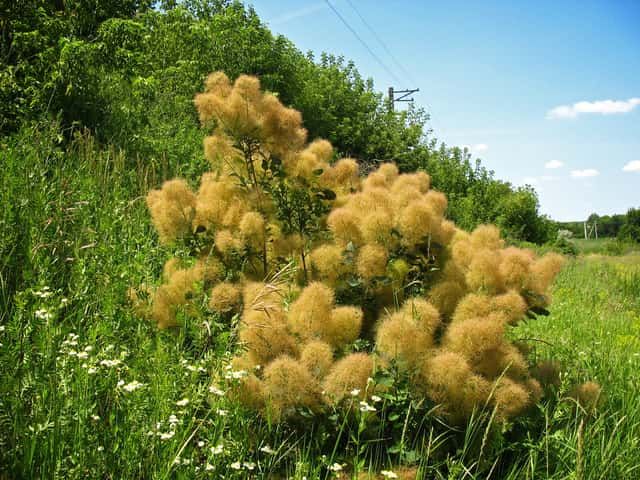
Cotinus is a genus of seven species of large deciduous shrubs and small trees in the family Anacardiaceae, close relatives of the sumacs (Rhus), native to the warm temperate Northern Hemisphere. The two most grown species are Cotinus coggygria from Europe and Asia and Cotinus obovatus, the American smoketree of the southeastern United States. The leaves are simple, oval and 3 to 13 cm long, and many cultivars have purple, burgundy or golden foliage. The flowers are tiny, but after bloom the branched 15-30 cm clusters are covered in pink or grayish hairs and look like a cloud of smoke over the plant, which gives it its common name. In fall the leaves turn orange, red or purple.
How to Propagate Smoke bush?
Ground layering
This is the easiest method and keeps the cultivar's leaf color.
- 1 Choose a low, flexible branch
- 2 Make a small cut in the bark on the part that will be buried
- 3 Bury that part 5-10 cm deep and pin it down, leaving the tip above ground
- 4 Keep the soil lightly moist and sever the new plant once it has roots
Materials needed:
Semi-ripe cutting
Cuttings wilt quickly: keep them under a plastic bag or in a propagator.
- 1 In early summer, cut shoot tips 10-15 cm long
- 2 Remove the lower leaves and dip the base in rooting hormone
- 3 Plant in moist sandy mix
- 4 Keep in bright light out of direct sun, with high humidity, until rooted
Materials needed:
Seed
Seedlings vary and do not keep cultivar leaf colors.
- 1 Collect ripe seeds in late summer or fall
- 2 Scarify them or soak in hot water
- 3 Sow in fall in a pot left outdoors so winter cold breaks dormancy
- 4 Keep the mix moist until germination
Materials needed:
How Big Does Smoke bush Grow?
TLDR: Smoke bush can reach up to 6.0m tall with Medium growth rate.
Max height
6.0m
Spread
4.5m
Growth rate
Medium
Foliage
Deciduous
Plant Uses
Ornamental
Great for decoration
Is your plant showing symptoms?
Click on the symptom to discover possible causes:
What Diseases Commonly Affect Smoke bush?
TLDR: Smoke bush is susceptible to 2 known diseases. Monitor regularly for early detection.
Verticillium Wilt
Verticillium wilt is a soil-borne fungal disease caused primarily by the fungi Verticillium dahliae and V. albo-atrum. These pathogens infect plant roots and grow within the vascular tissues, blocking water and nutrient transport, resulting in wilting and eventual plant death. The disease affects over 350 plant species including vegetables, fruits, ornamental flowers, and trees. The fungi can survive in soil for more than 10 years as resistant structures called microsclerotia.
Powdery Mildew
Powdery mildew is a common fungal disease caused by various fungi species including Erysiphe, Podosphaera, Oïdium, and Leveillula. It affects over 10,000 plant species worldwide. The disease thrives in warm, dry climates with high humidity and appears as a distinctive white powdery coating on plant surfaces.
Fun Facts
The "smoke" is not the flowers but the hairs on the flower stalks left after bloom.
Cotinus obovatus, from the southeastern US, usually has brighter fall color than the European species.
When the two main species grow together they cross and form hybrids.
Frequently asked questions
Why doesn't my smoke bush make "smoke"?
When should I prune Cotinus?
Why are branches suddenly wilting?
Does it need fertilizer?
Compare with similar plants
| Attribute | Difficulty | Light | Watering | Pet Safe |
|---|---|---|---|---|
| Field Maple | Easy | Bright indirect | 14d | ✓ |
| Iberian Houseleek | Easy | Direct sun | 14d | ✓ |
| Silver Birch | Easy | Direct sun | 14d | ✓ |
| Common Blanketflower | Easy | Direct sun | 10d | ✓ |





