Quillajaceae
Soapbark tree: Medicinal Uses & Care Tips
Quillaja saponaria
A full-sun tree that is highly drought-resistant with a moderate growth rate (about 30 cm per year). It prefers well-drained soils and does not tolerate waterlogging. Once established, it requires almost no watering or maintenance, needing only sparse irrigation during its first few summers. It is not suitable for indoor growth.
Every 14 days
Bright indirect
-12° - 40°C
30% - 60%
Categories
What is Soapbark tree?
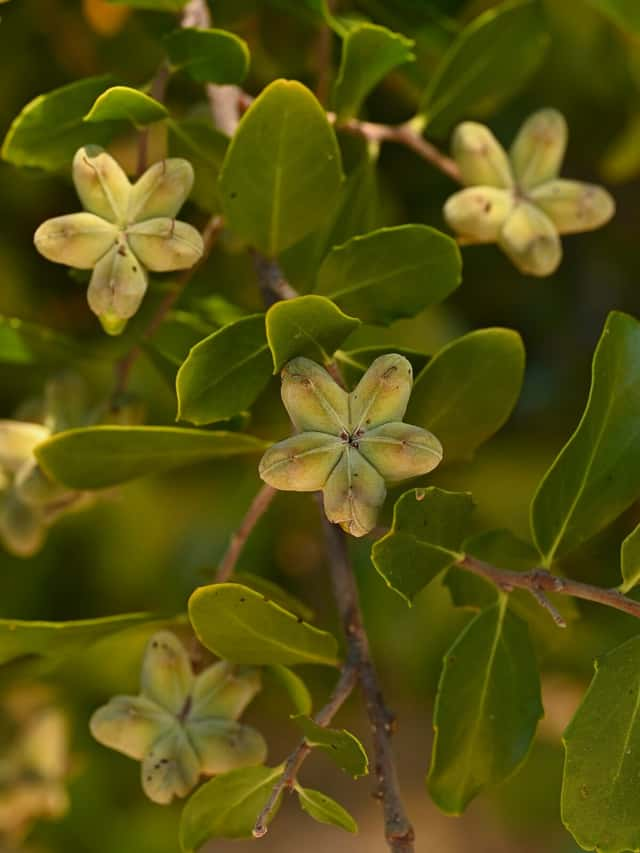
Soapbark tree (Quillaja saponaria) is a easy-care plant from the Quillajaceae family. The quillay (Quillaja saponaria) is an evergreen tree native to central Chile, featuring a rounded crown and bright green foliage, reaching heights of 15 to 20 meters. Its leaves are alternate, leathery, and have nearly smooth margins; during spring and summer, it produces star-shaped, greenish-whit...
Soapbark tree grows up to 15.0m, spread of 750cm, watering every 14 days, -12°C – 40°C, 30–60% humidity. It is not suitable for indoor environments and safe for pets.
Unlike many tropical plants, Soapbark tree tolerates watering mistakes. Best for beginners. Unlike many popular species, Soapbark tree is safe to keep around pets.
How to Care for Soapbark tree?
TLDR: Soapbark tree needs Bright indirect, watering every 14 days, and temperatures between -12-40°C with 30-60% humidity.
How Often Should You Water Soapbark tree?
Water sparingly and infrequently, allowing the soil to dry out completely between waterings. Young specimens benefit from one deep watering per month during the summer; excess moisture is its primary enemy.
How Much Light Does Soapbark tree Need?
Plant in full sun. It can tolerate some partial shade, but it blooms and grows best with high light levels.
What Is the Best Soil for Soapbark tree?
Use well-drained soils, including poor, stony, or sandy types. Avoid heavy clays that retain water.
What Pot Should You Use for Soapbark tree?
Not recommended for pots due to its large size; plant directly in the ground. If the plant is young, use a deep pot with excellent drainage.
What Is Soapbark tree and Where Does It Come From?
The quillay (Quillaja saponaria) is an evergreen tree native to central Chile, featuring a rounded crown and bright green foliage, reaching heights of 15 to 20 meters. Its leaves are alternate, leathery, and have nearly smooth margins; during spring and summer, it produces star-shaped, greenish-white flowers that are highly attractive to bees. It thrives in dry climates and poor soils, tolerates frosts down to approximately -12 °C (10 °F), and is exceptionally drought-resistant. Its bark is rich in saponins, which have been used for centuries as a natural detergent and are currently utilized in cosmetics, beverages, and vaccine adjuvants.
How to Propagate Soapbark tree?
How Big Does Soapbark tree Grow?
TLDR: Soapbark tree can reach up to 15.0m tall with Medium growth rate.
Max height
15.0m
Spread
7.5m
Growth rate
Medium
Foliage
Evergreen
Plant Uses
Ornamental
Great for decoration
Medicinal
Medicinal properties
Medicinal Uses
- Bark traditionally used as an expectorant for respiratory conditions
- Bark infusion used as a hair tonic to prevent hair loss
- Saponins used as an adjuvant in vaccines and as a natural foaming agent and detergent
Culinary Uses
- Bark extract (quillaja) used as a foaming agent in beverages
Is your plant showing symptoms?
Click on the symptom to discover possible causes:
What Diseases Commonly Affect Soapbark tree?
TLDR: Soapbark tree is susceptible to 1 known diseases. Monitor regularly for early detection.
Meaning & Symbolism
An emblematic tree of central Chile, associated with cleansing and purification due to the foam produced by its bark. In Mapuche tradition, it is known as küllay.
Compare with similar plants
| Attribute | Difficulty | Light | Watering | Pet Safe |
|---|---|---|---|---|
| Field Maple | Easy | Bright indirect | 14d | ✓ |
| Iberian Houseleek | Easy | Direct sun | 14d | ✓ |
| Silver Birch | Easy | Direct sun | 14d | ✓ |
| Common Blanketflower | Easy | Direct sun | 10d | ✓ |





