Typhaceae
Southern Cattail: Edible Plant
Typha domingensis
It requires full sun and must always have its roots submerged or the substrate waterlogged; it grows naturally in shallow standing water. It adapts to almost any type of moist soil, including saline, and requires very little fertilizer or maintenance.
Every 1 days
Direct sun
14° - 32°C
60% - 100%
Categories
What is Southern Cattail?
Southern Cattail (Typha domingensis) is a easy-care plant from the Typhaceae family. The Southern Cattail (Typha domingensis) is a perennial herbaceous plant from the Typhaceae family, native to wetlands, marshes, and the banks of rivers and lagoons in tropical and subtropical regions of the Americas. It forms dense reed beds up to 4 meters high thanks to its creeping, vigorous, and...
Southern Cattail grows up to 4.0m, spread of 150cm, watering every 1 days, 14°C – 32°C, 60–100% humidity. It is not suitable for indoor environments and safe for pets.
Unlike many tropical plants, Southern Cattail tolerates watering mistakes. Best for beginners. Unlike many popular species, Southern Cattail is safe to keep around pets.
How to Care for Southern Cattail?
TLDR: Southern Cattail needs Direct sun, watering every 1 days, and temperatures between 14-32°C with 60-100% humidity.
How Often Should You Water Southern Cattail?
Keep the substrate permanently waterlogged or with a layer of standing water; it should never dry out, as it is a marsh plant that does not tolerate prolonged drought.
How Much Light Does Southern Cattail Need?
Place in full sun; it does not thrive in shade or prolonged partial shade.
What Is the Best Soil for Southern Cattail?
Prefers soils rich in organic matter and permanently moist, with a pH between 6 and 8; it tolerates saline and poor soils.
What Pot Should You Use for Southern Cattail?
Best in a pot without drainage holes or with a saucer that permanently retains water, or planted directly at the edge of a pond.
What Is Southern Cattail and Where Does It Come From?
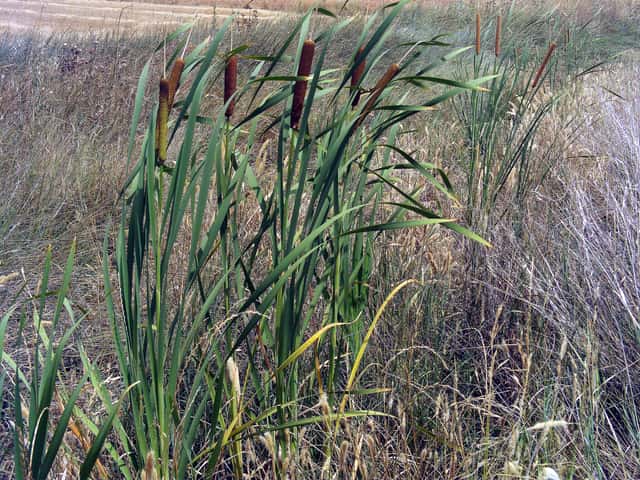
The Southern Cattail (Typha domingensis) is a perennial herbaceous plant from the Typhaceae family, native to wetlands, marshes, and the banks of rivers and lagoons in tropical and subtropical regions of the Americas. It forms dense reed beds up to 4 meters high thanks to its creeping, vigorous, and colonizing rhizomes. Its leaves are long, flat, and upright, and its flowers are grouped in a characteristic brown cylindrical spike reminiscent of a cigar. It tolerates flooding up to 1.5 meters and saline soils, playing a key ecological role by purifying water and providing shelter for aquatic wildlife.
How to Propagate Southern Cattail?
How Big Does Southern Cattail Grow?
TLDR: Southern Cattail can reach up to 4.0m tall with Fast growth rate.
Max height
4.0m
Spread
1.5m
Growth rate
Fast
Foliage
Deciduous
Plant Uses
Edible
Can be consumed
Medicinal
Medicinal properties
Ornamental
Great for decoration
Medicinal Uses
- The pollen and rhizome have been traditionally used as astringents, diuretics, and hemostatics, applied for nasal and uterine hemorrhages.
Culinary Uses
- The rhizomes, tender shoots, stem bases, seeds, and pollen are edible and rich in starch and protein.
Is your plant showing symptoms?
Click on the symptom to discover possible causes:
What Diseases Commonly Affect Southern Cattail?
TLDR: Southern Cattail is susceptible to 3 known diseases. Monitor regularly for early detection.
Leaf Spot
Leaf spot is a common fungal disease caused by various pathogens including Alternaria, Ascochyta, Colletotrichum, Septoria, and Venturia. It primarily affects leaves, causing discolored spots that can lead to premature leaf drop if left untreated.
Rust
Rust is a common fungal disease caused by fungi in the order Pucciniales that affects a wide variety of plants. The disease gets its name from the characteristic orange, yellow, or reddish-brown pustules that appear on leaves, resembling metal rust. This obligate fungal parasite requires living plants to survive and can cause significant economic losses in agricultural crops.
Aphids
Aphids are small, soft-bodied, pear-shaped insects (1/16 to 1/8 inch long) that feed by sucking nutrient-rich sap from plants. They reproduce rapidly and can quickly weaken plants, causing distorted growth and transmitting plant viruses. Aphids come in various colors including green, black, red, yellow, brown, and gray. They secrete honeydew, a sticky substance that attracts ants and encourages sooty mold growth.
Meaning & Symbolism
In many riparian cultures, it symbolizes the regeneration of wetlands and the purification of water.
Compare with similar plants
| Attribute | Difficulty | Light | Watering | Pet Safe |
|---|---|---|---|---|
| Field Maple | Easy | Bright indirect | 14d | ✓ |
| Silver Birch | Easy | Direct sun | 14d | ✓ |
| Common Blanketflower | Easy | Direct sun | 10d | ✓ |
| Cushion Bush | Easy | Direct sun | 14d | ✓ |





