Crassulaceae
Spanish Stonecrop (Sedum hispanicum)
Sedum hispanicum
Give full sun to partial shade, very well-drained soil and infrequent watering, only once the soil is completely dry. Feed lightly, at most monthly in the growing season. Avoid soggy soil and high humidity, which encourage root rot and fungal problems.
Every 14 days
Bright indirect
° - °C
% - %
Categories
What is Spanish Stonecrop?
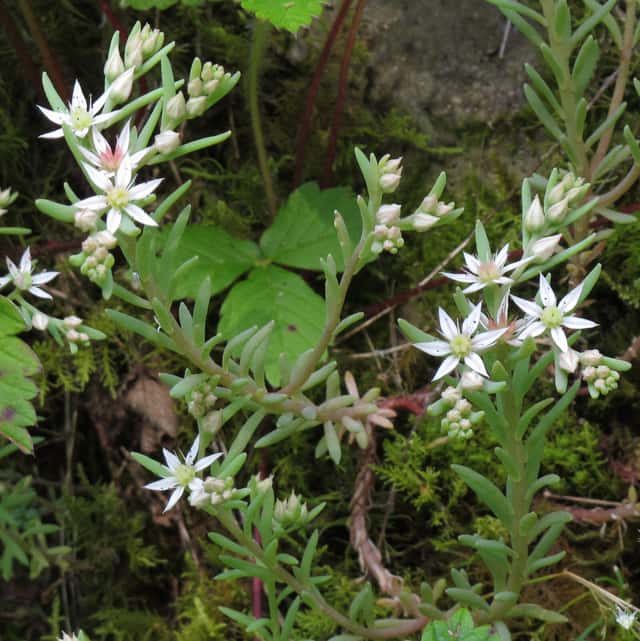
Spanish Stonecrop (Sedum hispanicum) is a easy-care plant from the Crassulaceae family. Low-growing succulent groundcover with tiny, narrow, bluish-grey leaves forming a dense mat. It reaches about 5 to 15 cm tall and spreads roughly 30 cm. Small star-shaped white to pale pink flowers, usually with six petals, appear in summer. Foliage can turn burgundy in autumn. Despite the name, it...
Spanish Stonecrop grows up to 15cm, spread of 30cm, watering every 14 days. It is suitable for indoor environments and safe for pets.
Unlike many tropical plants, Spanish Stonecrop tolerates watering mistakes. Best for beginners. Unlike many popular species, Spanish Stonecrop is safe to keep around pets. Without adequate drainage, root rot can develop within 28 days.
How to Care for Spanish Stonecrop?
TLDR: Spanish Stonecrop needs Bright indirect, watering every 14 days, and temperatures between 15-30°C with 40-70% humidity.
How Often Should You Water Spanish Stonecrop?
Water only when the soil is completely dry, then soak thoroughly. Never leave it sitting in water, as excess moisture causes root rot.
How Much Light Does Spanish Stonecrop Need?
Prefers full sun to partial shade. In low light it loses its compact shape and color intensity.
What Is the Best Soil for Spanish Stonecrop?
Use a sandy, fast-draining mix with coarse sand or perlite. Avoid heavy clay. It thrives in poor soil with neutral to slightly acidic pH.
What Pot Should You Use for Spanish Stonecrop?
Shallow, wide terracotta or ceramic pot with drainage holes and a sandy mix.
Care Schedule
Fertilize
Every 30 days
What Is Spanish Stonecrop and Where Does It Come From?
Low-growing succulent groundcover with tiny, narrow, bluish-grey leaves forming a dense mat. It reaches about 5 to 15 cm tall and spreads roughly 30 cm. Small star-shaped white to pale pink flowers, usually with six petals, appear in summer. Foliage can turn burgundy in autumn. Despite the name, it is native to south-central and southeastern Europe through to Iran and the Arabian Peninsula.
How to Propagate Spanish Stonecrop?
Stem cuttings
Keep the mix only lightly moist until rooted and avoid overwatering.
- 1 Take 8 to 10 cm stem cuttings in spring or early summer
- 2 Remove the lower leaves
- 3 Let the cutting dry for a few days
- 4 Plant in sandy, well-draining mix
Materials needed:
Clump division
Water sparingly after replanting.
- 1 Dig up a mature clump in early spring or late summer
- 2 Separate it into rooted sections
- 3 Replant in well-drained soil
Materials needed:
How Big Does Spanish Stonecrop Grow?
TLDR: Spanish Stonecrop can reach up to 15cm tall with Medium growth rate.
Max height
15cm
Spread
30cm
Growth rate
Medium
Foliage
Evergreen
Plant Uses
Ornamental
Great for decoration
Ground Cover
Soil coverage
Is your plant showing symptoms?
Click on the symptom to discover possible causes:
What Diseases Commonly Affect Spanish Stonecrop?
TLDR: Spanish Stonecrop is susceptible to 4 known diseases. Monitor regularly for early detection.
Root Rot
Root rot is a serious fungal disease that affects the root system of plants, causing them to decay and die. It is primarily caused by overwatering, poor drainage, or soil-borne fungi such as Pythium, Phytophthora, Rhizoctonia, and Fusarium. The disease thrives in waterlogged conditions where roots are deprived of oxygen, making them susceptible to fungal infection.
Mealybugs
Mealybugs are small, soft-bodied insects covered with a white, waxy, cottony material. They are common pests of houseplants and outdoor plants in mild climates. These sap-sucking insects feed on plant tissue, causing damage, stunted growth, and can lead to plant death if left untreated. They produce sticky honeydew which attracts sooty mold.
Aphids
Aphids are small, soft-bodied, pear-shaped insects (1/16 to 1/8 inch long) that feed by sucking nutrient-rich sap from plants. They reproduce rapidly and can quickly weaken plants, causing distorted growth and transmitting plant viruses. Aphids come in various colors including green, black, red, yellow, brown, and gray. They secrete honeydew, a sticky substance that attracts ants and encourages sooty mold growth.
White Mold
White mold (Sclerotinia sclerotiorum) is a devastating fungal disease affecting over 400 plant species worldwide. The fungus produces black, seed-like structures (sclerotia) that can survive in soil for 5 or more years. The disease is favored by cool, moist weather (50-68°F/10-20°C), especially during flowering.
Fun Facts
Despite its name, it is not native to Spain but to southeastern Europe through to Iran and the Arabian Peninsula
Its flowers usually have six petals, while most stonecrops have five
The foliage can turn burgundy in autumn
Frequently asked questions
How often should I water Sedum hispanicum?
Does it need full sun?
What soil is best?
How do I propagate it?
Compare with similar plants
| Attribute | Difficulty | Light | Watering | Pet Safe |
|---|---|---|---|---|
| Field Maple | Easy | Bright indirect | 14d | ✓ |
| Silver Birch | Easy | Direct sun | 14d | ✓ |
| Common Blanketflower | Easy | Direct sun | 10d | ✓ |
| Cushion Bush | Easy | Direct sun | 14d | ✓ |





