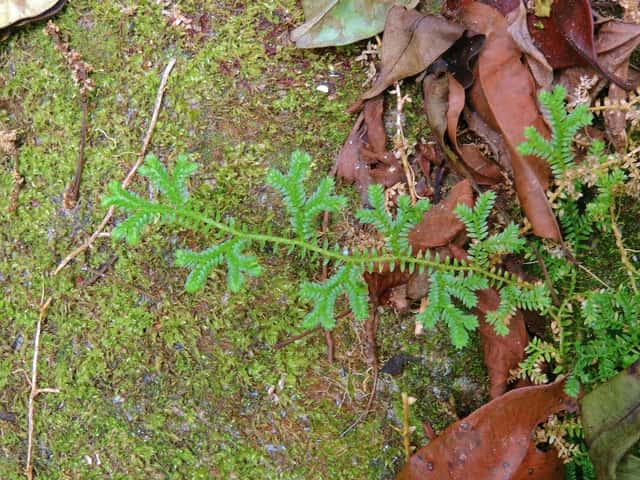
Selaginellaceae
Selaginella — Spikemoss: Care, Cultivation & Facts
Selaginella
Keep soil consistently moist but never waterlogged. Provide bright indirect light and maintain high humidity (50–80%). Avoid direct sun, cold drafts, and temperatures below 15°C. Terrariums are ideal.
Every 7 days
Low light
15° - 27°C
50% - 80%
Categories
What is Spikemoss?
Spikemoss (Selaginella) is a medium-care plant from the Selaginellaceae family. Selaginella is a diverse genus of over 700 species of primitive vascular plants in the family Selaginellaceae, commonly known as spikemosses or little club mosses. Though not true mosses, they resemble them with their delicate, scale-like foliage and low, spreading growth habit. Found worldwide — pr...
Spikemoss grows up to 30cm, spread of 60cm, watering every 7 days, 15°C – 27°C, 50–80% humidity. It is suitable for indoor environments and safe for pets.
Unlike many popular species, Spikemoss is safe to keep around pets. Without adequate drainage, root rot can develop within 14 days.
How to Care for Spikemoss?
TLDR: Spikemoss needs Low light, watering every 7 days, and temperatures between 15-27°C with 50-80% humidity.
How Often Should You Water Spikemoss?
Water every 5–7 days or when the top inch of soil begins to dry out. Use room-temperature, preferably distilled or rainwater. Mist foliage regularly to maintain adequate humidity.
How Much Light Does Spikemoss Need?
Prefers soft, indirect light — a north- or east-facing window is ideal. Avoid direct sun, which can scorch delicate leaves. Tolerates low-light conditions better than many houseplants.
What Is the Best Soil for Spikemoss?
Use a rich, well-draining organic mix. A blend of peat moss, perlite, and coarse sand works well. Target pH between 5.5 and 7.0 (slightly acidic to neutral).
What Pot Should You Use for Spikemoss?
Plastic or glazed ceramic pots with drainage holes. Closed or semi-closed terrariums are ideal, as they naturally maintain the high humidity levels Selaginella requires to thrive.
Care Schedule
Fertilize
Every 30 days
Misting
Every 3 days
Repot
Every 365 days
What Is Spikemoss and Where Does It Come From?
Selaginella is a diverse genus of over 700 species of primitive vascular plants in the family Selaginellaceae, commonly known as spikemosses or little club mosses. Though not true mosses, they resemble them with their delicate, scale-like foliage and low, spreading growth habit. Found worldwide — predominantly in humid tropical and subtropical environments — they are prized as ornamental plants for terrariums, shaded gardens, and ground covers. Certain species, notably Selaginella lepidophylla (the resurrection plant), can survive near-complete desiccation and rehydrate fully when watered.
How to Propagate Spikemoss?
Division
Division is the easiest and most reliable method. Maintain high humidity around divisions during rooting for best results.
- 1 Carefully remove the plant from its pot
- 2 Gently divide the clump into smaller sections by hand or with a clean knife
- 3 Plant each section in moist, organic-rich substrate
- 4 Keep in a humid spot with indirect light until established
Materials needed:
Spores
Spore propagation is slow and delicate. Keep substrate sterile and consistently moist to prevent fungal issues.
- 1 Collect mature spores from strobili (cone-like reproductive structures)
- 2 Sow spores on moist, sterile substrate
- 3 Cover with clear plastic to retain humidity
- 4 Place in a warm location with indirect light and await germination
Materials needed:
How Big Does Spikemoss Grow?
TLDR: Spikemoss can reach up to 30cm tall with Slow growth rate.
Max height
30cm
Spread
60cm
Growth rate
Slow
Foliage
Evergreen
Plant Uses
Ornamental
Great for decoration
Ground Cover
Soil coverage
Is your plant showing symptoms?
Click on the symptom to discover possible causes:
What Diseases Commonly Affect Spikemoss?
TLDR: Spikemoss is susceptible to 5 known diseases. Monitor regularly for early detection.
Root Rot
Root rot is a serious fungal disease that affects the root system of plants, causing them to decay and die. It is primarily caused by overwatering, poor drainage, or soil-borne fungi such as Pythium, Phytophthora, Rhizoctonia, and Fusarium. The disease thrives in waterlogged conditions where roots are deprived of oxygen, making them susceptible to fungal infection.
Leaf Spot
Leaf spot is a common fungal disease caused by various pathogens including Alternaria, Ascochyta, Colletotrichum, Septoria, and Venturia. It primarily affects leaves, causing discolored spots that can lead to premature leaf drop if left untreated.
Spider Mites
Spider mites are tiny arachnids (less than 1/20 inch long) related to spiders and ticks that feed on plant sap. They thrive in hot, dry conditions and can cause significant damage to ornamental and vegetable plants. During severe infestations, crop losses can reach 14% or higher as these pests disrupt vital plant processes including photosynthesis, carbon dioxide absorption, and transpiration.
Mealybugs
Mealybugs are small, soft-bodied insects covered with a white, waxy, cottony material. They are common pests of houseplants and outdoor plants in mild climates. These sap-sucking insects feed on plant tissue, causing damage, stunted growth, and can lead to plant death if left untreated. They produce sticky honeydew which attracts sooty mold.
Meaning & Symbolism
Selaginella symbolizes resilience and renewal. Some species can revive from complete desiccation, making them a powerful emblem of endurance, adaptability, and rebirth.
Fun Facts
Selaginella is one of the oldest plant groups on Earth, with fossils dating back over 400 million years.
Some species, like Selaginella lepidophylla, are called resurrection plants — they can lose up to 95% of their water content and fully revive when rehydrated.
Unlike true mosses, Selaginella has a true vascular system, making it more closely related to ferns.
The genus contains over 700 species found on every continent except Antarctica.
Frequently asked questions
How often should I water Selaginella?
Is Selaginella toxic to cats and dogs?
Why are my Selaginella leaves turning brown?
Can I grow Selaginella in a terrarium?
How do I propagate Selaginella?
Compare with similar plants
| Attribute | Difficulty | Light | Watering | Pet Safe |
|---|---|---|---|---|
| Dark Fieldcap | Medium | Low light | 2d | ⚠️ |
| Azalea | Medium | Partial shade | 3d | ⚠️ |
| Muriel's Bamboo | Medium | Partial shade | 3d | ✓ |
| Bougainvillea | Medium | Direct sun | 7d | ⚠️ |




