Amaranthaceae
Spiny amaranth (Amaranthus spinosus)
Amaranthus spinosus
A self-sown plant that needs no care: it likes strong sun and fertile soil and tolerates drought. If harvesting, wear gloves because of the spines and pick young leaves before flowering. To stop it spreading, pull it while small, before it sets seed.
Every 5 days
Direct sun
° - °C
% - %
Categories
What is Spiny amaranth?
Spiny amaranth (Amaranthus spinosus) is a easy-care plant from the Amaranthaceae family. Spiny amaranth (Amaranthus spinosus) is an annual herb in the Amaranthaceae family, native to tropical America and now found in warm regions all over the world. It grows upright and much-branched to 1-1.5 m, often with reddish stems. What sets it apart from other pigweeds is the pair of hard, sharp...
Spiny amaranth grows up to 1.5m, watering every 5 days. It is not suitable for indoor environments and safe for pets.
Unlike many tropical plants, Spiny amaranth tolerates watering mistakes. Best for beginners. Unlike many popular species, Spiny amaranth is safe to keep around pets.
How to Care for Spiny amaranth?
TLDR: Spiny amaranth needs Direct sun, watering every 5 days, and temperatures between 15-30°C with 40-70% humidity.
How Often Should You Water Spiny amaranth?
Drought tolerant. In a bed, watering every 4 or 5 days in hot weather is enough; leaves are more tender when the soil stays slightly moist.
How Much Light Does Spiny amaranth Need?
Full sun. In shade it grows thin and leggy.
What Is the Best Soil for Spiny amaranth?
Prefers loose, fertile soil rich in organic matter and nitrogen, but comes up in almost any soil, including wetter ground.
What Is Spiny amaranth and Where Does It Come From?
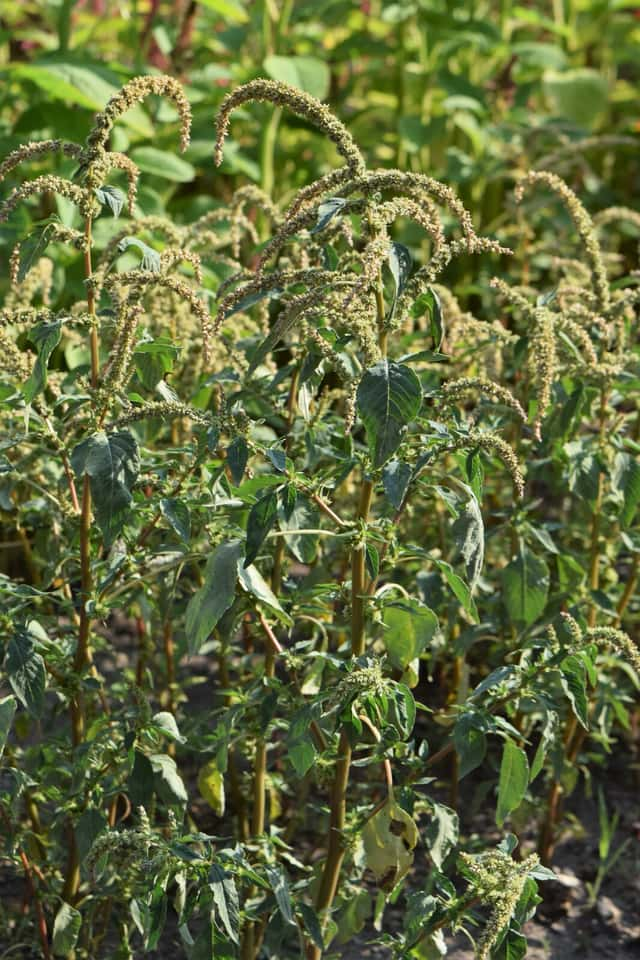
Spiny amaranth (Amaranthus spinosus) is an annual herb in the Amaranthaceae family, native to tropical America and now found in warm regions all over the world. It grows upright and much-branched to 1-1.5 m, often with reddish stems. What sets it apart from other pigweeds is the pair of hard, sharp spines at the base of each leaf. The leaves are alternate, diamond-shaped, with long stalks. The flowers are tiny, green and petal-less, in spikes at the branch tips and in the leaf axils. A single plant sheds hundreds of thousands of seeds, which makes it a serious weed of crops, pastures and gardens. The young leaves are cooked and eaten as greens in many countries.
How to Propagate Spiny amaranth?
Seeds
It self-seeds very easily. Pick young leaves before flowering and pull plants before the spikes drop seed if you do not want it to take over.
- 1 Scatter seeds on loose, moist soil
- 2 Cover with a very thin layer of soil
- 3 Keep the soil moist until seedlings appear
- 4 Thin to about 20 cm between plants
Materials needed:
How Big Does Spiny amaranth Grow?
TLDR: Spiny amaranth can reach up to 1.5m tall with Fast growth rate.
Max height
1.5m
Growth rate
Fast
Plant Uses
Edible
Can be consumed
Medicinal
Medicinal properties
Medicinal Uses
- In traditional medicine of Yucatan and Central America the plant was used as a decoction
Culinary Uses
- Young leaves and shoots cooked like other amaranth greens
- Stir-fried shoots in Thailand (phak khom)
- Cooked into angu and stews in Brazil
Is your plant showing symptoms?
Click on the symptom to discover possible causes:
What Diseases Commonly Affect Spiny amaranth?
TLDR: Spiny amaranth is susceptible to 4 known diseases. Monitor regularly for early detection.
Root-Knot Nematodes
Root-knot nematodes (Meloidogyne species) are microscopic roundworms that parasitize plant roots, causing characteristic galls or knots. These soil-borne pests are among the most economically damaging plant pathogens worldwide, affecting a wide range of ornamental and edible plants. The nematodes inject enzymes into root cells, causing abnormal swelling and disrupting water and nutrient uptake.
Caterpillars
Caterpillars are the larval stage of moths and butterflies that feed voraciously on plant foliage, stems, flowers, and fruits. Common species include cabbage loopers, tomato hornworms, armyworms, and cutworms. These pests can cause extensive damage by consuming large amounts of plant tissue in a short time. They vary in size from small (1/4 inch) to large (5 inches), with colors ranging from green to brown, often featuring stripes or spots. Caterpillars are highly mobile and can quickly spread throughout gardens, making them one of the most destructive common pests.
Curculionidae
Curculionidae (weevils) are small beetles that feed on plants. Adults chew leaf margins, leaving crescent-shaped notches, primarily at night. The larvae live in the substrate and consume roots, causing decline, yellowing, and wilting even when the substrate is moist, and in severe cases, plant death. They frequently affect ornamentals and garden plants such as strawberries, citrus, roses, hydrangeas, azaleas, blueberries, begonias, and many potted plants.
Mosaic Virus
Mosaic virus is a group of plant viruses that cause mottled, patchy patterns on leaves and can affect a wide variety of plants. The virus creates characteristic yellow, white, and green mosaic patterns, often accompanied by stunted growth and deformed plant parts. This highly contagious disease spreads rapidly through insect vectors and contaminated tools.
Fun Facts
A single plant can produce hundreds of thousands of seeds.
Its ash was once used to dye cloth grey.
It ranks among the weeds that host the most crop pests worldwide.
Frequently asked questions
Is spiny amaranth edible?
Is spiny amaranth toxic to livestock?
How do I control spiny amaranth?
Compare with similar plants
| Attribute | Difficulty | Light | Watering | Pet Safe |
|---|---|---|---|---|
| Field Maple | Easy | Bright indirect | 14d | ✓ |
| Iberian Houseleek | Easy | Direct sun | 14d | ✓ |
| Silver Birch | Easy | Direct sun | 14d | ✓ |
| Common Blanketflower | Easy | Direct sun | 10d | ✓ |
Choose & Compare
Sources & References
- Wikipedia - Amaranthus spinosus
- University of Pretoria SAHRI - Amaranthus spinosus (thorny pigweed)
- Pesquisa Veterinária Brasileira (2003) - Intoxicação por Amaranthus spinosus em ovinos
- Temperate Plants Database - Amaranthus spinosus
- Plant Pono (Hawaii) - Amaranthus spinosus weed risk
- HorseDVM - Spiny pigweed





