Cyclanthaceae
Split-leaf Cyclanthus: Medicinal Uses & Care Tips
Cyclanthus bipartitus
A tropical understory plant that requires constant humidity, soil rich in organic matter, and filtered light. Allow only the top layer of the substrate to dry slightly between waterings; never allow it to dry out completely.
Every 4 days
Partial shade
18° - 32°C
65% - 95%
Categories
What is Split-leaf Cyclanthus?
Split-leaf Cyclanthus (Cyclanthus bipartitus) is a medium-care plant from the Cyclanthaceae family. Cyclanthus bipartitus, known within its family as the "Panama hat plant" (Cyclanthaceae), is a stemless perennial herb native to humid tropical rainforests ranging from southern Mexico and Central America to Venezuela, the Guianas, Colombia, Ecuador, Peru, Bolivia, and northern Brazil. It typically...
Split-leaf Cyclanthus grows up to 2.5m, spread of 180cm, watering every 4 days, 18°C – 32°C, 65–95% humidity. It is suitable for indoor environments and safe for pets.
Unlike many popular species, Split-leaf Cyclanthus is safe to keep around pets. Without adequate drainage, root rot can develop within 8 days.
How to Care for Split-leaf Cyclanthus?
TLDR: Split-leaf Cyclanthus needs Partial shade, watering every 4 days, and temperatures between 18-32°C with 65-95% humidity.
How Often Should You Water Split-leaf Cyclanthus?
Water regularly as soon as the first few inches of the substrate feel dry to the touch, keeping it consistently slightly moist. Use chlorine-free water at room temperature to avoid stressing the roots.
How Much Light Does Split-leaf Cyclanthus Need?
Prefers partial shade or shade with filtered light; direct sun quickly burns its sensitive leaves. Indoors, position it near a window with indirect light.
What Is the Best Soil for Split-leaf Cyclanthus?
Use a substrate rich in organic matter with good moisture retention and adequate drainage—a mix of potting soil, peat moss (or coconut coir), and perlite works well, at a slightly acidic pH.
What Pot Should You Use for Split-leaf Cyclanthus?
Large, deep pots made of ceramic or plastic with efficient drainage holes that still allow the substrate to retain moisture—avoid very narrow pots as the plant forms wide clumps.
Care Schedule
Fertilize
Every 30 days
Misting
Every 1 days
Rotate
Every 15 days
Repot
Every 730 days
What Is Split-leaf Cyclanthus and Where Does It Come From?
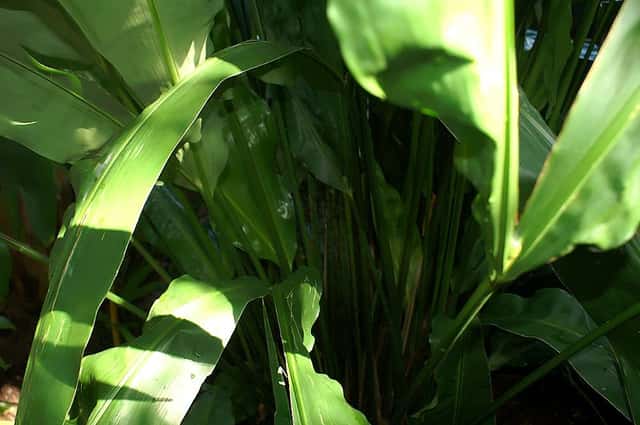
Cyclanthus bipartitus, known within its family as the "Panama hat plant" (Cyclanthaceae), is a stemless perennial herb native to humid tropical rainforests ranging from southern Mexico and Central America to Venezuela, the Guianas, Colombia, Ecuador, Peru, Bolivia, and northern Brazil. It typically grows along stream banks and in swampy understory areas, forming dense clumps. Its long leaves (50 to 100 cm or more) are deeply divided in half from the base, resembling a split fan or a fishtail—therefore, despite its palm-like appearance, it is not a true palm. It produces a spadix inflorescence with flowers arranged in discs, orange in color, with a fragrance reminiscent of a blend of cinnamon and vanilla; among Amazonian indigenous peoples, these flowers are used in body adornments.
How to Propagate Split-leaf Cyclanthus?
Clump Division
- Maintain extremely high humidity after division by using a clear plastic bag or a propagation dome over the plant to create a greenhouse effect.
- Avoid dividing outside of spring/summer when the plant is in active growth.
- 1 Plant Removal
Carefully remove the plant from the pot, preserving as much of the root system and rhizome as possible.
- 2 Rhizome Separation
Identify natural separation points on the rhizome and use a sterilized blade to divide the plant into sections, ensuring each part has healthy leaves and roots.
- 3 Repotting
Plant the divisions in new pots with substrate rich in organic matter and keep in a warm (above 68°F/20°C) and very humid location until established.
Materials needed:
Seeds
- Method rarely used commercially due to low germination rates and long waiting times; division is preferred.
- 1 Collection
Collect seeds from ripe fruits, as they lose viability quickly.
- 2 Sowing
Sow in a light substrate and keep constantly moist and warm in a shaded location.
Materials needed:
How Big Does Split-leaf Cyclanthus Grow?
TLDR: Split-leaf Cyclanthus can reach up to 2.5m tall with Medium growth rate.
Max height
2.5m
Spread
1.8m
Growth rate
Medium
Foliage
Evergreen
Plant Uses
Ornamental
Great for decoration
Medicinal
Medicinal properties
Medicinal Uses
- Traditional use in the treatment of snake bites
- Traditional use in the treatment of cataracts
Is your plant showing symptoms?
Click on the symptom to discover possible causes:
What Diseases Commonly Affect Split-leaf Cyclanthus?
TLDR: Split-leaf Cyclanthus is susceptible to 4 known diseases. Monitor regularly for early detection.
Root Rot
Root rot is a serious fungal disease that affects the root system of plants, causing them to decay and die. It is primarily caused by overwatering, poor drainage, or soil-borne fungi such as Pythium, Phytophthora, Rhizoctonia, and Fusarium. The disease thrives in waterlogged conditions where roots are deprived of oxygen, making them susceptible to fungal infection.
Scale Insects
Scale insects are small sap-sucking pests that appear as brown, shell-like bumps on plant stems and leaves. There are over 25 species, divided into armored (hard) and unarmored (soft) scales. They feed by piercing plant tissue and extracting sap, which weakens the plant and can lead to yellowing, stunted growth, and even death if left untreated. They also excrete honeydew, which attracts ants and promotes sooty mold growth.
Aphids
Aphids are small, soft-bodied, pear-shaped insects (1/16 to 1/8 inch long) that feed by sucking nutrient-rich sap from plants. They reproduce rapidly and can quickly weaken plants, causing distorted growth and transmitting plant viruses. Aphids come in various colors including green, black, red, yellow, brown, and gray. They secrete honeydew, a sticky substance that attracts ants and encourages sooty mold growth.
Spider Mites
Spider mites are tiny arachnids (less than 1/20 inch long) related to spiders and ticks that feed on plant sap. They thrive in hot, dry conditions and can cause significant damage to ornamental and vegetable plants. During severe infestations, crop losses can reach 14% or higher as these pests disrupt vital plant processes including photosynthesis, carbon dioxide absorption, and transpiration.
Meaning & Symbolism
Represents duality and harmony due to its unique leaf divided into two symmetrical lobes. Among Amazonian indigenous peoples, its fragrant flowers (scented between cinnamon and vanilla) are used in body adornments and rituals, associating the plant with celebration and connection to the forest.
Compare with similar plants
| Attribute | Difficulty | Light | Watering | Pet Safe |
|---|---|---|---|---|
| Dark Fieldcap | Medium | Low light | 2d | ⚠️ |
| Azalea | Medium | Partial shade | 3d | ⚠️ |
| Muriel's Bamboo | Medium | Partial shade | 3d | ✓ |
| Bougainvillea | Medium | Direct sun | 7d | ⚠️ |




