Fabaceae
Spotted Medick – Medicago arabica
Medicago arabica
Easy to grow annual, perfect as a cover crop or garden filler. Thrives in full sun with moderate watering and well-drained soil. Drought-tolerant once established; no heavy fertilization needed due to nitrogen fixation.
Every 7 days
Direct sun
5° - 28°C
40% - 60%
Categories
What is Spotted Medick?
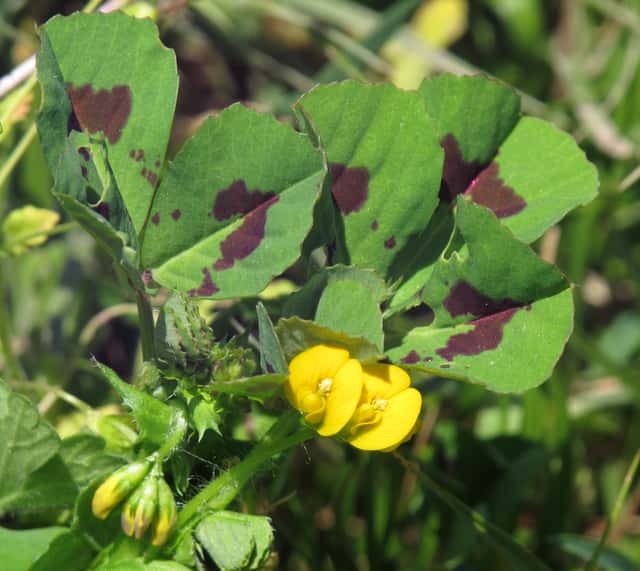
Spotted Medick (Medicago arabica) is a easy-care plant from the Fabaceae family. Spotted medick (Medicago arabica) is a sprawling annual herb in the legume family Fabaceae, native to the Mediterranean basin. It is easily recognized by its trifoliate leaves bearing dark purple spots and small yellow flowers that bloom from spring through summer. The plant plays an important ecolo...
Spotted Medick grows up to 60cm, spread of 80cm, watering every 7 days, 5°C – 28°C, 40–60% humidity. It is not suitable for indoor environments and safe for pets.
Unlike many tropical plants, Spotted Medick tolerates watering mistakes. Best for beginners. Unlike many popular species, Spotted Medick is safe to keep around pets.
How to Care for Spotted Medick?
TLDR: Spotted Medick needs Direct sun, watering every 7 days, and temperatures between 5-28°C with 40-60% humidity.
How Often Should You Water Spotted Medick?
Water every 7 days, allowing the topsoil to dry slightly between waterings. Overwatering can cause root rot — this plant is adapted to Mediterranean dry spells.
How Much Light Does Spotted Medick Need?
Requires full sun — at least 6 hours of direct sunlight per day. Insufficient light reduces flowering and causes weak, leggy growth.
What Is the Best Soil for Spotted Medick?
Prefers loamy, well-drained soil with a slightly acidic to neutral pH (6.0–7.5). Sandy and gravelly coastal soils are also suitable. Avoid waterlogged or compacted soils.
What Pot Should You Use for Spotted Medick?
Terracotta or ceramic pot with drainage holes; best grown in open garden beds.
Care Schedule
Fertilize
Every 30 days
What Is Spotted Medick and Where Does It Come From?
Spotted medick (Medicago arabica) is a sprawling annual herb in the legume family Fabaceae, native to the Mediterranean basin. It is easily recognized by its trifoliate leaves bearing dark purple spots and small yellow flowers that bloom from spring through summer. The plant plays an important ecological role by fixing atmospheric nitrogen through its symbiosis with Sinorhizobium medicae bacteria, making it a valuable cover crop and green manure plant.
How to Propagate Spotted Medick?
Direct Seeding
Sow in spring after last frost. Scarification or light soaking of seeds overnight speeds up germination. Avoid waterlogged soil during germination.
- 1 Prepare well-draining soil with neutral pH
- 2 Sow seeds shallowly on the moist soil surface
- 3 Keep soil lightly moist until germination
- 4 Scarify seeds to improve germination rate
Materials needed:
How Big Does Spotted Medick Grow?
TLDR: Spotted Medick can reach up to 60cm tall with Medium growth rate.
Max height
60cm
Spread
80cm
Growth rate
Medium
Foliage
Deciduous
Plant Uses
Ornamental
Great for decoration
Medicinal
Medicinal properties
Ground Cover
Soil coverage
Medicinal Uses
- Traditional use as a diuretic and expectorant
- Anti-inflammatory properties reported in Mediterranean folk medicine
- Rich in saponins with potential antimicrobial applications
Is your plant showing symptoms?
Click on the symptom to discover possible causes:
What Diseases Commonly Affect Spotted Medick?
TLDR: Spotted Medick is susceptible to 7 known diseases. Monitor regularly for early detection.
Anthracnose
Anthracnose is a fungal disease caused by fungi in the genus Colletotrichum that affects many plants, including vegetables, fruits, and trees. The disease thrives in cool, wet conditions, causing dark, sunken lesions on leaves, stems, flowers, and fruits.
White Mold
White mold (Sclerotinia sclerotiorum) is a devastating fungal disease affecting over 400 plant species worldwide. The fungus produces black, seed-like structures (sclerotia) that can survive in soil for 5 or more years. The disease is favored by cool, moist weather (50-68°F/10-20°C), especially during flowering.
Downy Mildew
Downy mildew is a fungal-like disease caused by oomycetes (water molds) that thrives in cool, wet conditions. It affects a wide range of plants, causing yellowing leaves with fuzzy white-gray growth underneath, leading to defoliation and reduced yields if left untreated.
Powdery Mildew
Powdery mildew is a common fungal disease caused by various fungi species including Erysiphe, Podosphaera, Oïdium, and Leveillula. It affects over 10,000 plant species worldwide. The disease thrives in warm, dry climates with high humidity and appears as a distinctive white powdery coating on plant surfaces.
Meaning & Symbolism
Symbol of resilience and soil renewal. The spotted leaves are associated with good fortune in Mediterranean folk traditions.
Fun Facts
Spotted medick fixes atmospheric nitrogen through its symbiosis with Sinorhizobium medicae bacteria, naturally fertilizing the soil.
The dark purple spots on its leaves are made of anthocyanins — the same pigment found in blueberries.
Despite being considered a weed in some regions, farmers prize it as a green manure crop to restore soil fertility.
Frequently asked questions
How often should I water Spotted Medick?
Is Spotted Medick toxic to pets?
When is the best time to sow Spotted Medick seeds?
Can Spotted Medick be grown in pots?
What are the benefits of Spotted Medick as a cover crop?
Compare with similar plants
| Attribute | Difficulty | Light | Watering | Pet Safe |
|---|---|---|---|---|
| Field Maple | Easy | Bright indirect | 14d | ✓ |
| Silver Birch | Easy | Direct sun | 14d | ✓ |
| Common Blanketflower | Easy | Direct sun | 10d | ✓ |
| Cushion Bush | Easy | Direct sun | 14d | ✓ |





