Amaryllidaceae
Sternbergia (Autumn Daffodil)
Sternbergia
An easy bulb for full sun and well-drained soil. Water in autumn and winter while it has leaves, and keep the bulb dry in summer. Plant about 12 cm deep in late summer and leave clumps undisturbed for several years.
Every 10 days
Bright indirect
-2° - °C
% - %
Categories
What is Sternbergia?
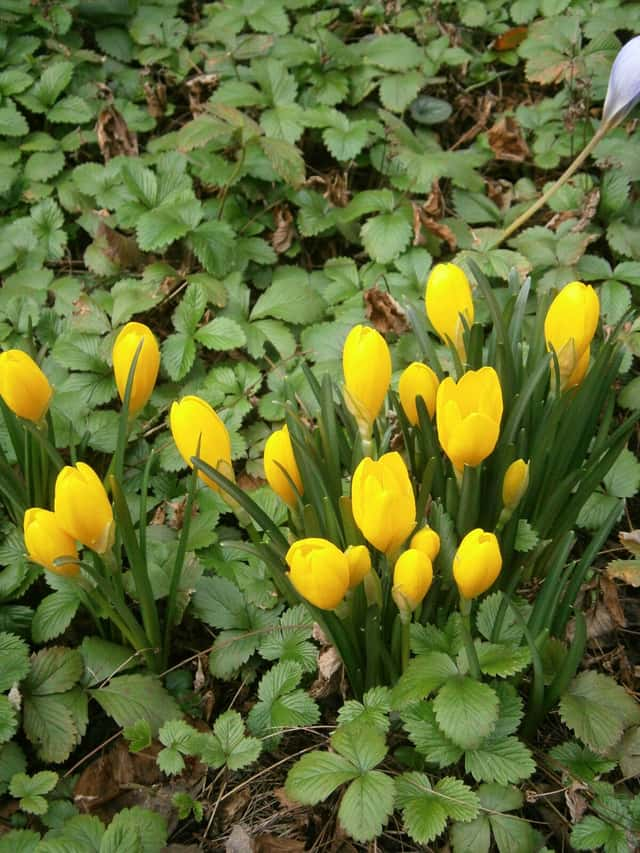
Sternbergia (Sternbergia) is a easy-care plant from the Amaryllidaceae family. Sternbergia is a genus of eight bulbous plants in the amaryllis family, from the Mediterranean to central and southwestern Asia, often in rocky places. The flowers look like crocuses, but the plants are relatives of daffodils. Most bear golden-yellow, goblet-shaped flowers in autumn, often right aft...
Sternbergia grows up to 20cm, spread of 15cm, watering every 10 days. It is not suitable for indoor environments and safe for pets.
Unlike many tropical plants, Sternbergia tolerates watering mistakes. Best for beginners. Unlike many popular species, Sternbergia is safe to keep around pets.
How to Care for Sternbergia?
TLDR: Sternbergia needs Bright indirect, watering every 10 days, and temperatures between -2-30°C with 40-70% humidity.
How Often Should You Water Sternbergia?
Water regularly from autumn to spring while the plant is in leaf, letting the soil dry a little between waterings. Once the leaves yellow, stop watering: the bulb needs a warm, dry summer to flower.
How Much Light Does Sternbergia Need?
Full sun, at least 6 hours a day. It tolerates part shade but flowers best in sun, ideally at the foot of a sunny, sheltered wall.
What Is the Best Soil for Sternbergia?
Gritty, sandy or rocky soil with good drainage. It tolerates clay that does not stay wet. For S. lutea, chalky or alkaline soil is recommended.
What Pot Should You Use for Sternbergia?
A deep pot with drainage holes and a mix with plenty of grit or coarse sand; about 5 bulbs per 15 cm pot.
What Is Sternbergia and Where Does It Come From?
Sternbergia is a genus of eight bulbous plants in the amaryllis family, from the Mediterranean to central and southwestern Asia, often in rocky places. The flowers look like crocuses, but the plants are relatives of daffodils. Most bear golden-yellow, goblet-shaped flowers in autumn, often right after the first rains; S. vernalis and S. candida bloom in spring, and S. candida is the only white one. The narrow leaves appear with or soon after the flowers, last through winter and die down in spring; in summer the bulb rests dry. The most widely grown is S. lutea. All trade in the genus is regulated by CITES.
How to Propagate Sternbergia?
Bulb division
This is the preferred method: it is faster and gives an identical plant.
- 1 Let the clump build up for about 4 years
- 2 In late summer, while the bulb is dormant, lift the clump
- 3 Gently separate the offsets
- 4 Replant about 12 cm deep and 10-15 cm apart
Materials needed:
Seed
It can take up to 6 years from seed to first flower.
- 1 Collect ripe seed in spring
- 2 Sow in a pot of gritty mix
- 3 Keep moist in winter and dry in summer
- 4 Plant out the small bulbs after a few years
Materials needed:
How Big Does Sternbergia Grow?
TLDR: Sternbergia can reach up to 20cm tall with Slow growth rate.
Max height
20cm
Spread
15cm
Growth rate
Slow
Foliage
Deciduous
Plant Uses
Ornamental
Great for decoration
Is your plant showing symptoms?
Click on the symptom to discover possible causes:
What Diseases Commonly Affect Sternbergia?
TLDR: Sternbergia is susceptible to 3 known diseases. Monitor regularly for early detection.
Slugs and Snails
Slugs and snails are mollusks that feed on plant tissue, causing irregular holes in leaves and damage to young seedlings. They are most active at night and in moist conditions, leaving characteristic silvery slime trails. These pests can quickly devastate gardens, especially during wet seasons.
Viruses
Viral diseases are infectious conditions caused by tiny intracellular parasites that require host cells to survive. Viruses are typically transmitted to plants by insects and mites. Some viruses are severe plant pathogens, such as Rose Rosette Virus or Tobacco Rattle Virus.
Root-Knot Nematodes
Root-knot nematodes (Meloidogyne species) are microscopic roundworms that parasitize plant roots, causing characteristic galls or knots. These soil-borne pests are among the most economically damaging plant pathogens worldwide, affecting a wide range of ornamental and edible plants. The nematodes inject enzymes into root cells, causing abnormal swelling and disrupting water and nutrient uptake.
Fun Facts
The genus is named after the botanist Kaspar Maria von Sternberg.
All trade in Sternbergia is regulated by CITES, the convention on endangered species.
S. lutea has been grown in gardens for several hundred years.
Frequently asked questions
When should I plant Sternbergia bulbs?
Why is my Sternbergia not flowering?
Is Sternbergia a crocus?
Is Sternbergia poisonous?
Compare with similar plants
| Attribute | Difficulty | Light | Watering | Pet Safe |
|---|---|---|---|---|
| Field Maple | Easy | Bright indirect | 14d | ✓ |
| Iberian Houseleek | Easy | Direct sun | 14d | ✓ |
| Silver Birch | Easy | Direct sun | 14d | ✓ |
| Common Blanketflower | Easy | Direct sun | 10d | ✓ |





