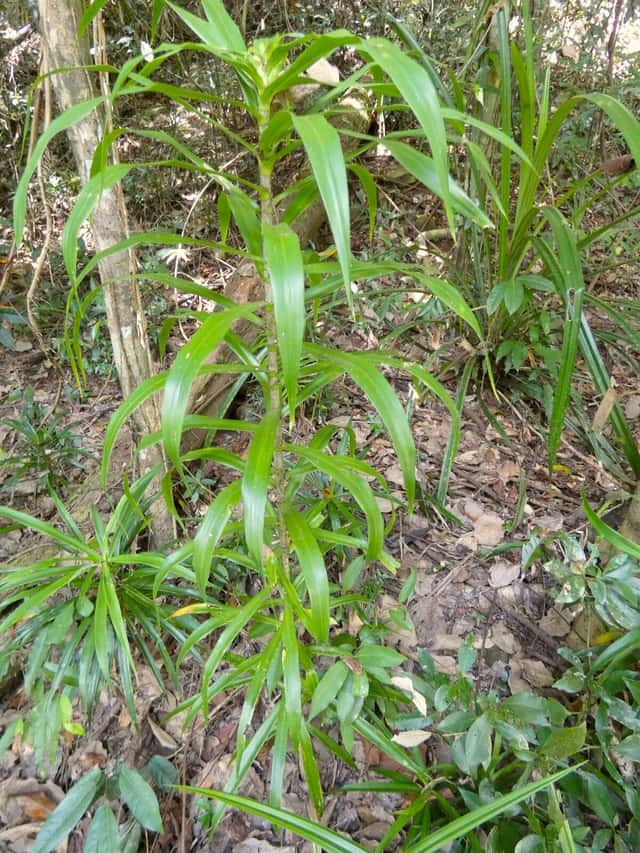
Asparagaceae
Suji (Dracaena angustifolia)
Dracaena angustifolia
An easy plant for indoors or a tropical garden. Give it bright, indirect light; it tolerates partial shade, but strong sun scorches the leaves. Water when the top third of the pot is dry and never leave water in the saucer. It prefers 18 to 27 °C and suffers below 13 °C. Feed at half strength every 4 to 6 weeks in spring and summer. It roots easily from stem cuttings.
Every 10 days
Partial shade
13° - 30°C
40% - 60%
Categories
What is Suji?
Suji (Dracaena angustifolia) is a easy-care plant from the Asparagaceae family. Dracaena angustifolia is an evergreen shrub in the Asparagaceae family, native to the understorey of tropical Asian forests, from India and Bangladesh through Indo-China, southern China, Indonesia, the Philippines and New Guinea to northern Australia. It has slender, sparsely branched stems 1 to 3 m...
Suji grows up to 3.0m, watering every 10 days, 13°C – 30°C, 40–60% humidity. It is suitable for indoor environments and not safe for pets.
Unlike many tropical plants, Suji tolerates watering mistakes. Best for beginners. Without precautions, ingestion can cause irritation in pets. Keep out of reach of cats and dogs. Without adequate drainage, root rot can develop within 20 days.
How to Care for Suji?
TLDR: Suji needs Partial shade, watering every 10 days, and temperatures between 13-30°C with 40-60% humidity.
How Often Should You Water Suji?
Water thoroughly when the top third of the soil is dry, about every 7 to 14 days in warm months and every 2 to 3 weeks in winter. It is sensitive to fluoride and chlorine, so use filtered water, rainwater, or tap water left to stand overnight.
How Much Light Does Suji Need?
Bright, indirect light is ideal. It tolerates medium light and a shadier corner but grows more slowly there. Avoid strong direct sun, which scorches the leaves.
What Is the Best Soil for Suji?
Use a well-draining potting mix with 20 to 30% perlite or coarse sand, pH 6.0 to 6.5. The pot must have drainage holes.
What Pot Should You Use for Suji?
Pot with drainage holes, slightly larger than the root ball; repot every 2 years or when roots come out of the holes.
Care Schedule
Fertilize
Every 42 days
Repot
Every 730 days
What Is Suji and Where Does It Come From?
Dracaena angustifolia is an evergreen shrub in the Asparagaceae family, native to the understorey of tropical Asian forests, from India and Bangladesh through Indo-China, southern China, Indonesia, the Philippines and New Guinea to northern Australia. It has slender, sparsely branched stems 1 to 3 m tall and narrow, sword-shaped, dark green leaves 15 to 45 cm long. Small greenish-white to yellowish flowers come in branched clusters at the stem tips, followed by round orange berries. In Indonesia the leaves are called suji and are used to color cakes, desserts and drinks green, often together with pandan. It is a different plant from Dracaena marginata (Dracaena reflexa var. angustifolia).
How to Propagate Suji?
Stem cutting
Keep the cutting the right way up, as it grew on the plant. The mother plant will sprout again below the cut.
- 1 Cut a 10 to 15 cm piece of stem
- 2 Let the cut end dry for a few hours
- 3 Place it in water or moist perlite and peat
- 4 Keep it in bright, indirect light above 21 °C
- 5 Pot it up once the roots are a few centimeters long
Materials needed:
How Big Does Suji Grow?
TLDR: Suji can reach up to 3.0m tall with Medium growth rate.
Max height
3.0m
Foliage
Evergreen
Warning: Toxic Plant
This plant can be toxic if ingested. Keep out of reach of:
Plant Uses
Ornamental
Great for decoration
Edible
Can be consumed
Medicinal
Medicinal properties
Medicinal Uses
- In Southeast Asian folk medicine, a root decoction is used as a tonic and for gonorrhea, and the leaves for asthma, beriberi and hair growth; efficacy not proven.
Culinary Uses
- The leaves (suji) are blended or boiled to extract a green juice that colors cakes, puddings, rice dishes and drinks, usually with pandan.
- Young shoots are eaten cooked as a vegetable in parts of Indonesia.
Is your plant showing symptoms?
Click on the symptom to discover possible causes:
What Diseases Commonly Affect Suji?
TLDR: Suji is susceptible to 6 known diseases. Monitor regularly for early detection.
Root Rot
Root rot is a serious fungal disease that affects the root system of plants, causing them to decay and die. It is primarily caused by overwatering, poor drainage, or soil-borne fungi such as Pythium, Phytophthora, Rhizoctonia, and Fusarium. The disease thrives in waterlogged conditions where roots are deprived of oxygen, making them susceptible to fungal infection.
Leaf Spot
Leaf spot is a common fungal disease caused by various pathogens including Alternaria, Ascochyta, Colletotrichum, Septoria, and Venturia. It primarily affects leaves, causing discolored spots that can lead to premature leaf drop if left untreated.
Bacterial Soft Rot
Bacterial soft rot is a destructive plant disease caused primarily by bacteria from the genera Pectobacterium (formerly Erwinia) and Dickeya. These bacteria produce enzymes that break down plant cell walls, causing rapid and foul-smelling tissue decomposition. It mainly affects succulent tissues such as tubers, fruits, stems, and bulbs, being especially problematic in warm and humid conditions.
Spider Mites
Spider mites are tiny arachnids (less than 1/20 inch long) related to spiders and ticks that feed on plant sap. They thrive in hot, dry conditions and can cause significant damage to ornamental and vegetable plants. During severe infestations, crop losses can reach 14% or higher as these pests disrupt vital plant processes including photosynthesis, carbon dioxide absorption, and transpiration.
Fun Facts
In Indonesia, the leaf juice has been used for centuries to dye desserts green and also batik fabrics.
The leaves are rich in chlorophyll, which is what gives the coloring its green.
In the wild it forms shrubs over 3 m tall in the forest understorey.
Frequently asked questions
Is Dracaena angustifolia the same as Dracaena marginata?
Is it toxic to cats and dogs?
How often should I water it?
Why are the leaf tips turning brown?
Compare with similar plants
| Attribute | Difficulty | Light | Watering | Pet Safe |
|---|---|---|---|---|
| Field Maple | Easy | Bright indirect | 14d | ✓ |
| Iberian Houseleek | Easy | Direct sun | 14d | ✓ |
| Silver Birch | Easy | Direct sun | 14d | ✓ |
| Common Blanketflower | Easy | Direct sun | 10d | ✓ |





