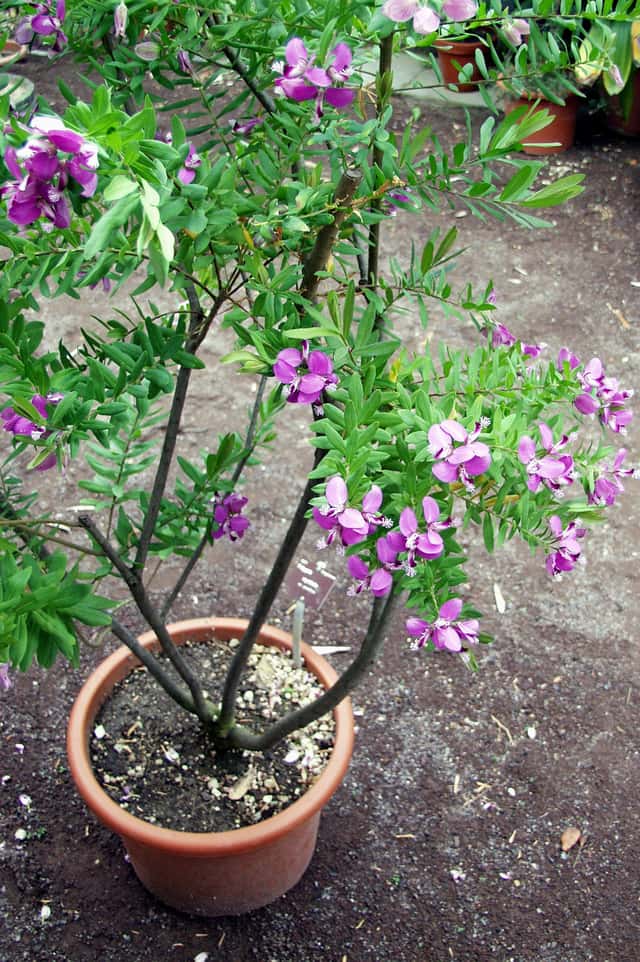
Polygalaceae
Sweet Pea Bush (Polygala myrtifolia)
Polygala myrtifolia
A tough, low-maintenance outdoor shrub. Prefers full sun, well-draining soils, and moderate watering — highly drought-tolerant once established. Ideal for coastal gardens, hedges, and container growing on terraces.
Every 5 days
Bright indirect
-5° - 35°C
40% - 70%
Categories
What is Sweet Pea Bush?
Sweet Pea Bush (Polygala myrtifolia) is a easy-care plant from the Polygalaceae family. Polygala myrtifolia, commonly known as Sweet Pea Bush or Myrtle-leaf Milkwort, is an evergreen shrub native to South Africa. It produces prolific butterfly-shaped flowers in shades of purple, mauve, and pink throughout almost the entire year, making it one of the most ornamental low-maintenance shru...
Sweet Pea Bush grows up to 3.0m, spread of 200cm, watering every 5 days, -5°C – 35°C, 40–70% humidity. It is suitable for indoor environments and safe for pets.
Unlike many tropical plants, Sweet Pea Bush tolerates watering mistakes. Best for beginners. Unlike many popular species, Sweet Pea Bush is safe to keep around pets. Without adequate drainage, root rot can develop within 10 days.
How to Care for Sweet Pea Bush?
TLDR: Sweet Pea Bush needs Bright indirect, watering every 5 days, and temperatures between -5-35°C with 40-70% humidity.
How Often Should You Water Sweet Pea Bush?
Water every 5 days during hot periods. Once established, the plant is highly drought-tolerant — reduce watering significantly and only irrigate when the top 2 inches of soil are completely dry.
How Much Light Does Sweet Pea Bush Need?
Requires full sun (minimum 4–6 hours daily) to bloom abundantly. Tolerates partial shade but flowering will be reduced significantly.
What Is the Best Soil for Sweet Pea Bush?
Use well-draining, light, and fertile soil. Mix general-purpose compost with perlite or coarse sand for improved drainage. Tolerates slightly acidic to neutral pH (6.0–7.5).
What Pot Should You Use for Sweet Pea Bush?
Terracotta or ceramic pots with drainage holes work best. In garden beds, no container is needed.
Care Schedule
Fertilize
Every 21 days
What Is Sweet Pea Bush and Where Does It Come From?
Polygala myrtifolia, commonly known as Sweet Pea Bush or Myrtle-leaf Milkwort, is an evergreen shrub native to South Africa. It produces prolific butterfly-shaped flowers in shades of purple, mauve, and pink throughout almost the entire year, making it one of the most ornamental low-maintenance shrubs for gardens, patios, and coastal landscapes. It belongs to the family Polygalaceae and is a fast-growing species.
How to Propagate Sweet Pea Bush?
Semi-hardwood Cutting
Use clean, sterilised tools. Keep substrate lightly moist without waterlogging. Autumn cuttings have the highest success rate.
- 1 Take a semi-hardwood cutting 10–15 cm long in late summer or autumn
- 2 Remove leaves from the lower half
- 3 Dip the base in rooting hormone
- 4 Plant in well-draining, moist substrate
- 5 Keep in bright indirect light until rooted
Materials needed:
Seed
Use fresh seeds for best germination rates. Cover lightly and maintain consistent moisture.
- 1 Sow seeds in spring in moist substrate at 2 mm depth
- 2 Keep in a warm environment (20–22°C)
- 3 Germination occurs in 2–3 weeks
- 4 Transplant to final pot once 2–3 leaf pairs have developed
Materials needed:
How Big Does Sweet Pea Bush Grow?
TLDR: Sweet Pea Bush can reach up to 3.0m tall with Fast growth rate.
Max height
3.0m
Spread
2.0m
Growth rate
Fast
Foliage
Evergreen
Plant Uses
Ornamental
Great for decoration
Is your plant showing symptoms?
Click on the symptom to discover possible causes:
What Diseases Commonly Affect Sweet Pea Bush?
TLDR: Sweet Pea Bush is susceptible to 6 known diseases. Monitor regularly for early detection.
Aphids
Aphids are small, soft-bodied, pear-shaped insects (1/16 to 1/8 inch long) that feed by sucking nutrient-rich sap from plants. They reproduce rapidly and can quickly weaken plants, causing distorted growth and transmitting plant viruses. Aphids come in various colors including green, black, red, yellow, brown, and gray. They secrete honeydew, a sticky substance that attracts ants and encourages sooty mold growth.
Mealybugs
Mealybugs are small, soft-bodied insects covered with a white, waxy, cottony material. They are common pests of houseplants and outdoor plants in mild climates. These sap-sucking insects feed on plant tissue, causing damage, stunted growth, and can lead to plant death if left untreated. They produce sticky honeydew which attracts sooty mold.
Spider Mites
Spider mites are tiny arachnids (less than 1/20 inch long) related to spiders and ticks that feed on plant sap. They thrive in hot, dry conditions and can cause significant damage to ornamental and vegetable plants. During severe infestations, crop losses can reach 14% or higher as these pests disrupt vital plant processes including photosynthesis, carbon dioxide absorption, and transpiration.
Powdery Mildew
Powdery mildew is a common fungal disease caused by various fungi species including Erysiphe, Podosphaera, Oïdium, and Leveillula. It affects over 10,000 plant species worldwide. The disease thrives in warm, dry climates with high humidity and appears as a distinctive white powdery coating on plant surfaces.
Fun Facts
Sweet Pea Bush blooms almost year-round in mild climates, providing a continuous display of colour in the garden.
It is a pioneer species that can grow 1–1.5 m per year under ideal conditions.
The butterfly-shaped flowers are highly attractive to pollinators such as bees and butterflies.
Native to the Western Cape of South Africa, it has been introduced worldwide as an ornamental plant.
Frequently asked questions
How often should I water Sweet Pea Bush?
Is Sweet Pea Bush toxic to pets?
How much sun does Sweet Pea Bush need?
How do I encourage more blooms?
Can Sweet Pea Bush grow in a pot?
Compare with similar plants
| Attribute | Difficulty | Light | Watering | Pet Safe |
|---|---|---|---|---|
| Field Maple | Easy | Bright indirect | 14d | ✓ |
| Silver Birch | Easy | Direct sun | 14d | ✓ |
| Common Blanketflower | Easy | Direct sun | 10d | ✓ |
| Cushion Bush | Easy | Direct sun | 14d | ✓ |





