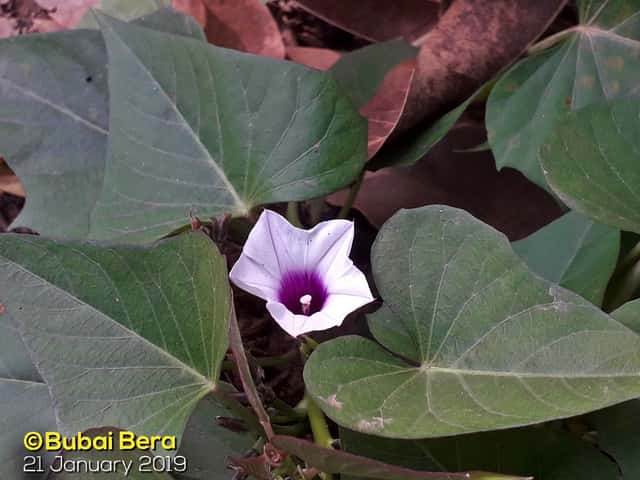
Convolvulaceae
Sweet Potato: How to Grow and Care for Ipomoea batatas
Ipomoea batatas
Easy-to-grow plant that thrives in full sun and well-drained soil. Water every 3-5 days, allowing the top inch of soil to dry between waterings. Fertilize monthly during the growing season. Prune excessive vines to encourage tuber production. Not frost-tolerant.
Every 4 days
Direct sun
15° - 35°C
30% - 50%
Categories
What is Sweet Potato?
Sweet Potato (Ipomoea batatas) is a easy-care plant from the Convolvulaceae family. Sweet potato (Ipomoea batatas) is a vigorous trailing vine native to Central and South America, cultivated for over 5,000 years. It is prized both for its edible tuberous roots and its ornamental foliage, which comes in shades of lime green, deep purple, and bronze. One of the world's most important...
Sweet Potato grows up to 30cm, spread of 300cm, watering every 4 days, 15°C – 35°C, 30–50% humidity. It is not suitable for indoor environments and safe for pets.
Unlike many tropical plants, Sweet Potato tolerates watering mistakes. Best for beginners. Unlike many popular species, Sweet Potato is safe to keep around pets.
How to Care for Sweet Potato?
TLDR: Sweet Potato needs Direct sun, watering every 4 days, and temperatures between 15-35°C with 30-50% humidity.
How Often Should You Water Sweet Potato?
Water deeply every 3-5 days. Check that the top inch of soil is dry before watering again. Avoid waterlogging, which can cause root rot. During hot summers, more frequent watering may be needed.
How Much Light Does Sweet Potato Need?
Requires full sun — at least 6 hours of direct sunlight per day. The more light it receives, the more vigorous the growth and tuber production. Tolerates partial shade but with reduced yield.
What Is the Best Soil for Sweet Potato?
Prefers loose, well-draining, nutrient-rich soil. Ideal pH between 5.0 and 6.5. Avoid heavy clay soils that retain excess moisture, as this promotes tuber rot.
What Pot Should You Use for Sweet Potato?
Large, shallow container or raised bed (minimum 12 inches deep). Clay or sturdy plastic pots with drainage holes work well. For ornamental use, hanging baskets or long window boxes showcase the trailing foliage beautifully.
Care Schedule
Fertilize
Every 30 days
What Is Sweet Potato and Where Does It Come From?
Sweet potato (Ipomoea batatas) is a vigorous trailing vine native to Central and South America, cultivated for over 5,000 years. It is prized both for its edible tuberous roots and its ornamental foliage, which comes in shades of lime green, deep purple, and bronze. One of the world's most important food crops, it thrives in warm climates and adapts well to gardens, raised beds, and large containers.
How to Propagate Sweet Potato?
Stem Cutting
Use young, vigorous stems. Change water every 2-3 days when rooting in water. Soil rooting tends to produce stronger plants.
- 1 Cut a healthy stem 6-8 inches long
- 2 Remove leaves from the lower half of the stem
- 3 Place in water or insert into moist soil mix
- 4 Keep in a warm, bright location
- 5 Transplant once roots are established
Materials needed:
Tuber Division
Choose disease-free, high-quality tubers. This is the most common method for food production.
- 1 Select a healthy, firm tuber
- 2 Cut into sections with at least 1-2 buds each
- 3 Allow to cure for 1-2 days to form a callus
- 4 Plant 2-3 inches deep in prepared soil
- 5 Water lightly until sprouting
Materials needed:
How Big Does Sweet Potato Grow?
TLDR: Sweet Potato can reach up to 30cm tall with Fast growth rate.
Max height
30cm
Spread
3.0m
Growth rate
Fast
Foliage
Semi-evergreen
Plant Uses
Edible
Can be consumed
Ornamental
Great for decoration
Ground Cover
Soil coverage
Medicinal Uses
- Traditional use as antioxidant and anti-inflammatory in folk medicine of the Americas
Culinary Uses
- Roasted, boiled, fried, or mashed tubers
- Young leaves sautéed as greens
- Sweet potato flour for baked goods
- Sweet potato chips
- Candied sweet potato
Is your plant showing symptoms?
Click on the symptom to discover possible causes:
What Diseases Commonly Affect Sweet Potato?
TLDR: Sweet Potato is susceptible to 6 known diseases. Monitor regularly for early detection.
Root Rot
Root rot is a serious fungal disease that affects the root system of plants, causing them to decay and die. It is primarily caused by overwatering, poor drainage, or soil-borne fungi such as Pythium, Phytophthora, Rhizoctonia, and Fusarium. The disease thrives in waterlogged conditions where roots are deprived of oxygen, making them susceptible to fungal infection.
Powdery Mildew
Powdery mildew is a common fungal disease caused by various fungi species including Erysiphe, Podosphaera, Oïdium, and Leveillula. It affects over 10,000 plant species worldwide. The disease thrives in warm, dry climates with high humidity and appears as a distinctive white powdery coating on plant surfaces.
Spider Mites
Spider mites are tiny arachnids (less than 1/20 inch long) related to spiders and ticks that feed on plant sap. They thrive in hot, dry conditions and can cause significant damage to ornamental and vegetable plants. During severe infestations, crop losses can reach 14% or higher as these pests disrupt vital plant processes including photosynthesis, carbon dioxide absorption, and transpiration.
Aphids
Aphids are small, soft-bodied, pear-shaped insects (1/16 to 1/8 inch long) that feed by sucking nutrient-rich sap from plants. They reproduce rapidly and can quickly weaken plants, causing distorted growth and transmitting plant viruses. Aphids come in various colors including green, black, red, yellow, brown, and gray. They secrete honeydew, a sticky substance that attracts ants and encourages sooty mold growth.
Meaning & Symbolism
Symbol of abundance, fertility, and nourishment. In indigenous cultures of the Americas, the sweet potato represents the generosity of the earth and connection to nature's cycles.
Fun Facts
Sweet potato has been cultivated in the Americas for over 5,000 years
Despite the similar name, sweet potato and regular potato (Solanum tuberosum) are not botanically related
Ornamental sweet potato vine varieties rarely produce significant edible tubers
Japan is one of the world's largest sweet potato consumers, featuring it in traditional sweets and snacks
Frequently asked questions
How often should I water sweet potato?
Does sweet potato need a lot of sun?
Is sweet potato toxic to pets?
When should I harvest sweet potatoes?
How do I prevent root rot in sweet potato?
Compare with similar plants
| Attribute | Difficulty | Light | Watering | Pet Safe |
|---|---|---|---|---|
| Field Maple | Easy | Bright indirect | 14d | ✓ |
| Silver Birch | Easy | Direct sun | 14d | ✓ |
| Common Blanketflower | Easy | Direct sun | 10d | ✓ |
| Cushion Bush | Easy | Direct sun | 14d | ✓ |





