Orchidaceae
Jewel orchid (Anoectochilus formosanus)
Anoectochilus formosanus
A delicate orchid that does best in a terrarium. It wants shade, 70-90% humidity, 18-24 °C and a mix that stays lightly moist but never soggy. It does not tolerate direct sun, dry air or temperatures below 15 °C.
Every 4 days
Low light
15° - 26°C
70% - 90%
Categories
What is Jewel orchid?
Jewel orchid (Anoectochilus formosanus) is a hard-care plant from the Orchidaceae family. Anoectochilus formosanus is a small terrestrial orchid from Taiwan, also recorded in the Ryukyu Islands of southern Japan. It grows on the shady floor of humid broad-leaved and bamboo forests at 500 to 1,500 m. Unlike most orchids it is grown for its leaves: 2 to 4 oval leaves, 2 to 5 cm long, dark...
Jewel orchid grows up to 20cm, spread of 15cm, watering every 4 days, 15°C – 26°C, 70–90% humidity. It is suitable for indoor environments and safe for pets.
Unlike easy-care plants, Jewel orchid demands constant attention to humidity and light. Not recommended for beginners. Unlike many popular species, Jewel orchid is safe to keep around pets. Without adequate drainage, root rot can develop within 8 days.
How to Care for Jewel orchid?
TLDR: Jewel orchid needs Low light, watering every 4 days, and temperatures between 15-26°C with 70-90% humidity.
How Often Should You Water Jewel orchid?
Water when the surface of the mix starts to dry, usually every 3 or 4 days, with demineralised, rain or filtered water. Do not let it dry out completely, but never leave water standing around the roots: the stem rots easily.
How Much Light Does Jewel orchid Need?
Low to medium filtered light. A spot away from the window or LED light in a terrarium works well. Direct sun burns the leaves.
What Is the Best Soil for Jewel orchid?
A light, moisture-holding mix: chopped sphagnum moss, leaf compost and a little fine bark.
What Pot Should You Use for Jewel orchid?
A small, shallow plastic pot with drainage holes, or a closed terrarium with some ventilation, to keep humidity high.
Care Schedule
Fertilize
Every 30 days
Repot
Every 730 days
What Is Jewel orchid and Where Does It Come From?
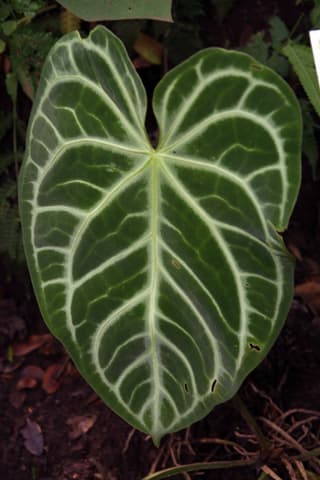
Anoectochilus formosanus is a small terrestrial orchid from Taiwan, also recorded in the Ryukyu Islands of southern Japan. It grows on the shady floor of humid broad-leaved and bamboo forests at 500 to 1,500 m. Unlike most orchids it is grown for its leaves: 2 to 4 oval leaves, 2 to 5 cm long, dark green and velvety, with a network of white or golden veins and a purplish underside. The whole plant is 11 to 20 cm tall. In autumn it sends up a reddish stalk with 3 to 5 small flowers, with white petals and a pale yellowish-white lip. In Taiwan it is a prized medicinal herb taken as tea, and wild collecting has badly depleted wild populations; plants on sale now come from tissue culture.
How to Propagate Jewel orchid?
Stem cutting
Use clean tools and fresh sphagnum to avoid stem rot. Keep it moist, not wet.
- 1 Cut a piece of the creeping stem with at least 2 nodes
- 2 Lay the cutting on damp sphagnum with the nodes touching the moss
- 3 Keep it in a terrarium or closed container with high humidity and low light
- 4 Wait for roots to form at the nodes before potting it up
Materials needed:
How Big Does Jewel orchid Grow?
TLDR: Jewel orchid can reach up to 20cm tall with Slow growth rate.
Max height
20cm
Spread
15cm
Growth rate
Slow
Foliage
Evergreen
Plant Uses
Ornamental
Great for decoration
Medicinal
Medicinal properties
Medicinal Uses
- In Taiwanese folk medicine the whole plant is taken as a tea (kim-soan-lian)
Is your plant showing symptoms?
Click on the symptom to discover possible causes:
What Diseases Commonly Affect Jewel orchid?
TLDR: Jewel orchid is susceptible to 7 known diseases. Monitor regularly for early detection.
Fusarium Wilt
Fusarium is a soil-borne fungus that primarily attacks the roots and vascular tissues of plants. It enters through small wounds or stressed roots, is favored by warm temperatures and waterlogging, and then obstructs the flow of sap. Symptoms include yellowing, often on only one side of the plant, wilting even with moist soil, stunted growth, and, when cutting the stem, internal brown streaks. It frequently affects tomatoes, peppers, eggplants, basil, cucumbers, and zucchini, as well as ornamentals like carnations and cyclamen. In potted plants, it can manifest as root rot with a darkened crown.
Root Rot
Root rot is a serious fungal disease that affects the root system of plants, causing them to decay and die. It is primarily caused by overwatering, poor drainage, or soil-borne fungi such as Pythium, Phytophthora, Rhizoctonia, and Fusarium. The disease thrives in waterlogged conditions where roots are deprived of oxygen, making them susceptible to fungal infection.
Crown Rot
Crown rot is a serious fungal disease that attacks the crown (base) of the plant where the stem meets the soil. It is caused by various fungal pathogens including Phytophthora, Fusarium, and Rhizoctonia. The disease thrives in waterlogged conditions and can quickly spread to kill the entire plant if not addressed promptly.
Spider Mites
Spider mites are tiny arachnids (less than 1/20 inch long) related to spiders and ticks that feed on plant sap. They thrive in hot, dry conditions and can cause significant damage to ornamental and vegetable plants. During severe infestations, crop losses can reach 14% or higher as these pests disrupt vital plant processes including photosynthesis, carbon dioxide absorption, and transpiration.
Fun Facts
In Taiwan the dried plant is sold as a medicinal herb and has fetched more than 300 US dollars per kilogram.
Unlike most orchids, it is grown for its leaves rather than its flowers.
In the wild its seeds only germinate with help from soil fungi.
Frequently asked questions
Does a jewel orchid need a terrarium?
How much sun can a jewel orchid take?
Why did my jewel orchid's stem rot?
Compare with similar plants
| Attribute | Difficulty | Light | Watering | Pet Safe |
|---|---|---|---|---|
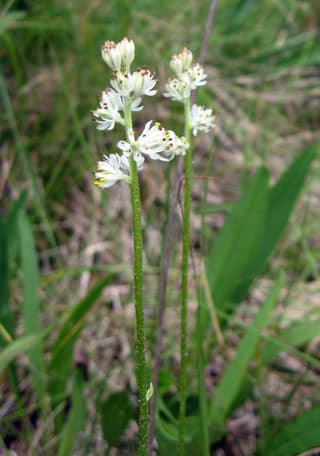
| Sticky false asphodel | Hard | Bright indirect | 1d | ✓ |
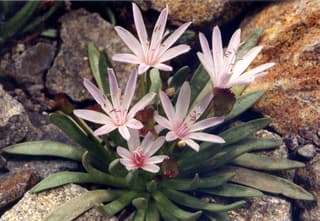
| Truckee lewisia | Hard | Bright indirect | 10d | ✓ |
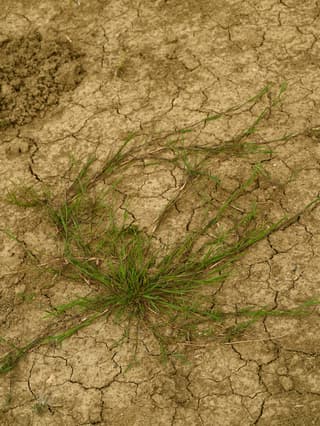
| Creeping bentgrass | Hard | Direct sun | 3d | ✓ |
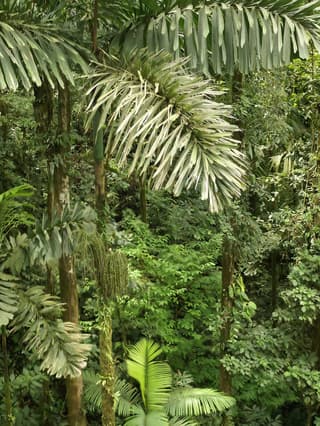
| Walking Palm | Hard | Bright indirect | 3d | ✓ |
Choose & Compare
Sources & References
- Flora of Chinese Orchids - Anoectochilus formosanus
- Orchideeen-shop - Anoectochilus formosanus (care)
- Orchids Limited - Anoectochilus formosanus jewel orchid
- Mycorrhiza (2014) - Rhizoctonia mycorrhizae of Anoectochilus formosanus
- Taiwan plant database - Anoectochilus formosanus (台灣金線蓮)
- Plant Pathology 2014 - Stem rot of jewel orchid, Fusarium oxysporum f. sp. anoectochili