Orchidaceae
Tall Oncidium (Oncidium altissimum): Complete Care Guide
Oncidium altissimum
Medium difficulty. Provide bright indirect light (4–6 hours filtered sun), water weekly allowing medium to nearly dry between waterings, maintain 50–75% humidity, and fertilize every 14 days during active growth. Ensure excellent drainage at all times.
Every 7 days
Bright indirect
13° - 32°C
50% - 75%
Categories
What is Tall Oncidium?
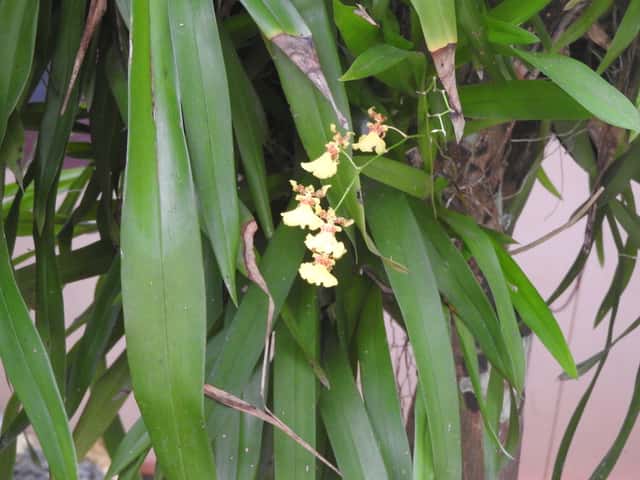
Tall Oncidium (Oncidium altissimum) is a medium-care plant from the Orchidaceae family. Oncidium altissimum is a large epiphytic orchid native to the Caribbean islands of Cuba, Hispaniola, Puerto Rico, and the Lesser Antilles. It produces dramatically tall, branching flower spikes reaching 5–6 feet (150–180 cm) in length, adorned with hundreds of small yellow and brown flowers. This ma...
Tall Oncidium grows up to 1.8m, spread of 60cm, watering every 7 days, 13°C – 32°C, 50–75% humidity. It is suitable for indoor environments and not safe for pets.
Without precautions, ingestion can cause irritation in pets. Keep out of reach of cats and dogs. Without adequate drainage, root rot can develop within 14 days.
How to Care for Tall Oncidium?
TLDR: Tall Oncidium needs Bright indirect, watering every 7 days, and temperatures between 13-32°C with 50-75% humidity.
How Often Should You Water Tall Oncidium?
Water thoroughly every 7 days in summer (10–12 days in winter), using filtered or rainwater at room temperature. Allow the potting medium to almost dry out between waterings — soggy roots lead to root rot. Immerse the pot until fully saturated, then drain completely.
How Much Light Does Tall Oncidium Need?
Bright, indirect light is ideal — equivalent to 4–6 hours of filtered sunlight. East- or west-facing windows work best indoors. Avoid direct midday sun which can scorch the leaves. Good light is essential for flowering.
What Is the Best Soil for Tall Oncidium?
Use a specialized epiphytic orchid mix: medium-grade pine bark (60%), activated charcoal (20%), and sphagnum moss (20%). Excellent drainage and aeration are critical. Can also be grown mounted on cork bark or tree fern slabs.
What Pot Should You Use for Tall Oncidium?
Clay or terracotta pot with generous drainage holes, or a wire basket for epiphytic culture. Moderate size — orchids bloom best when slightly pot-bound. Avoid oversized pots that retain too much moisture.
Care Schedule
Fertilize
Every 14 days
Misting
Every 2 days
Rotate
Every 30 days
Repot
Every 730 days
What Is Tall Oncidium and Where Does It Come From?
Oncidium altissimum is a large epiphytic orchid native to the Caribbean islands of Cuba, Hispaniola, Puerto Rico, and the Lesser Antilles. It produces dramatically tall, branching flower spikes reaching 5–6 feet (150–180 cm) in length, adorned with hundreds of small yellow and brown flowers. This majestic species blooms in spring and fall, making it a spectacular addition to any orchid collection. Like all epiphytes, it thrives when its roots can breathe freely in well-draining bark-based media.
How to Propagate Tall Oncidium?
Clump Division
Divide only when the plant has sufficient pseudobulbs (6+). Avoid dividing during active flowering or when new growth is emerging.
- 1 Remove the plant from its pot carefully after flowering
- 2 Separate pseudobulbs with a sterilized cutting tool, keeping at least 3 per division
- 3 Dust cut surfaces with cinnamon powder or fungicide
- 4 Repot each division in fresh orchid mix and keep lightly moist for 2–4 weeks
Materials needed:
Seed Propagation
Orchid seed propagation requires laboratory conditions. Recommended only for advanced growers with access to sterile lab equipment.
- 1 Collect mature seeds from an open seed capsule
- 2 Sow on sterile culture medium (Knudson protocol)
- 3 Maintain in controlled environment with adequate light and humidity
- 4 Transplant seedlings to orchid medium after 6–12 months
Materials needed:
How Big Does Tall Oncidium Grow?
TLDR: Tall Oncidium can reach up to 1.8m tall with Medium growth rate.
Max height
1.8m
Spread
60cm
Growth rate
Medium
Foliage
Evergreen
Warning: Toxic Plant
This plant can be toxic if ingested. Keep out of reach of:
Plant Uses
Ornamental
Great for decoration
Is your plant showing symptoms?
Click on the symptom to discover possible causes:
What Diseases Commonly Affect Tall Oncidium?
TLDR: Tall Oncidium is susceptible to 14 known diseases. Monitor regularly for early detection.
Root Rot
Root rot is a serious fungal disease that affects the root system of plants, causing them to decay and die. It is primarily caused by overwatering, poor drainage, or soil-borne fungi such as Pythium, Phytophthora, Rhizoctonia, and Fusarium. The disease thrives in waterlogged conditions where roots are deprived of oxygen, making them susceptible to fungal infection.
Mealybugs
Mealybugs are small, soft-bodied insects covered with a white, waxy, cottony material. They are common pests of houseplants and outdoor plants in mild climates. These sap-sucking insects feed on plant tissue, causing damage, stunted growth, and can lead to plant death if left untreated. They produce sticky honeydew which attracts sooty mold.
Spider Mites
Spider mites are tiny arachnids (less than 1/20 inch long) related to spiders and ticks that feed on plant sap. They thrive in hot, dry conditions and can cause significant damage to ornamental and vegetable plants. During severe infestations, crop losses can reach 14% or higher as these pests disrupt vital plant processes including photosynthesis, carbon dioxide absorption, and transpiration.
Scale Insects
Scale insects are small sap-sucking pests that appear as brown, shell-like bumps on plant stems and leaves. There are over 25 species, divided into armored (hard) and unarmored (soft) scales. They feed by piercing plant tissue and extracting sap, which weakens the plant and can lead to yellowing, stunted growth, and even death if left untreated. They also excrete honeydew, which attracts ants and promotes sooty mold growth.
Meaning & Symbolism
The Dancing Lady Orchid symbolizes joy, elegance, and the fleeting beauty of tropical Caribbean nature. Its flower shape — resembling a lady in a flowing skirt — has made it a symbol of grace and celebration.
Fun Facts
The flower spikes of Oncidium altissimum can reach over 6 feet (180 cm) in length — among the tallest of any Oncidium species.
Native to Caribbean islands including Cuba, Puerto Rico, and the Lesser Antilles, it grows as an epiphyte on tropical trees.
The genus Oncidium comprises over 330 species, and altissimum is one of the largest-growing.
The name "Dancing Lady" comes from the flower's resemblance to a tiny lady in a flowing skirt dancing in the wind.
Frequently asked questions
How often should I water Oncidium altissimum?
How much light does the Tall Oncidium need?
Is Oncidium altissimum toxic to pets?
When does the Tall Oncidium bloom?
How often should I fertilize?
Compare with similar plants
| Attribute | Difficulty | Light | Watering | Pet Safe |
|---|---|---|---|---|
| Dark Fieldcap | Medium | Low light | 2d | ⚠️ |
| Azalea | Medium | Partial shade | 3d | ⚠️ |
| Muriel's Bamboo | Medium | Partial shade | 3d | ✓ |
| Bougainvillea | Medium | Direct sun | 7d | ⚠️ |




