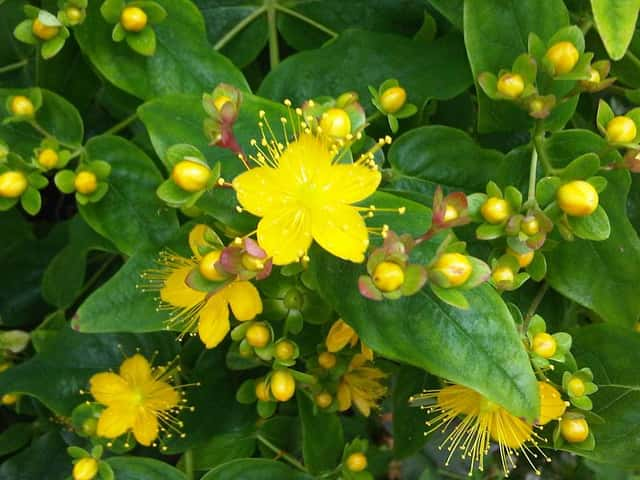
Hypericaceae
Tall Tutsan (Hypericum × inodorum)
Hypericum × inodorum
A tough, easy shrub for borders or large containers. It likes sun or part shade and soil that stays moist but drains well, and it accepts almost any soil type and pH. It takes frosts down to about -10 °C. Cut it back hard (10–15 cm) in early spring and feed at the same time. Rust is the main disease: choose resistant cultivars and leave room for air to move.
Every 7 days
Bright indirect
-10° - °C
% - %
Categories
What is Tall Tutsan?
Tall Tutsan (Hypericum × inodorum) is a easy-care plant from the Hypericaceae family. Hypericum × inodorum is a shrub in the St John's wort family (Hypericaceae), a fertile garden hybrid between Hypericum androsaemum and Hypericum hircinum. It is native to western Europe and the Mediterranean (France, Italy and Spain) and has naturalised in Portugal, Madeira, Britain, Ireland, Chile...
Tall Tutsan grows up to 2.0m, spread of 150cm, watering every 7 days. It is not suitable for indoor environments and safe for pets.
Unlike many tropical plants, Tall Tutsan tolerates watering mistakes. Best for beginners. Unlike many popular species, Tall Tutsan is safe to keep around pets.
How to Care for Tall Tutsan?
TLDR: Tall Tutsan needs Bright indirect, watering every 7 days, and temperatures between -10-30°C with 40-70% humidity.
How Often Should You Water Tall Tutsan?
Keep the soil lightly moist, watering about once a week in warm, dry spells. Do not let it dry out completely while it flowers and sets berries, but avoid waterlogging.
How Much Light Does Tall Tutsan Need?
Full sun or part shade. More sun means more flowers and berries; in very hot climates afternoon shade helps.
What Is the Best Soil for Tall Tutsan?
Moist, well-drained soil. Clay, sand, loam or chalk all work, acid or alkaline. A layer of compost helps hold moisture.
What Pot Should You Use for Tall Tutsan?
A large, deep pot (40 cm or more) with drainage holes, ideally for the compact cultivars that stay between 50 cm and 1 m.
Care Schedule
Fertilize
Every 365 days
What Is Tall Tutsan and Where Does It Come From?
Hypericum × inodorum is a shrub in the St John's wort family (Hypericaceae), a fertile garden hybrid between Hypericum androsaemum and Hypericum hircinum. It is native to western Europe and the Mediterranean (France, Italy and Spain) and has naturalised in Portugal, Madeira, Britain, Ireland, Chile and New Zealand, in damp or shaded places. It grows 0.6–2 m tall and up to 1.5 m wide, with upright stems from the base and stalkless oval leaves. In summer it carries clusters of 3 to 23 golden-yellow flowers, 1.5–3 cm across, full of stamens. These are followed by berry-like fruits that turn from red to dark brown; floristry cultivars have white, cream, pink, red, yellow or black berries. These are the berries sold in bouquets as "hypericum".
How to Propagate Tall Tutsan?
Semi-ripe cuttings
Named commercial cultivars (such as the Magical series) may carry plant breeders' rights; propagating them for sale needs a licence.
- 1 In summer, cut 10–15 cm tips of this year's shoots that are firm at the base
- 2 Strip the leaves from the lower half
- 3 Insert into a light, moist mix such as sand with peat or coir
- 4 Keep in a bright spot out of strong sun, with the mix moist until rooted
Materials needed:
How Big Does Tall Tutsan Grow?
TLDR: Tall Tutsan can reach up to 2.0m tall with Medium growth rate.
Max height
2.0m
Spread
1.5m
Foliage
Semi-evergreen
Warning: Toxic Plant
This plant can be toxic if ingested. Keep out of reach of:
Plant Uses
Ornamental
Great for decoration
Is your plant showing symptoms?
Click on the symptom to discover possible causes:
What Diseases Commonly Affect Tall Tutsan?
TLDR: Tall Tutsan is susceptible to 5 known diseases. Monitor regularly for early detection.
Rust
Rust is a common fungal disease caused by fungi in the order Pucciniales that affects a wide variety of plants. The disease gets its name from the characteristic orange, yellow, or reddish-brown pustules that appear on leaves, resembling metal rust. This obligate fungal parasite requires living plants to survive and can cause significant economic losses in agricultural crops.
Powdery Mildew
Powdery mildew is a common fungal disease caused by various fungi species including Erysiphe, Podosphaera, Oïdium, and Leveillula. It affects over 10,000 plant species worldwide. The disease thrives in warm, dry climates with high humidity and appears as a distinctive white powdery coating on plant surfaces.
Aphids
Aphids are small, soft-bodied, pear-shaped insects (1/16 to 1/8 inch long) that feed by sucking nutrient-rich sap from plants. They reproduce rapidly and can quickly weaken plants, causing distorted growth and transmitting plant viruses. Aphids come in various colors including green, black, red, yellow, brown, and gray. They secrete honeydew, a sticky substance that attracts ants and encourages sooty mold growth.
Caterpillars
Caterpillars are the larval stage of moths and butterflies that feed voraciously on plant foliage, stems, flowers, and fruits. Common species include cabbage loopers, tomato hornworms, armyworms, and cutworms. These pests can cause extensive damage by consuming large amounts of plant tissue in a short time. They vary in size from small (1/4 inch) to large (5 inches), with colors ranging from green to brown, often featuring stripes or spots. Caterpillars are highly mobile and can quickly spread throughout gardens, making them one of the most destructive common pests.
Fun Facts
The hybrid was first recorded in 1700
It was long thought to come from North America; its European origin was only settled in 1886
The hypericum berries sold by florists come from this hybrid
Frequently asked questions
Are hypericum berries edible?
When should I prune tall tutsan?
Why are my hypericum leaves covered in orange powder?
Is tall tutsan hardy?
Compare with similar plants
| Attribute | Difficulty | Light | Watering | Pet Safe |
|---|---|---|---|---|
| Field Maple | Easy | Bright indirect | 14d | ✓ |
| Iberian Houseleek | Easy | Direct sun | 14d | ✓ |
| Silver Birch | Easy | Direct sun | 14d | ✓ |
| Common Blanketflower | Easy | Direct sun | 10d | ✓ |
Choose & Compare
Sources & References
- Wikipedia — Hypericum × inodorum
- RHS — Hypericum × inodorum Magical Universe ('Kolmuni')
- DAERA/CAFRE Greenmount — Hypericum cut-stem production trial (interim report 2007)
- BioInfo (UK) — Hypericum androsaemum x hircinum = H. x inodorum (Melampsora hypericorum host)
- ASPCA — St. John's Wort (Hypericum perforatum), genus-level toxicity reference





