Myrtaceae
Tea Tree (Melaleuca alternifolia)
Melaleuca alternifolia
An easy tree for full sun and moist but well-drained soil. It is not cold hardy: in cool regions grow it in a large pot and protect it in winter. Regular pruning keeps it compact.
Every 5 days
Direct sun
° - °C
% - %
Categories
What is Tea Tree?
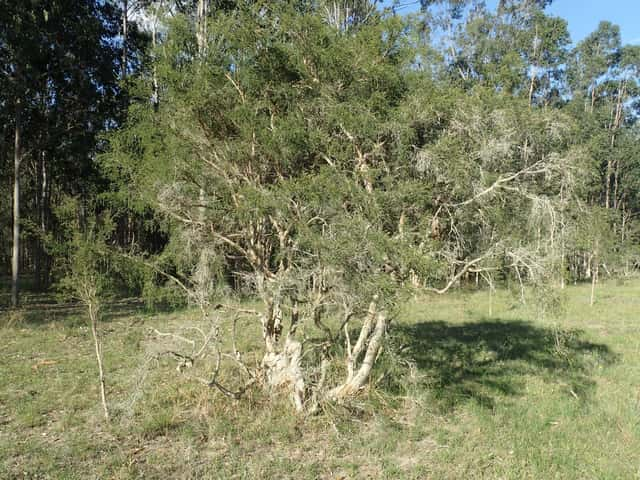
Tea Tree (Melaleuca alternifolia) is a easy-care plant from the Myrtaceae family. Tea tree (Melaleuca alternifolia) is a small tree or tall shrub in the myrtle family (Myrtaceae), endemic to south-east Queensland and the north coast of New South Wales, Australia, where it grows along streams and on swampy flats. It reaches about 7 m, with pale, papery bark and narrow, soft leaves...
Tea Tree grows up to 7.0m, watering every 5 days. It is not suitable for indoor environments and not safe for pets.
Unlike many tropical plants, Tea Tree tolerates watering mistakes. Best for beginners. Without precautions, ingestion can cause irritation in pets. Keep out of reach of cats and dogs.
How to Care for Tea Tree?
TLDR: Tea Tree needs Direct sun, watering every 5 days, and temperatures between 15-30°C with 40-70% humidity.
How Often Should You Water Tea Tree?
It likes soil that stays slightly moist: water about twice a week in hot weather and less in winter, without waterlogging.
How Much Light Does Tea Tree Need?
Full sun. It tolerates part shade but grows sparser.
What Is the Best Soil for Tea Tree?
Loamy or sandy soil that stays moist but drains well.
What Pot Should You Use for Tea Tree?
In cold climates, a large pot with drainage holes so it can be moved under cover in winter.
Care Schedule
Fertilize
Every 365 days
What Is Tea Tree and Where Does It Come From?
Tea tree (Melaleuca alternifolia) is a small tree or tall shrub in the myrtle family (Myrtaceae), endemic to south-east Queensland and the north coast of New South Wales, Australia, where it grows along streams and on swampy flats. It reaches about 7 m, with pale, papery bark and narrow, soft leaves 1-3.5 cm long dotted with oil glands. In spring and early summer it bears fluffy spikes of white to cream flowers. Tea tree oil is distilled from its leaves.
How to Propagate Tea Tree?
Seed
The seed is very fine; mix it with fine sand to sow evenly.
- 1 Scatter the tiny seeds on fine, moist seed mix
- 2 Do not cover; just press lightly
- 3 Keep moist from below (tray of water) in a warm, bright spot
- 4 Prick out seedlings when a few centimetres tall
Materials needed:
Semi-hardwood cuttings
Keep air humidity high while the cuttings root.
- 1 Take 8-10 cm semi-hardwood cuttings
- 2 Strip the lower leaves and use rooting hormone
- 3 Insert into moist sandy mix
- 4 Keep covered in indirect light until rooted
Materials needed:
How Big Does Tea Tree Grow?
TLDR: Tea Tree can reach up to 7.0m tall with Medium growth rate.
Max height
7.0m
Foliage
Evergreen
Warning: Toxic Plant
This plant can be toxic if ingested. Keep out of reach of:
Plant Uses
Ornamental
Great for decoration
Medicinal
Medicinal properties
Aromatic
Pleasant fragrance
Medicinal Uses
- The essential oil from the leaves (tea tree oil) is used on the skin as an antiseptic and for acne, dandruff and athlete's foot. It must never be swallowed.
- Aboriginal Australians inhaled the vapour of crushed leaves for coughs and colds and applied leaves to wounds.
Is your plant showing symptoms?
Click on the symptom to discover possible causes:
What Diseases Commonly Affect Tea Tree?
TLDR: Tea Tree is susceptible to 3 known diseases. Monitor regularly for early detection.
Spider Mites
Spider mites are tiny arachnids (less than 1/20 inch long) related to spiders and ticks that feed on plant sap. They thrive in hot, dry conditions and can cause significant damage to ornamental and vegetable plants. During severe infestations, crop losses can reach 14% or higher as these pests disrupt vital plant processes including photosynthesis, carbon dioxide absorption, and transpiration.
Scale Insects
Scale insects are small sap-sucking pests that appear as brown, shell-like bumps on plant stems and leaves. There are over 25 species, divided into armored (hard) and unarmored (soft) scales. They feed by piercing plant tissue and extracting sap, which weakens the plant and can lead to yellowing, stunted growth, and even death if left untreated. They also excrete honeydew, which attracts ants and promotes sooty mold growth.
Rust
Rust is a common fungal disease caused by fungi in the order Pucciniales that affects a wide variety of plants. The disease gets its name from the characteristic orange, yellow, or reddish-brown pustules that appear on leaves, resembling metal rust. This obligate fungal parasite requires living plants to survive and can cause significant economic losses in agricultural crops.
Fun Facts
The name tea tree goes back to Captain Cook's sailors, who brewed a tea from Melaleuca leaves.
In plantations the trees are cut low and regrow; the first leaf harvest comes 15-18 months after planting.
Its leaves are only about 1 mm wide.
Frequently asked questions
Is this the plant tea tree oil comes from?
Is tea tree toxic to cats and dogs?
Is it frost hardy?
How often should I water?
Compare with similar plants
| Attribute | Difficulty | Light | Watering | Pet Safe |
|---|---|---|---|---|
| Field Maple | Easy | Bright indirect | 14d | ✓ |
| Iberian Houseleek | Easy | Direct sun | 14d | ✓ |
| Silver Birch | Easy | Direct sun | 14d | ✓ |
| Common Blanketflower | Easy | Direct sun | 10d | ✓ |
Choose & Compare
Sources & References
- Wikipedia - Melaleuca alternifolia
- RHS - Melaleuca alternifolia (search snippet: full sun, loam/sand, red spider mite, scale)
- University of Arizona Campus Arboretum - Melaleuca alternifolia (search snippet)
- PROSEA / Pl@ntUse - Melaleuca alternifolia
- PIRSA - Myrtle rust (attacks Melaleuca)
- Gardening Know How - Melaleuca tea tree care (search snippet: zones 9-11)





