Amaryllidaceae
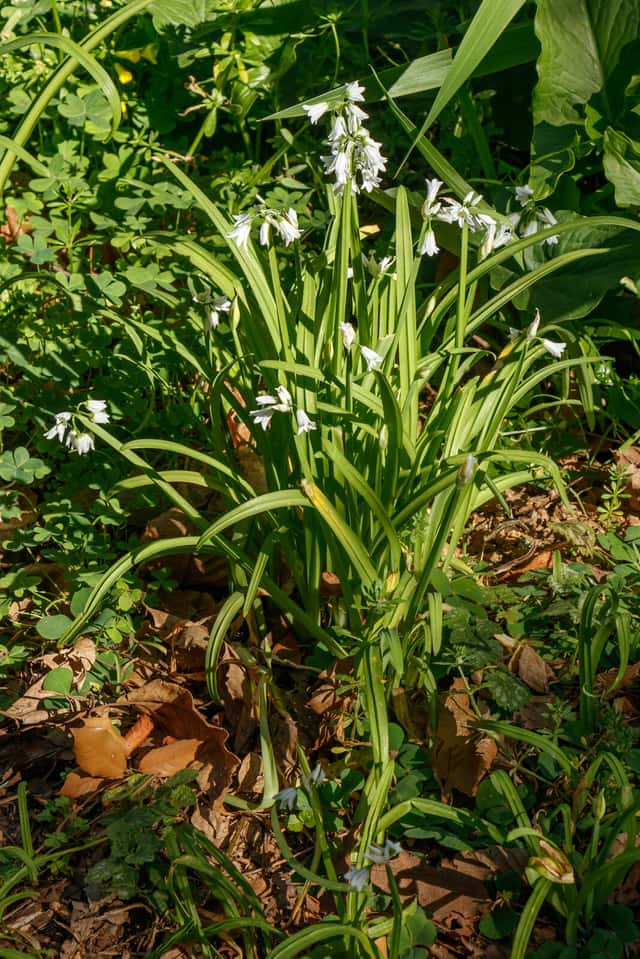
Three-cornered Leek (Allium triquetrum)
Allium triquetrum
A very easy plant that grows in shade, part shade or sun in moist, rich soil. It grows from autumn to spring and goes dormant in summer, when the leaves wither. No fertilizer needed. The main task is keeping it in check: it multiplies by bulblets and seed and can take over whole beds. Like onion and garlic, it is toxic to dogs and cats.
Every 5 days
Partial shade
-10° - 30°C
% - %
Categories
What is Three-cornered Leek?
Three-cornered Leek (Allium triquetrum) is a easy-care plant from the Amaryllidaceae family. Allium triquetrum is a perennial bulb in the family Amaryllidaceae, native to southwestern Europe, North Africa, Madeira and the Canary Islands. Its 17-60 cm stems are triangular in cross-section, which gives the plant its name, and it has two or three narrow leaves with a strong onion smell when cr...
Three-cornered Leek grows up to 60cm, watering every 5 days, -10°C – 30°C. It is not suitable for indoor environments and not safe for pets.
Unlike many tropical plants, Three-cornered Leek tolerates watering mistakes. Best for beginners. Without precautions, ingestion can cause irritation in pets. Keep out of reach of cats and dogs.
How to Care for Three-cornered Leek?
TLDR: Three-cornered Leek needs Partial shade, watering every 5 days, and temperatures between -10-30°C with 40-70% humidity.
How Often Should You Water Three-cornered Leek?
Water every 4 to 7 days from autumn to spring if there is no rain, keeping the soil moist. Stop watering in summer while the plant is dormant.
How Much Light Does Three-cornered Leek Need?
Takes anything from full sun to woodland shade. It flowers best in part shade or dappled light.
What Is the Best Soil for Three-cornered Leek?
Moist, loamy or sandy soil rich in organic matter and well drained, slightly acidic to slightly alkaline.
What Pot Should You Use for Three-cornered Leek?
A deep pot of 20 cm or more with a drainage hole; growing it in a container keeps it from invading the garden.
What Is Three-cornered Leek and Where Does It Come From?
Allium triquetrum is a perennial bulb in the family Amaryllidaceae, native to southwestern Europe, North Africa, Madeira and the Canary Islands. Its 17-60 cm stems are triangular in cross-section, which gives the plant its name, and it has two or three narrow leaves with a strong onion smell when crushed. From late winter into spring it bears drooping umbels of 4-19 white bell-shaped flowers, each petal marked with a green stripe. It dies back in summer and returns with autumn rain. Every part is edible, but it spreads so freely that it is considered invasive in many countries.
How to Propagate Three-cornered Leek?
Bulbs
Plant only where it can be contained: the bulbs multiply quickly.
- 1 Plant the small bulbs 5-8 cm deep in late summer or autumn.
- 2 Space them 5 to 10 cm apart.
- 3 Water after planting; leaves appear with autumn rain.
Materials needed:
Seed
It self-seeds freely; deadhead before seed sets if you do not want it to spread.
- 1 Sow fresh seed in autumn, in place or in pots.
- 2 Cover with a thin layer of soil and keep moist.
- 3 Seedlings flower from their second or third year.
Materials needed:
How Big Does Three-cornered Leek Grow?
TLDR: Three-cornered Leek can reach up to 60cm tall with Fast growth rate.
Max height
60cm
Growth rate
Fast
Foliage
Deciduous
Warning: Toxic Plant
This plant can be toxic if ingested. Keep out of reach of:
Plant Uses
Edible
Can be consumed
Ornamental
Great for decoration
Aromatic
Pleasant fragrance
Culinary Uses
- Leaves raw or cooked, used like chives or leeks
- Raw flowers with a mild garlic taste to garnish salads
- Bulbs raw or cooked as a seasoning
Is your plant showing symptoms?
Click on the symptom to discover possible causes:
What Diseases Commonly Affect Three-cornered Leek?
TLDR: Three-cornered Leek is susceptible to 5 known diseases. Monitor regularly for early detection.
Rust
Rust is a common fungal disease caused by fungi in the order Pucciniales that affects a wide variety of plants. The disease gets its name from the characteristic orange, yellow, or reddish-brown pustules that appear on leaves, resembling metal rust. This obligate fungal parasite requires living plants to survive and can cause significant economic losses in agricultural crops.
Slugs and Snails
Slugs and snails are mollusks that feed on plant tissue, causing irregular holes in leaves and damage to young seedlings. They are most active at night and in moist conditions, leaving characteristic silvery slime trails. These pests can quickly devastate gardens, especially during wet seasons.
Thrips
Thrips are tiny cigar-shaped insects (1/25-inch long) that damage plants by sucking plant juices and scraping at fruits, flowers, and leaves. With over 6,000 species and rapid reproduction (lifecycle as short as 14 days), they can quickly infest plants and transmit viruses like tomato spotted wilt virus.
Root Rot
Root rot is a serious fungal disease that affects the root system of plants, causing them to decay and die. It is primarily caused by overwatering, poor drainage, or soil-borne fungi such as Pythium, Phytophthora, Rhizoctonia, and Fusarium. The disease thrives in waterlogged conditions where roots are deprived of oxygen, making them susceptible to fungal infection.
Fun Facts
Triquetrum means three-cornered, after the triangular stem.
Its seeds carry an oily appendage that ants carry away, spreading the plant.
It is a declared noxious weed in parts of Australia and California.
Frequently asked questions
Is three-cornered leek edible?
Why do the leaves disappear in summer?
Is it toxic to dogs and cats?
How do I stop it spreading?
Compare with similar plants
| Attribute | Difficulty | Light | Watering | Pet Safe |
|---|---|---|---|---|
| Field Maple | Easy | Bright indirect | 14d | ✓ |
| Iberian Houseleek | Easy | Direct sun | 14d | ✓ |
| Silver Birch | Easy | Direct sun | 14d | ✓ |
| Common Blanketflower | Easy | Direct sun | 10d | ✓ |





