Liliaceae
Erythronium (Trout Lily) Care Guide
Erythronium
Plant Erythronium corms in humus-rich, well-drained woodland soil in dappled to partial shade, and let evenly moist spring conditions carry them through their brief but showy bloom. Once foliage yellows in early summer, allow the bulbs to go fully dormant and dry; avoid disturbing them, as trout lilies resent transplanting and can take years to recover. Top-dress annually with leaf mold or compost instead of regular fertilizing.
Every 4 days
Low light
5° - 20°C
40% - 70%
Categories
What is Trout Lily?
Trout Lily (Erythronium) is a medium-care plant from the Liliaceae family. Erythronium, commonly known as trout lily, fawn lily, or dog's-tooth violet, is a genus of roughly 30 spring-blooming bulbous perennials native to woodlands across North America, Europe, and Asia. Named for the mottled, trout-skin-like pattern on its paired leaves, this diminutive woodland ephemeral...
Trout Lily grows up to 30cm, spread of 15cm, watering every 4 days, 5°C – 20°C, 40–70% humidity. It is not suitable for indoor environments and not safe for pets.
Without precautions, ingestion can cause irritation in pets. Keep out of reach of cats and dogs.
How to Care for Trout Lily?
TLDR: Trout Lily needs Low light, watering every 4 days, and temperatures between 5-20°C with 40-70% humidity.
How Often Should You Water Trout Lily?
Keep soil evenly moist during the active spring growth and flowering period, providing the equivalent of about 1 inch of water per week. Once leaves yellow and the plant goes dormant in early summer, reduce watering significantly - the corms prefer to stay on the dry side while dormant, especially in humus-rich soil that already retains some moisture.
How Much Light Does Trout Lily Need?
Erythronium thrives in the dappled light of a deciduous woodland canopy - deep to partial shade with only brief direct sun in early spring before trees leaf out gives the best flowering. Avoid hot, exposed, full-sun positions, which stress the shallow bulbs and shorten the bloom period.
What Is the Best Soil for Trout Lily?
Use a humus-rich, loamy woodland soil amended with leaf mold or compost that stays evenly moist in spring but drains freely so bulbs never sit in standing water. A slightly acidic to neutral pH (around 5.5-6.8) suits most species best; heavy clay or waterlogged soil promotes bulb rot.
What Pot Should You Use for Trout Lily?
Best grown in the open ground in a woodland bed; if grown in a container, choose a wide, shallow terracotta or clay pot with excellent drainage to mimic the free-draining woodland soil profile, and sink the pot in a shaded spot to buffer temperature swings.
What Is Trout Lily and Where Does It Come From?
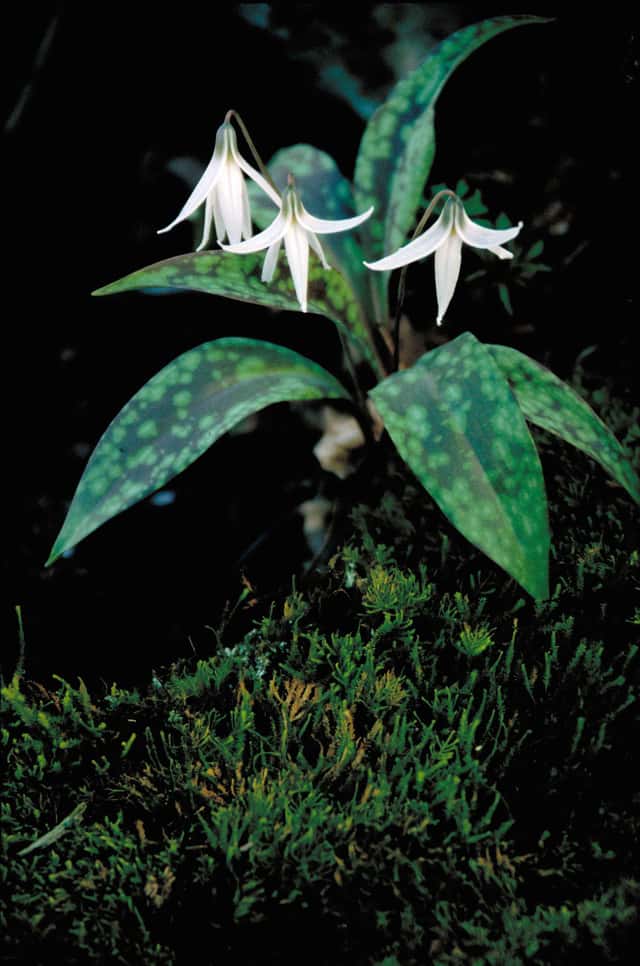
Erythronium, commonly known as trout lily, fawn lily, or dog's-tooth violet, is a genus of roughly 30 spring-blooming bulbous perennials native to woodlands across North America, Europe, and Asia. Named for the mottled, trout-skin-like pattern on its paired leaves, this diminutive woodland ephemeral produces nodding, lily-shaped flowers in shades of yellow, white, pink, or lavender-purple that emerge before deciduous tree canopies leaf out in spring. After a brief flowering period of about two weeks, the foliage yellows and dies back, and the plant spends the rest of the year dormant underground as a small, tooth-shaped corm, the origin of the common name dog's-tooth violet. Slow to establish from seed (often taking 4-7 years to first flower) but long-lived and naturalizing readily by offsets once settled, Erythronium is prized by woodland and native-plant gardeners for its fleeting but exquisite early-spring display.
How to Propagate Trout Lily?
Offset Division
Handle corms gently, they bruise easily and rarely recover if damaged; replant the same day they are lifted since Erythronium bulbs dislike prolonged drying out.
- 1 Wait until foliage has fully yellowed and died back in early summer, signaling dormancy.
- 2 Carefully dig around the clump to lift the corms and attached offsets without bruising them.
- 3 Gently separate small offset corms from the parent bulb by hand.
- 4 Replant corms immediately, 7-10 cm deep, in humus-rich woodland soil, spacing them 8-10 cm apart.
- 5 Water in well and mulch with leaf mold to retain moisture until roots establish.
Materials needed:
Seed Propagation
This method is slow and best suited to patient gardeners; seedlings need several years of undisturbed growth before flowering.
- 1 Collect ripe seed capsules in early summer just as they split open.
- 2 Sow seed fresh (do not let it dry out) onto trays of humus-rich, well-drained compost.
- 3 Cover lightly with grit and place trays in a shaded cold frame outdoors to experience natural winter chilling.
- 4 Keep compost consistently moist; germination may take one to two winters.
- 5 Grow seedlings on undisturbed for several years before transplanting to their final woodland position.
Materials needed:
How Big Does Trout Lily Grow?
TLDR: Trout Lily can reach up to 30cm tall with Medium growth rate.
Max height
30cm
Spread
15cm
Growth rate
Medium
Foliage
Deciduous
Warning: Toxic Plant
This plant can be toxic if ingested. Keep out of reach of:
Plant Uses
Ornamental
Great for decoration
Ground Cover
Soil coverage
Medicinal Uses
- traditional wound treatment
- traditional fever remedy
Culinary Uses
- corms and young leaves cooked as a foraged spring vegetable in some traditions
Is your plant showing symptoms?
Click on the symptom to discover possible causes:
What Diseases Commonly Affect Trout Lily?
TLDR: Trout Lily is susceptible to 6 known diseases. Monitor regularly for early detection.
Gray Mold (Botrytis Blight)
Gray mold, caused by the fungus Botrytis cinerea, is a widespread necrotrophic pathogen affecting over 1,400 plant species. It thrives in cool, humid conditions and attacks weakened or aging plant tissues, causing soft rot and characteristic gray fuzzy growth.
Grey Mould
Fusarium Wilt
Fusarium wilt is a serious fungal disease caused by the soil-borne fungus Fusarium oxysporum. The fungus invades roots and blocks the water-conducting vessels (xylem) of the plant, causing progressive wilting and eventual death. Host-specific forms of the pathogen exist that attack different plant species.
Root Rot
Root rot is a serious fungal disease that affects the root system of plants, causing them to decay and die. It is primarily caused by overwatering, poor drainage, or soil-borne fungi such as Pythium, Phytophthora, Rhizoctonia, and Fusarium. The disease thrives in waterlogged conditions where roots are deprived of oxygen, making them susceptible to fungal infection.
Meaning & Symbolism
Symbolizes friendship, protection, and renewal - its early golden bloom pushing through spring leaf litter is often read as a sign of rebirth. In 17th-century Europe, the newly imported American bulb gained a reputation as a love-potion ingredient and aphrodisiac.
Fun Facts
The mottled leaf pattern resembles the markings of a trout, inspiring the common name.
The corm is shaped like a canine tooth, giving rise to the alternate name dog's-tooth violet.
Colonies can take over a decade to spread, but individual clumps may live for many decades once established.
European gardeners once prized imported American Erythronium bulbs as a supposed aphrodisiac.
Frequently asked questions
When does Erythronium bloom?
Is trout lily toxic to pets?
Why wont my Erythronium flower?
Can I grow Erythronium in containers?
Compare with similar plants
| Attribute | Difficulty | Light | Watering | Pet Safe |
|---|---|---|---|---|
| Dark Fieldcap | Medium | Low light | 2d | ⚠️ |
| Azalea | Medium | Partial shade | 3d | ⚠️ |
| Muriel's Bamboo | Medium | Partial shade | 3d | ✓ |
| Bougainvillea | Medium | Direct sun | 7d | ⚠️ |