Scrophulariaceae
Twinspur (Diascia barberae)
Diascia barberae
Sun-loving bloomer: rich, moist, well-drained soil, frequent watering and a trim after the first flush so it blooms again.
Every 3 days
Bright indirect
-9° - 30°C
% - %
Categories
What is Twinspur?
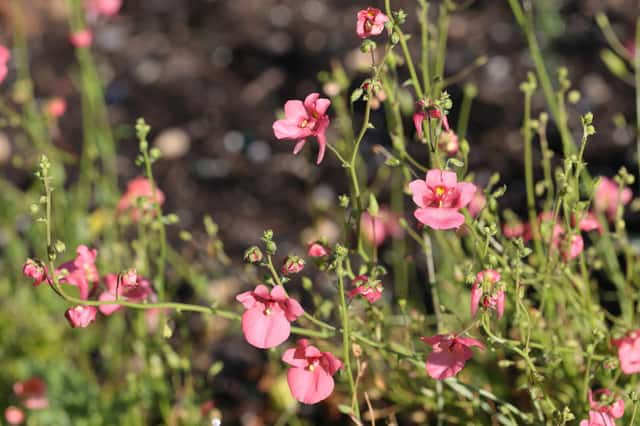
Twinspur (Diascia barberae) is a easy-care plant from the Scrophulariaceae family. Diascia barberae is a low, spreading herb from South Africa and Lesotho, about 30 cm tall, widely sold in pots and hanging baskets. It forms a mat of small, glossy green leaves and, from spring to fall, covers itself in clusters of small pink flowers with a yellow throat. Behind each flower are two...
Twinspur grows up to 30cm, spread of 45cm, watering every 3 days, -9°C – 30°C. It is not suitable for indoor environments and safe for pets.
Unlike many tropical plants, Twinspur tolerates watering mistakes. Best for beginners. Unlike many popular species, Twinspur is safe to keep around pets.
How to Care for Twinspur?
TLDR: Twinspur needs Bright indirect, watering every 3 days, and temperatures between -9-30°C with 40-70% humidity.
How Often Should You Water Twinspur?
Keep the soil slightly moist, watering every 2 or 3 days in pots. Let excess water drain: soggy soil rots the roots.
How Much Light Does Twinspur Need?
Full sun, or morning sun with afternoon shade. In hot, humid weather it stops flowering until it cools down.
What Is the Best Soil for Twinspur?
Rich, loose soil with good drainage. In pots, use flowering-plant mix with a little sand.
What Pot Should You Use for Twinspur?
A 20 to 25 cm pot, window box or hanging basket with drainage. It looks best spilling over the edge.
Care Schedule
Fertilize
Every 14 days
What Is Twinspur and Where Does It Come From?
Diascia barberae is a low, spreading herb from South Africa and Lesotho, about 30 cm tall, widely sold in pots and hanging baskets. It forms a mat of small, glossy green leaves and, from spring to fall, covers itself in clusters of small pink flowers with a yellow throat. Behind each flower are two small horns, the spurs, which give it the name twinspur. There are varieties in apricot, coral, lilac and red. It is perennial in mild climates, but many people grow it as an annual.
How to Propagate Twinspur?
Tip cutting
Named color varieties only come true from cuttings, not from seed.
- 1 Take 5 to 8 cm tips without flowers
- 2 Remove the lower leaves
- 3 Plant in light, moist mix
- 4 Keep in bright shade until rooted
Materials needed:
Seed
Seedlings may flower in a different color from the parent.
- 1 Sow on the surface of moist mix, covering lightly
- 2 Keep at 15 to 20 °C
- 3 Transplant when they have 4 leaves
Materials needed:
How Big Does Twinspur Grow?
TLDR: Twinspur can reach up to 30cm tall with Medium growth rate.
Max height
30cm
Spread
45cm
Growth rate
Medium
Foliage
Evergreen
Plant Uses
Ornamental
Great for decoration
Ground Cover
Soil coverage
Is your plant showing symptoms?
Click on the symptom to discover possible causes:
What Diseases Commonly Affect Twinspur?
TLDR: Twinspur is susceptible to 5 known diseases. Monitor regularly for early detection.
Slugs and Snails
Slugs and snails are mollusks that feed on plant tissue, causing irregular holes in leaves and damage to young seedlings. They are most active at night and in moist conditions, leaving characteristic silvery slime trails. These pests can quickly devastate gardens, especially during wet seasons.
Powdery Mildew
Powdery mildew is a common fungal disease caused by various fungi species including Erysiphe, Podosphaera, Oïdium, and Leveillula. It affects over 10,000 plant species worldwide. The disease thrives in warm, dry climates with high humidity and appears as a distinctive white powdery coating on plant surfaces.
Gray Mold (Botrytis Blight)
Gray mold, caused by the fungus Botrytis cinerea, is one of the most common fungal diseases in plants. It affects over 200 plant species, including ornamentals, vegetables, fruits, and houseplants. The disease thrives in cool, humid conditions with poor air circulation, causing grayish spots and soft rot on infected tissues.
Root Rot
Root rot is a serious fungal disease that affects the root system of plants, causing them to decay and die. It is primarily caused by overwatering, poor drainage, or soil-borne fungi such as Pythium, Phytophthora, Rhizoctonia, and Fusarium. The disease thrives in waterlogged conditions where roots are deprived of oxygen, making them susceptible to fungal infection.
Fun Facts
The two spurs on each flower hold an oil that only certain South African bees can collect
The name Diascia comes from Greek for two sacs
The cultivar 'Blackthorn Apricot' has the Royal Horticultural Society's Award of Garden Merit
Frequently asked questions
Why did my twinspur stop blooming in summer?
Does it come back next year?
Is it toxic to cats and dogs?
Why are the lower leaves rotting?
Compare with similar plants
| Attribute | Difficulty | Light | Watering | Pet Safe |
|---|---|---|---|---|
| Field Maple | Easy | Bright indirect | 14d | ✓ |
| Iberian Houseleek | Easy | Direct sun | 14d | ✓ |
| Silver Birch | Easy | Direct sun | 14d | ✓ |
| Common Blanketflower | Easy | Direct sun | 10d | ✓ |





