Asparagaceae
Variegated Song of India (Dracaena reflexa 'Variegata')
Dracaena reflexa 'Variegata'
An easy indoor plant. Give it bright, indirect light with no strong afternoon sun; in deep shade it loses its variegation and is prone to root rot. Let half the soil dry between waterings and water less in autumn and winter. It likes 18 to 29 °C (65 to 85 °F) and suffers below 12 °C (54 °F). Feed once a month in spring and summer with a diluted fertilizer. Lower leaves yellow and drop over time, which is normal.
Every 10 days
Partial shade
12° - 32°C
% - %
Categories
What is Variegated Song of India?
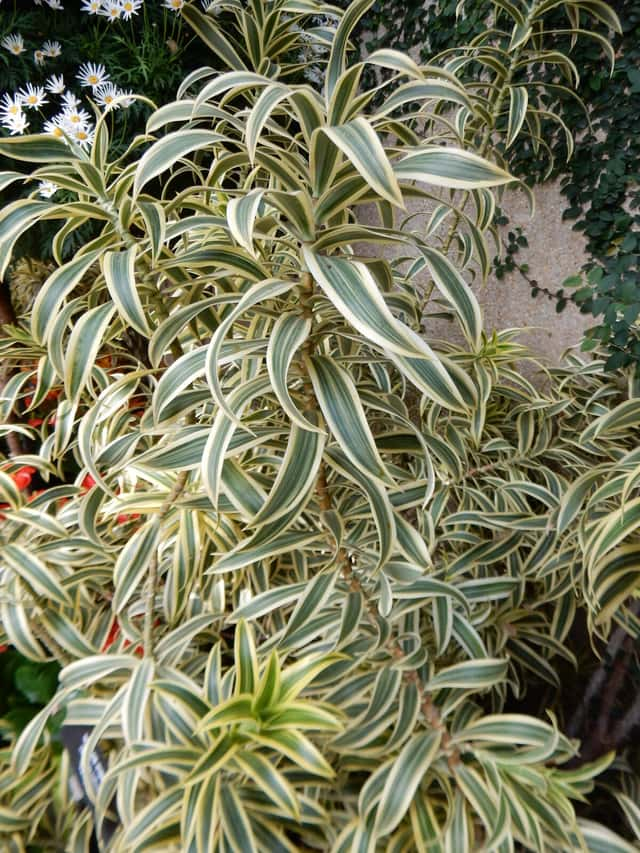
Variegated Song of India (Dracaena reflexa 'Variegata') is a easy-care plant from the Asparagaceae family. Variegated Song of India is a cultivar of Dracaena reflexa, in the asparagus family (Asparagaceae), native to Mozambique, Madagascar, Mauritius and other Indian Ocean islands. Its narrow, glossy leaves have a green center and wide cream to yellow-green margins, and spiral along thin stems that lean...
Variegated Song of India grows up to 3.0m, spread of 70cm, watering every 10 days, 12°C – 32°C. It is suitable for indoor environments and not safe for pets.
Unlike many tropical plants, Variegated Song of India tolerates watering mistakes. Best for beginners. Without precautions, ingestion can cause irritation in pets. Keep out of reach of cats and dogs. Without adequate drainage, root rot can develop within 20 days.
How to Care for Variegated Song of India?
TLDR: Variegated Song of India needs Partial shade, watering every 10 days, and temperatures between 12-32°C with 40-70% humidity.
How Often Should You Water Variegated Song of India?
Water when the top half of the soil is dry, roughly every 10 days, and empty the saucer. Fluoridated or salty water burns the tips: use filtered or rain water and flush the soil now and then.
How Much Light Does Variegated Song of India Need?
Bright, indirect light near a well-lit window. Avoid strong direct sun, which scorches the leaves, and dark corners, which fade the cream stripes.
What Is the Best Soil for Variegated Song of India?
Loose, fast-draining houseplant mix; if it is heavy, add coarse sand or perlite. Always use a pot with a drainage hole.
What Pot Should You Use for Variegated Song of India?
A pot with drainage holes, only slightly larger than the root ball: it likes to be a little root-bound. Move up one size every 2-3 years in spring.
Care Schedule
Fertilize
Every 30 days
Repot
Every 1095 days
What Is Variegated Song of India and Where Does It Come From?
Variegated Song of India is a cultivar of Dracaena reflexa, in the asparagus family (Asparagaceae), native to Mozambique, Madagascar, Mauritius and other Indian Ocean islands. Its narrow, glossy leaves have a green center and wide cream to yellow-green margins, and spiral along thin stems that lean and twist with age. In the wild the species reaches 4-5 m; in a pot it can top 3 m, but takes 8 to 10 years to get there. It flowers in winter with clusters of small, fragrant white blooms, which are rare indoors. The cultivar holds the Royal Horticultural Society's Award of Garden Merit.
How to Propagate Variegated Song of India?
Tip cutting
Plant several cuttings in one pot for a fuller clump.
- 1 Cut an 8-12 cm stem tip with clean shears
- 2 Strip the lower leaves
- 3 Let the cut dry overnight
- 4 Plant in light, moist mix or stand in a glass of water
- 5 Keep bright, warm (about 18 °C or more) and humid until it roots
Materials needed:
How Big Does Variegated Song of India Grow?
TLDR: Variegated Song of India can reach up to 3.0m tall with Slow growth rate.
Max height
3.0m
Spread
70cm
Growth rate
Slow
Foliage
Evergreen
Warning: Toxic Plant
This plant can be toxic if ingested. Keep out of reach of:
Plant Uses
Ornamental
Great for decoration
Is your plant showing symptoms?
Click on the symptom to discover possible causes:
What Diseases Commonly Affect Variegated Song of India?
TLDR: Variegated Song of India is susceptible to 12 known diseases. Monitor regularly for early detection.
Root Rot
Root rot is a serious fungal disease that affects the root system of plants, causing them to decay and die. It is primarily caused by overwatering, poor drainage, or soil-borne fungi such as Pythium, Phytophthora, Rhizoctonia, and Fusarium. The disease thrives in waterlogged conditions where roots are deprived of oxygen, making them susceptible to fungal infection.
Mealybugs
Mealybugs are small, soft-bodied insects covered with a white, waxy, cottony material. They are common pests of houseplants and outdoor plants in mild climates. These sap-sucking insects feed on plant tissue, causing damage, stunted growth, and can lead to plant death if left untreated. They produce sticky honeydew which attracts sooty mold.
Spider Mites
Spider mites are tiny arachnids (less than 1/20 inch long) related to spiders and ticks that feed on plant sap. They thrive in hot, dry conditions and can cause significant damage to ornamental and vegetable plants. During severe infestations, crop losses can reach 14% or higher as these pests disrupt vital plant processes including photosynthesis, carbon dioxide absorption, and transpiration.
Scale Insects
Scale insects are small sap-sucking pests that appear as brown, shell-like bumps on plant stems and leaves. There are over 25 species, divided into armored (hard) and unarmored (soft) scales. They feed by piercing plant tissue and extracting sap, which weakens the plant and can lead to yellowing, stunted growth, and even death if left untreated. They also excrete honeydew, which attracts ants and promotes sooty mold growth.
Fun Facts
The name Song of India is a trade name: the plant is African, from Madagascar and nearby islands.
Black-and-white ruffed lemurs eat the fruit of the species in the wild.
In a pot it takes 8 to 10 years to reach full height.
Frequently asked questions
Why are the lower leaves turning yellow?
Why did my Song of India lose its cream stripes?
Is Song of India toxic to cats and dogs?
Why do the leaf tips turn brown?
Compare with similar plants
| Attribute | Difficulty | Light | Watering | Pet Safe |
|---|---|---|---|---|
| Field Maple | Easy | Bright indirect | 14d | ✓ |
| Iberian Houseleek | Easy | Direct sun | 14d | ✓ |
| Silver Birch | Easy | Direct sun | 14d | ✓ |
| Common Blanketflower | Easy | Direct sun | 10d | ✓ |





