Asphodelaceae
Veined Haworthia (Haworthiopsis venosa): Care Guide
Haworthiopsis venosa
An easy, slow-growing succulent for a bright windowsill. Give bright indirect light or gentle morning sun, a fast-draining gritty mix, and water deeply only when the pot has dried out. Keep it above 10 °C, feed lightly in the growing season and repot every two years or when the clump fills the pot.
Every 21 days
Partial shade
10° - 32°C
30% - 50%
Categories
What is Veined Haworthia?
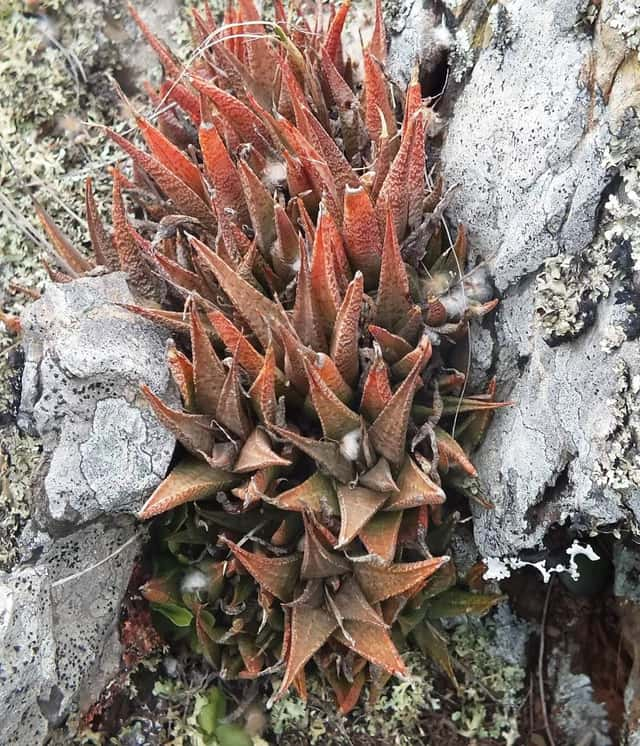
Veined Haworthia (Haworthiopsis venosa) is a easy-care plant from the Asphodelaceae family. Haworthiopsis venosa, formerly Haworthia venosa and known in Afrikaans as venstertjie, is a small mat-forming succulent from Namibia and South Africa, where it grows on rocky slopes from the inland Karoo to the Breede River valley. Its stemless rosettes hold 12 to 15 fleshy, triangular, dark green l...
Veined Haworthia grows up to 15cm, spread of 30cm, watering every 21 days, 10°C – 32°C, 30–50% humidity. It is suitable for indoor environments and safe for pets.
Unlike many tropical plants, Veined Haworthia tolerates watering mistakes. Best for beginners. Unlike many popular species, Veined Haworthia is safe to keep around pets. Without adequate drainage, root rot can develop within 42 days.
How to Care for Veined Haworthia?
TLDR: Veined Haworthia needs Partial shade, watering every 21 days, and temperatures between 10-32°C with 30-50% humidity.
How Often Should You Water Veined Haworthia?
Water thoroughly, then wait until the mix is dry several centimetres down before watering again, roughly every 2-3 weeks in the growing season. Reduce in the hottest weeks of summer and in winter, when growth slows. Never leave the pot standing in water.
How Much Light Does Veined Haworthia Need?
Bright indirect light or a few hours of soft morning sun. Strong direct sun can burn the leaves and turn them reddish-brown; too little light makes the rosette stretch and lose its veined pattern.
What Is the Best Soil for Veined Haworthia?
Use a fast-draining cactus and succulent mix with 30-50% grit, pumice or perlite. A pot with a drainage hole is essential; heavy, moisture-retaining soil quickly leads to root rot.
What Pot Should You Use for Veined Haworthia?
A shallow terracotta or unglazed clay pot with a drainage hole, only slightly wider than the clump, helps the mix dry out between waterings.
Care Schedule
Fertilize
Every 90 days
Repot
Every 730 days
What Is Veined Haworthia and Where Does It Come From?
Haworthiopsis venosa, formerly Haworthia venosa and known in Afrikaans as venstertjie, is a small mat-forming succulent from Namibia and South Africa, where it grows on rocky slopes from the inland Karoo to the Breede River valley. Its stemless rosettes hold 12 to 15 fleshy, triangular, dark green leaves marked with pale veins on the upper surface and small teeth along the edges. It spreads by offsets into dense clumps, and in spring sends up thin stems of small greenish-white tubular flowers. The name venosa means "veined".
How to Propagate Veined Haworthia?
Offset division
Offsets with their own roots establish much faster. Keep newly potted offsets in bright shade until they show new growth.
- 1 Wait until the offset is a reasonable size and has some roots of its own
- 2 Remove the plant from the pot and gently separate the offset by hand or with a clean knife
- 3 Let any cut surface dry for 1-2 days
- 4 Plant in dry succulent mix and wait about a week before the first light watering
Materials needed:
Leaf cutting
Slower and less reliable than offsets; use it only when no offsets are available.
- 1 Twist off a healthy leaf cleanly at the base
- 2 Let it callus for 2-3 days
- 3 Lay or insert the base in barely moist gritty mix
- 4 Keep in bright shade and water sparingly until roots and a small rosette form
Materials needed:
How Big Does Veined Haworthia Grow?
TLDR: Veined Haworthia can reach up to 15cm tall with Slow growth rate.
Max height
15cm
Spread
30cm
Growth rate
Slow
Foliage
Evergreen
Plant Uses
Ornamental
Great for decoration
Is your plant showing symptoms?
Click on the symptom to discover possible causes:
What Diseases Commonly Affect Veined Haworthia?
TLDR: Veined Haworthia is susceptible to 5 known diseases. Monitor regularly for early detection.
Root Rot
Root rot is a serious fungal disease that affects the root system of plants, causing them to decay and die. It is primarily caused by overwatering, poor drainage, or soil-borne fungi such as Pythium, Phytophthora, Rhizoctonia, and Fusarium. The disease thrives in waterlogged conditions where roots are deprived of oxygen, making them susceptible to fungal infection.
Overwatering
Overwatering occurs when plants receive too much water, depriving roots of oxygen and causing root rot. This environmental stress is one of the most common causes of houseplant death, as waterlogged soil prevents roots from breathing and functioning properly.
Mealybugs
Mealybugs are small, soft-bodied insects covered with a white, waxy, cottony material. They are common pests of houseplants and outdoor plants in mild climates. These sap-sucking insects feed on plant tissue, causing damage, stunted growth, and can lead to plant death if left untreated. They produce sticky honeydew which attracts sooty mold.
Scale Insects
Scale insects are small sap-sucking pests that appear as brown, shell-like bumps on plant stems and leaves. There are over 25 species, divided into armored (hard) and unarmored (soft) scales. They feed by piercing plant tissue and extracting sap, which weakens the plant and can lead to yellowing, stunted growth, and even death if left untreated. They also excrete honeydew, which attracts ants and promotes sooty mold growth.
Meaning & Symbolism
Associated with resilience and endurance, it suits gifts for someone starting a new phase who needs to hold on through dry spells.
Fun Facts
The epithet venosa means "veined", after the pale lines on the leaves
In Afrikaans it is called venstertjie, "little window"
It was moved from Haworthia to Haworthiopsis after DNA studies showed the group was only distantly related
Frequently asked questions
How often should I water Haworthiopsis venosa?
Is Haworthiopsis venosa the same as Haworthia venosa?
Is Haworthiopsis venosa toxic to pets?
How cold can it get?
Compare with similar plants
| Attribute | Difficulty | Light | Watering | Pet Safe |
|---|---|---|---|---|
| Field Maple | Easy | Bright indirect | 14d | ✓ |
| Iberian Houseleek | Easy | Direct sun | 14d | ✓ |
| Silver Birch | Easy | Direct sun | 14d | ✓ |
| Common Blanketflower | Easy | Direct sun | 10d | ✓ |





