Fabaceae
Wallaba: Medicinal Uses & Care Tips
Eperua falcata
A rarely cultivated tropical rainforest giant, primarily grown successfully in botanical gardens and for research purposes; it requires high temperatures, constant humidity, and well-ventilated, acidic sandy soil. While shade-tolerant when young, mature specimens bloom most profusely in full sun. Water needs are moderate: the soil should never dry out completely, but it does not tolerate waterlogging for long periods when kept in containers.
Every 7 days
Bright indirect
20° - 34°C
70% - 100%
Categories
What is Wallaba?
Wallaba (Eperua falcata) is a hard-care plant from the Fabaceae family. Eperua falcata is a rainforest tree in the legume family (Fabaceae), native to northern South America, primarily the Guianas (French Guiana, Suriname, Guyana) and northern Brazil (Amapá). It grows up to 35 meters tall, featuring grayish-brown bark and pinnately compound leaves consisting of 2-4 pair...
Wallaba grows up to 35.0m, spread of 1200cm, watering every 7 days, 20°C – 34°C, 70–100% humidity. It is not suitable for indoor environments and safe for pets.
Unlike easy-care plants, Wallaba demands constant attention to humidity and light. Not recommended for beginners. Unlike many popular species, Wallaba is safe to keep around pets.
How to Care for Wallaba?
TLDR: Wallaba needs Bright indirect, watering every 7 days, and temperatures between 20-34°C with 70-100% humidity.
How Often Should You Water Wallaba?
Keep the soil evenly moist but avoid standing water: in its natural habitat, it grows in swampy forests and riverine sands, so excellent drainage is crucial for container cultivation.
How Much Light Does Wallaba Need?
Young specimens develop well in partial shade, but full sunlight is required for abundant flowering and healthy growth—a canopy gap or a sunny outdoor location is ideal.
What Is the Best Soil for Wallaba?
In nature, it thrives even on pure white quartz sand, therefore it requires loose, acidic (pH 4.5-6), excellently draining sandy soil; for container growth, mix sand into nutrient-rich potting soil.
What Pot Should You Use for Wallaba?
As it is a rainforest tree that grows massive over decades, it can only be kept in a pot during its youth: choose a deep, large-capacity pot with excellent drainage and wide bottom openings to ensure the sandy soil mix never becomes waterlogged.
Care Schedule
Fertilize
Every 90 days
What Is Wallaba and Where Does It Come From?
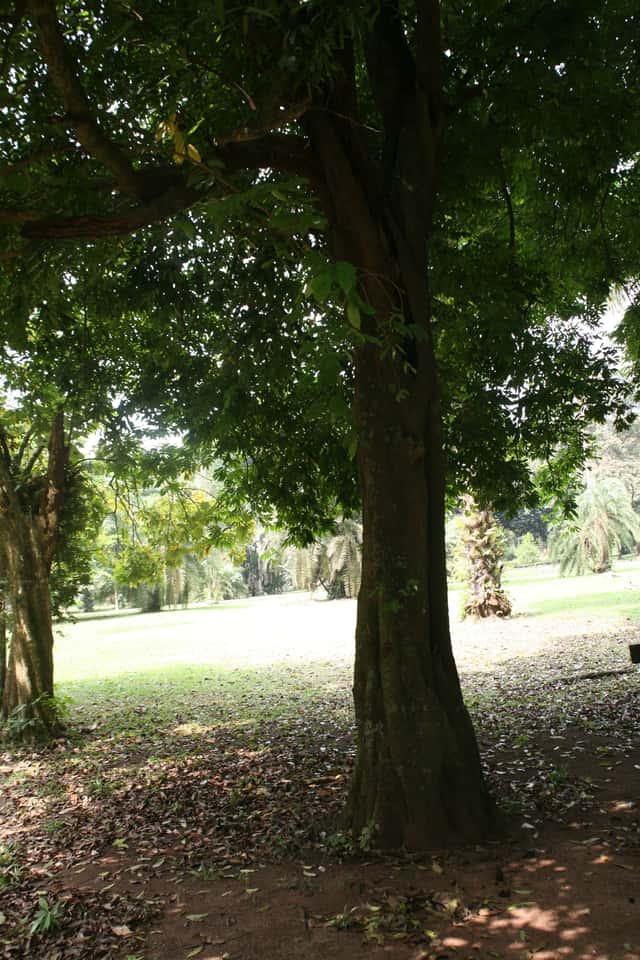
Eperua falcata is a rainforest tree in the legume family (Fabaceae), native to northern South America, primarily the Guianas (French Guiana, Suriname, Guyana) and northern Brazil (Amapá). It grows up to 35 meters tall, featuring grayish-brown bark and pinnately compound leaves consisting of 2-4 pairs of ovate leaflets approximately 18 cm long. Its bell-shaped flowers with red petals bloom in pendulous clusters and are highly decorative, while its ripening, mauve-pink, sword-shaped pods can eject seeds up to 30 meters away upon opening. The tree often forms pure stands on white quartz sands in riverine and swampy rainforests, up to elevations of 700 meters. Its reddish-brown heartwood is extremely durable; due to its natural fungal resistance, it is used for piles, shingles, and telegraph poles.
How Big Does Wallaba Grow?
TLDR: Wallaba can reach up to 35.0m tall with Medium growth rate.
Max height
35.0m
Spread
12.0m
Growth rate
Medium
Foliage
Evergreen
Plant Uses
Ornamental
Great for decoration
Medicinal
Medicinal properties
Medicinal Uses
- The resin from the bark is used as a wound-healing and cicatrizing agent
- An infusion of the bark is used to relieve toothaches
- The bitter bark is used as an emetic in traditional medicine
- The wood oil is used to treat rheumatism and wounds
- An infusion of the bark is also applied as a hair growth stimulant
Is your plant showing symptoms?
Click on the symptom to discover possible causes:
What Diseases Commonly Affect Wallaba?
TLDR: Wallaba is susceptible to 2 known diseases. Monitor regularly for early detection.
Caterpillars
Caterpillars are the larval stage of moths and butterflies that feed voraciously on plant foliage, stems, flowers, and fruits. Common species include cabbage loopers, tomato hornworms, armyworms, and cutworms. These pests can cause extensive damage by consuming large amounts of plant tissue in a short time. They vary in size from small (1/4 inch) to large (5 inches), with colors ranging from green to brown, often featuring stripes or spots. Caterpillars are highly mobile and can quickly spread throughout gardens, making them one of the most destructive common pests.
Insect herbivory
Insect herbivory occurs when various pests like caterpillars, beetles, or grasshoppers feed on plant tissues. This damage reduces the plant's ability to photosynthesize and can introduce secondary infections. If left unchecked, it can lead to total defoliation and plant death.
Meaning & Symbolism
The Wallaba is a symbol of rainforest resilience and adaptability: it is capable of forming pure stands even on nutrient-poor white sand soils, and its explosive seed pods express the power of passing on life.
Compare with similar plants
| Attribute | Difficulty | Light | Watering | Pet Safe |
|---|---|---|---|---|
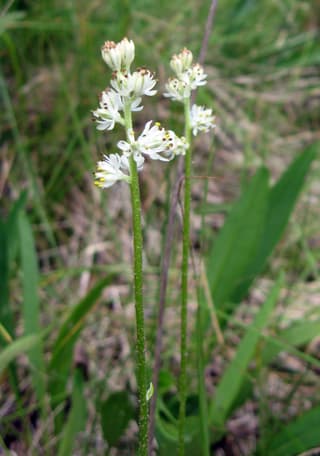
| Sticky false asphodel | Hard | Bright indirect | 1d | ✓ |
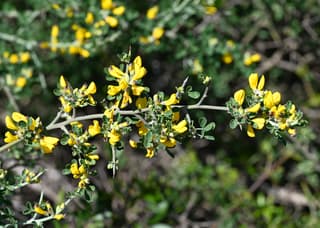
| Hairy Thorny Broom | Easy | Direct sun | 14d | ✓ |
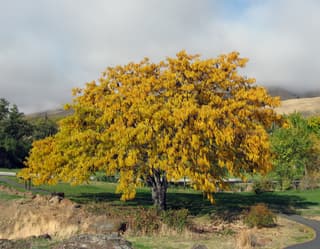
| Honey Locust | Medium | Direct sun | 14d | ✓ |
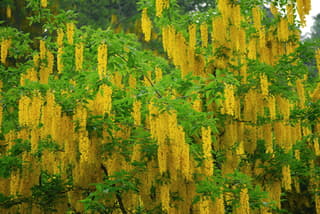
| Scotch laburnum | Medium | Bright indirect | 10d | ⚠️ |
Choose & Compare
Sources & References
- Eperua falcata - Wikipedia
- Eperua falcata - Useful Tropical Plants
- Chemical compounds from Eperua falcata and Eperua grandiflora heartwood and their biological activities against wood destroying fungus (Coriolus versicolor)
- Diversity and abundance of insect herbivores foraging on seedlings in a rainforest in Guyana
- Physiological epicotyl dormancy and recalcitrant storage behaviour in seeds of two tropical Fabaceae species (PMC)