Lythraceae
Wand Loosestrife (Lythrum virgatum)
Lythrum virgatum
An easy perennial for sun and constantly moist soil. Cut off faded spikes before they set seed to stop it spreading, and cut the clump down to the ground in late winter. Do not plant it near natural wetlands.
Every 3 days
Bright indirect
-34° - °C
% - %
Categories
What is Wand Loosestrife?
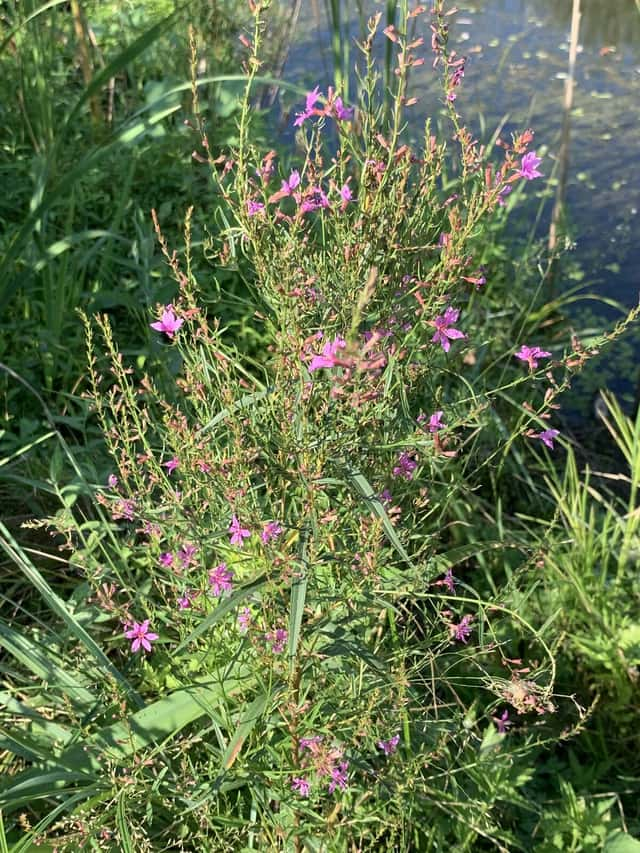
Wand Loosestrife (Lythrum virgatum) is a easy-care plant from the Lythraceae family. Lythrum virgatum is a herbaceous perennial in the loosestrife family (Lythraceae), native to Europe and western and central Asia. It is a close relative of purple loosestrife (L. salicaria) but smaller, hairless and with narrow leaves. It forms clumps of upright, four-angled stems 30 cm to 1 m tall...
Wand Loosestrife grows up to 1.0m, spread of 40cm, watering every 3 days. It is not suitable for indoor environments and safe for pets.
Unlike many tropical plants, Wand Loosestrife tolerates watering mistakes. Best for beginners. Unlike many popular species, Wand Loosestrife is safe to keep around pets.
How to Care for Wand Loosestrife?
TLDR: Wand Loosestrife needs Bright indirect, watering every 3 days, and temperatures between -34-30°C with 40-70% humidity.
How Often Should You Water Wand Loosestrife?
Keep the soil moist at all times: water every 2-3 days in hot weather without rain. It tolerates occasional flooding and a few dry days, but suffers in soil that stays dry.
How Much Light Does Wand Loosestrife Need?
Full sun is best. It tolerates part shade but flowers less.
What Is the Best Soil for Wand Loosestrife?
Fertile, humus-rich soil that holds moisture. It grows well at pond edges, in damp borders and even in shallow water.
What Pot Should You Use for Wand Loosestrife?
A large pot that does not dry out, or a pot standing in a saucer of water; it also works as a pond marginal.
What Is Wand Loosestrife and Where Does It Come From?
Lythrum virgatum is a herbaceous perennial in the loosestrife family (Lythraceae), native to Europe and western and central Asia. It is a close relative of purple loosestrife (L. salicaria) but smaller, hairless and with narrow leaves. It forms clumps of upright, four-angled stems 30 cm to 1 m tall and in summer bears open, leafy spikes of pink to purple flowers that bees visit often. The top dies back in winter and regrows in spring. It likes moist soil and even grows in shallow water. Several US states list it as a prohibited invasive plant, because it spreads by seed and stem fragments and crosses with L. salicaria.
How to Propagate Wand Loosestrife?
Clump division
This is the surest way to propagate cultivars, which come true to the parent.
- 1 In spring, lift the clump
- 2 Split it with a sharp spade so each piece has roots and shoots
- 3 Replant at the same depth
- 4 Water well and keep the soil moist
Materials needed:
Seed
Where the species is invasive, do not let the plant set seed.
- 1 Scatter seeds on moist seed mix
- 2 Press them in lightly without covering: they need light to germinate
- 3 Keep moist in a bright place
- 4 Pot on the seedlings once they have a few leaves
Materials needed:
How Big Does Wand Loosestrife Grow?
TLDR: Wand Loosestrife can reach up to 1.0m tall with Fast growth rate.
Max height
1.0m
Spread
40cm
Growth rate
Fast
Foliage
Deciduous
Plant Uses
Ornamental
Great for decoration
Is your plant showing symptoms?
Click on the symptom to discover possible causes:
What Diseases Commonly Affect Wand Loosestrife?
TLDR: Wand Loosestrife is susceptible to 2 known diseases. Monitor regularly for early detection.
Aphids
Aphids are small, soft-bodied, pear-shaped insects (1/16 to 1/8 inch long) that feed by sucking nutrient-rich sap from plants. They reproduce rapidly and can quickly weaken plants, causing distorted growth and transmitting plant viruses. Aphids come in various colors including green, black, red, yellow, brown, and gray. They secrete honeydew, a sticky substance that attracts ants and encourages sooty mold growth.
Slugs and Snails
Slugs and snails are mollusks that feed on plant tissue, causing irregular holes in leaves and damage to young seedlings. They are most active at night and in moist conditions, leaving characteristic silvery slime trails. These pests can quickly devastate gardens, especially during wet seasons.
Fun Facts
Its stems are clearly four-angled.
Cultivars sold as sterile, such as Morden's Gleam, can still cross with purple loosestrife.
The flowers attract several wild bees and hoverflies.
Frequently asked questions
How is wand loosestrife different from purple loosestrife?
Is wand loosestrife invasive?
Does it need a lot of water?
Is it poisonous?
Compare with similar plants
| Attribute | Difficulty | Light | Watering | Pet Safe |
|---|---|---|---|---|
| Field Maple | Easy | Bright indirect | 14d | ✓ |
| Iberian Houseleek | Easy | Direct sun | 14d | ✓ |
| Silver Birch | Easy | Direct sun | 14d | ✓ |
| Common Blanketflower | Easy | Direct sun | 10d | ✓ |
Choose & Compare
Sources & References
- Washington State Noxious Weed Control Board - Wand loosestrife
- NaturaDB - Lythrum virgatum (Ruten-Blutweiderich)
- Oklahoma State University Extension - Lythrum virgatum plant profile
- Alaska Center for Conservation Science - Lythrum invasiveness ranking
- Invasive.org / EDDMapS - European wand loosestrife
- Botany One - L. virgatum and L. salicaria hybridization study (Mattingly et al. 2023)





