Scrophulariaceae
Water Figwort: Medicinal Uses & Care Tips
Scrophularia auriculata
Water figwort is a low-maintenance, moisture-loving perennial best suited to bog gardens, pond edges, or containers kept constantly damp. Give it partial shade to full sun, keep the soil consistently wet and rich in organic matter, and it will reward you with tall spikes of small maroon flowers from summer into autumn with very little intervention.
Every 2 days
Partial shade
5° - 27°C
65% - 95%
Categories
What is Water Figwort?
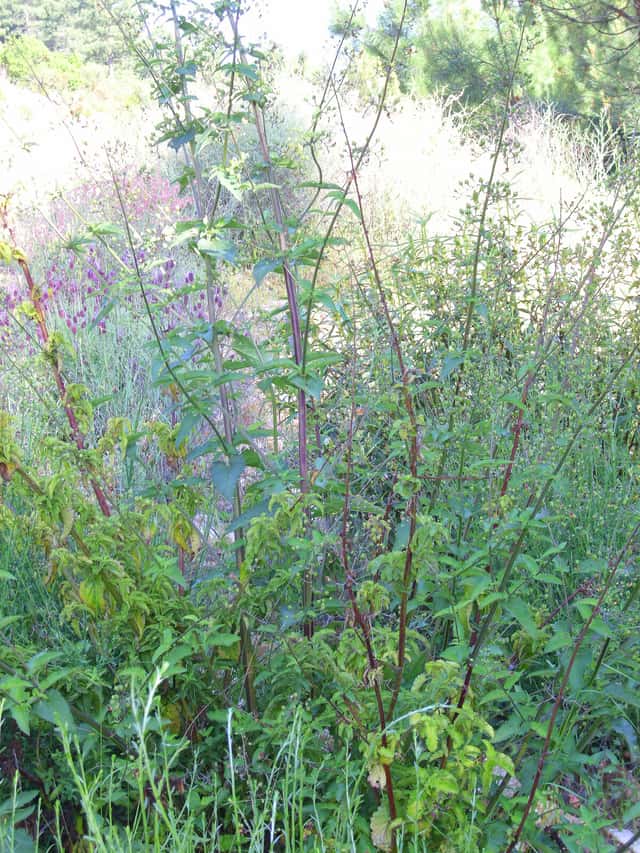
Water Figwort (Scrophularia auriculata) is a easy-care plant from the Scrophulariaceae family. Water figwort (Scrophularia auriculata) is an upright, clump-forming herbaceous perennial native to the damp riverbanks, pond margins, and wet meadows of Western Europe and North Africa. Reaching up to 1 m tall, it has distinctive winged, square, greenish-purple stems and oval, wrinkled, crenate-mar...
Water Figwort grows up to 1.0m, spread of 75cm, watering every 2 days, 5°C – 27°C, 65–95% humidity. It is not suitable for indoor environments and safe for pets.
Unlike many tropical plants, Water Figwort tolerates watering mistakes. Best for beginners. Unlike many popular species, Water Figwort is safe to keep around pets.
How to Care for Water Figwort?
TLDR: Water Figwort needs Partial shade, watering every 2 days, and temperatures between 5-27°C with 65-95% humidity.
How Often Should You Water Water Figwort?
Keep the soil permanently moist to wet -- this plant naturally grows at water's edge and does not tolerate drying out. Water deeply and frequently, especially in summer, or grow it as a marginal aquatic in up to 15 cm of water.
How Much Light Does Water Figwort Need?
Thrives in partial shade but tolerates full sun as long as the roots stay damp; avoid deep, permanent shade or hot, dry, direct sun exposure.
What Is the Best Soil for Water Figwort?
Use rich, loamy, moisture-retentive soil amended with compost or well-rotted manure. It tolerates clay, sand, and chalk as long as the ground stays consistently damp; pH can range from acid to alkaline.
What Pot Should You Use for Water Figwort?
If grown in a container, use a wide, unglazed or plastic pot with minimal drainage (or stand it in a saucer of water) to keep the compost constantly saturated, mimicking its natural boggy habitat.
Care Schedule
Fertilize
Every 45 days
Repot
Every 730 days
What Is Water Figwort and Where Does It Come From?
Water figwort (Scrophularia auriculata) is an upright, clump-forming herbaceous perennial native to the damp riverbanks, pond margins, and wet meadows of Western Europe and North Africa. Reaching up to 1 m tall, it has distinctive winged, square, greenish-purple stems and oval, wrinkled, crenate-margined leaves that are often auricled (eared) at the base, giving the species its name. From early summer to early autumn it produces small, globular, maroon-brown flowers with a two-lipped shape, borne on branching cymes above the foliage. Because it thrives in permanently moist to waterlogged soil, it is a popular choice for bog gardens, pond margins, and rain gardens, where it also serves as a larval host plant for the figwort sawfly.
How to Propagate Water Figwort?
How Big Does Water Figwort Grow?
TLDR: Water Figwort can reach up to 1.0m tall with Medium growth rate.
Max height
1.0m
Spread
75cm
Growth rate
Medium
Foliage
Deciduous
Plant Uses
Ornamental
Great for decoration
Medicinal
Medicinal properties
Medicinal Uses
- Traditionally applied topically as a poultice or infusion-soaked cloth for wounds, ulcers, bruises, and scalds
- Used as an infusion rinse for skin eruptions and eczema in European folk medicine
- Not used in mainstream herbal medicine today -- internal use is not recommended without professional guidance
Is your plant showing symptoms?
Click on the symptom to discover possible causes:
What Diseases Commonly Affect Water Figwort?
TLDR: Water Figwort is susceptible to 5 known diseases. Monitor regularly for early detection.
Slugs and Snails
Slugs and snails are mollusks that feed on plant tissue, causing irregular holes in leaves and damage to young seedlings. They are most active at night and in moist conditions, leaving characteristic silvery slime trails. These pests can quickly devastate gardens, especially during wet seasons.
Caterpillars
Caterpillars are the larval stage of moths and butterflies that feed voraciously on plant foliage, stems, flowers, and fruits. Common species include cabbage loopers, tomato hornworms, armyworms, and cutworms. These pests can cause extensive damage by consuming large amounts of plant tissue in a short time. They vary in size from small (1/4 inch) to large (5 inches), with colors ranging from green to brown, often featuring stripes or spots. Caterpillars are highly mobile and can quickly spread throughout gardens, making them one of the most destructive common pests.
Grey Mould
Powdery Mildew
Powdery mildew is a common fungal disease caused by various fungi species including Erysiphe, Podosphaera, Oïdium, and Leveillula. It affects over 10,000 plant species worldwide. The disease thrives in warm, dry climates with high humidity and appears as a distinctive white powdery coating on plant surfaces.
Meaning & Symbolism
In European folk tradition, water figwort's Portuguese name "erva-das-escaldadelas" ("herb of scalds") reflects its historic use as a poultice for burns, wounds, and skin ailments, making it a folk symbol of healing and soothing relief.
Compare with similar plants
| Attribute | Difficulty | Light | Watering | Pet Safe |
|---|---|---|---|---|
| Field Maple | Easy | Bright indirect | 14d | ✓ |
| Silver Birch | Easy | Direct sun | 14d | ✓ |
| Common Blanketflower | Easy | Direct sun | 10d | ✓ |
| Cushion Bush | Easy | Direct sun | 14d | ✓ |
Choose & Compare
Sources & References
- Water figwort | RHS Gardening
- Scrophularia auriculata - Wikipedia
- Shoreline Figwort Plant Care - PlantIn
- Scrophularia auriculata L., Water Figwort - BSBI
- Especie Scrophularia auriculata - Jardim Botanico UTAD
- Water Figwort - Friends of Heene Cemetery
- Scrophulariaceae (Scrophularia) propagation protocol - RNGR





