Onagraceae
Water Primrose (Ludwigia): Care Guide
Ludwigia
Give it strong light and constant water, in an aquarium or in permanently wet soil. It grows fast and needs regular trimming. Care varies by species, so find out which one you have first.
Every 3 days
Bright indirect
18° - 30°C
% - %
Categories
What is Water Primrose?
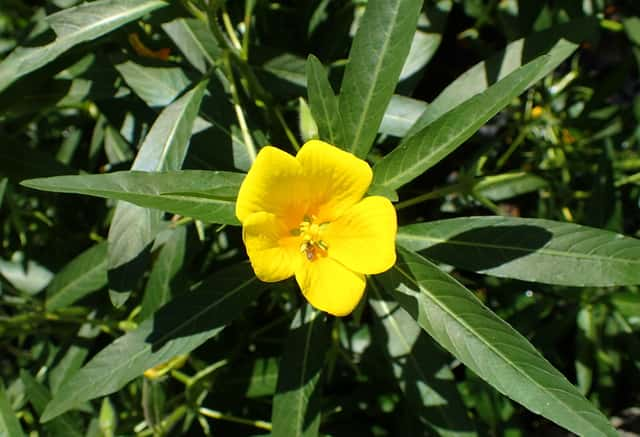
Water Primrose (Ludwigia) is a easy-care plant from the Onagraceae family. Ludwigia is a genus of about 82 water and marsh plants in the evening primrose family. They grow worldwide, mostly in the tropics. The flowers are usually yellow with 4 or 5 petals, and the stems are often red. Some species float or form mats on the water, while others stand upright at the edge. Sev...
Water Primrose grows up to 1.0m, watering every 3 days, 18°C – 30°C. It is suitable for indoor environments and safe for pets.
Unlike many tropical plants, Water Primrose tolerates watering mistakes. Best for beginners. Unlike many popular species, Water Primrose is safe to keep around pets. Without adequate drainage, root rot can develop within 7 days.
How to Care for Water Primrose?
TLDR: Water Primrose needs Bright indirect, watering every 3 days, and temperatures between 18-30°C with 40-70% humidity.
How Often Should You Water Water Primrose?
In a pond or aquarium, no watering is needed. In a pot or bed, keep the soil wet all the time and leave water in the saucer if needed.
How Much Light Does Water Primrose Need?
It does best in full sun or part shade. In an aquarium, moderate light suits the easier species. In low light the leaves stay green and growth slows.
What Is the Best Soil for Water Primrose?
Use rich, organic soil that stays wet. In an aquarium, a nutrient-rich substrate helps. Keep the water slightly acidic to neutral, around pH 6.0 to 7.5.
What Pot Should You Use for Water Primrose?
Use a pot without drainage holes, or stand it in a container of water. In an aquarium, plant the stems into the substrate.
What Is Water Primrose and Where Does It Come From?
Ludwigia is a genus of about 82 water and marsh plants in the evening primrose family. They grow worldwide, mostly in the tropics. The flowers are usually yellow with 4 or 5 petals, and the stems are often red. Some species float or form mats on the water, while others stand upright at the edge. Several are sold for aquariums because their leaves turn red or orange in good light. Others have become serious weeds in rivers and lakes.
How to Propagate Water Primrose?
Stem cutting
Older leaves may melt after planting in an aquarium. This is normal while underwater leaves develop.
- 1 Cut a healthy piece of stem
- 2 Strip the lower leaves
- 3 Push the base into aquarium substrate or wet soil
- 4 Keep it in good light until new roots form
Materials needed:
How Big Does Water Primrose Grow?
TLDR: Water Primrose can reach up to 1.0m tall with Fast growth rate.
Max height
1.0m
Growth rate
Fast
Plant Uses
Ornamental
Great for decoration
Is your plant showing symptoms?
Click on the symptom to discover possible causes:
What Diseases Commonly Affect Water Primrose?
TLDR: Water Primrose is susceptible to 2 known diseases. Monitor regularly for early detection.
Lack of Light
Lack of light, also known as etiolation, is an environmental condition that occurs when a plant does not receive adequate light for normal photosynthesis and growth. Without sufficient light, the plant cannot produce enough chlorophyll, leading to pale coloration, weakened tissues, and abnormal elongation as the plant stretches toward any available light source. Etiolation affects virtually all plant species, from sun-loving tropicals to shade-tolerant houseplants. While the condition is not contagious, it progressively weakens the plant over time, making it more susceptible to pests, disease, and physical damage. Prompt correction of lighting conditions is essential to reverse the effects and restore healthy growth.
Nutrient Deficiency
Nutrient deficiency occurs when a plant cannot access one or more essential mineral elements in sufficient quantities for healthy growth. Plants require 17 essential nutrients: macronutrients (N, P, K, Ca, Mg, S) and micronutrients (Fe, Zn, Mn, Cu, B, Mo, Cl). Each plays a unique role in metabolism, structure, and reproduction. Deficiencies arise from depleted soils, incorrect pH blocking uptake, poor watering practices leaching nutrients, root damage, or imbalanced fertilization. Understanding whether a nutrient is mobile or immobile determines where symptoms first appear: mobile nutrients (N, P, K, Mg) show symptoms on older leaves first, while immobile nutrients (Ca, Fe, Zn, Cu, B) show symptoms on new growth first.
Fun Facts
Linnaeus named the genus after the German botanist Christian Gottlieb Ludwig
Ludwigia remains dating to the Eocene were found at Eckfelder maar in Germany
A single fruit can hold 50 to 400 seeds
Frequently asked questions
Does water primrose need a lot of light?
Can I release Ludwigia into a pond or river?
Why did my Ludwigia lose its color?
Is Ludwigia toxic to pets?
Compare with similar plants
| Attribute | Difficulty | Light | Watering | Pet Safe |
|---|---|---|---|---|
| Field Maple | Easy | Bright indirect | 14d | ✓ |
| Iberian Houseleek | Easy | Direct sun | 14d | ✓ |
| Silver Birch | Easy | Direct sun | 14d | ✓ |
| Common Blanketflower | Easy | Direct sun | 10d | ✓ |





