Amaryllidaceae
White Rain Lily (Zephyranthes candida) Care Guide
Zephyranthes candida
An easy bulb that flowers best in full sun but accepts partial shade. Plant in well-drained soil and water regularly in the growing season; once established it tolerates drought and short periods of wet soil. It survives light frost (down to about -5 °C). Divide clumps every 2-3 years to keep it flowering. All parts, especially the bulb, are toxic if eaten.
Every 6 days
Bright indirect
-5° - 35°C
% - %
Categories
What is White Rain Lily?
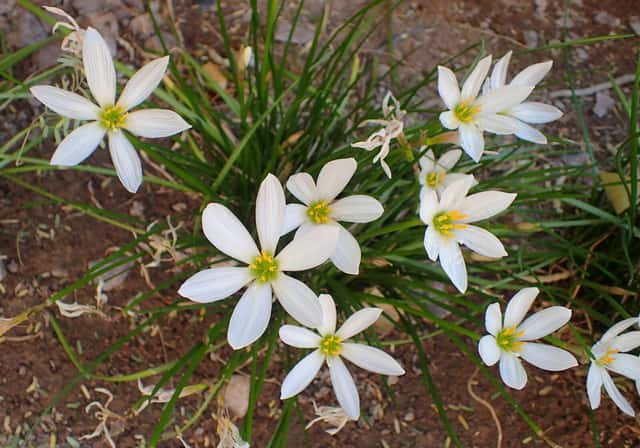
White Rain Lily (Zephyranthes candida) is a easy-care plant from the Amaryllidaceae family. Zephyranthes candida is a small perennial bulb in the family Amaryllidaceae, native to the Rio de la Plata region of southern Brazil, Uruguay, Argentina and Paraguay. It forms clumps of narrow, glossy, grass-like leaves and from summer into fall produces star-shaped white flowers 4-5 cm across with...
White Rain Lily grows up to 30cm, spread of 20cm, watering every 6 days, -5°C – 35°C. It is suitable for indoor environments and not safe for pets.
Unlike many tropical plants, White Rain Lily tolerates watering mistakes. Best for beginners. Without precautions, ingestion can cause irritation in pets. Keep out of reach of cats and dogs. Without adequate drainage, root rot can develop within 12 days.
How to Care for White Rain Lily?
TLDR: White Rain Lily needs Bright indirect, watering every 6 days, and temperatures between -5-35°C with 40-70% humidity.
How Often Should You Water White Rain Lily?
Water when the top few centimeters of soil are dry, about once a week in summer. A deep soak after a few dry days helps trigger flowering. Cut back watering a lot in winter.
How Much Light Does White Rain Lily Need?
Give it at least 6 hours of direct sun a day for plenty of flowers. It grows in partial shade but blooms less.
What Is the Best Soil for White Rain Lily?
Use well-drained soil with sand and organic matter; it also tolerates clay and moist ground. Slightly acidic to slightly alkaline pH is fine.
What Pot Should You Use for White Rain Lily?
A wide, shallow clay or plastic pot with good drainage holes; several bulbs together in one pot give the best display.
Care Schedule
Fertilize
Every 30 days
Repot
Every 730 days
What Is White Rain Lily and Where Does It Come From?
Zephyranthes candida is a small perennial bulb in the family Amaryllidaceae, native to the Rio de la Plata region of southern Brazil, Uruguay, Argentina and Paraguay. It forms clumps of narrow, glossy, grass-like leaves and from summer into fall produces star-shaped white flowers 4-5 cm across with orange-yellow stamens. The flowers often open in masses a few days after a heavy rain. It is widely used for edging, beds, containers and even damp pond margins.
How to Propagate White Rain Lily?
Bulb division
Divide every 2-3 years, when clumps get crowded and flowering drops off. Wear gloves, because the bulb is toxic.
- 1 Carefully lift the clump in early spring.
- 2 Separate the small offset bulbs that form beside the main bulb.
- 3 Replant each bulb about 3-5 cm deep, 5-8 cm apart.
- 4 Water well after planting.
Materials needed:
Seed
Seeds lose viability quickly, so sow them fresh. Seedlings take 1-2 years to flower.
- 1 Collect the capsules when they dry and split open, releasing flat black seeds.
- 2 Sow right away on moist mix, covering lightly.
- 3 Keep moist in a bright spot until they germinate.
Materials needed:
How Big Does White Rain Lily Grow?
TLDR: White Rain Lily can reach up to 30cm tall with Medium growth rate.
Max height
30cm
Spread
20cm
Growth rate
Medium
Foliage
Semi-evergreen
Warning: Toxic Plant
This plant can be toxic if ingested. Keep out of reach of:
Plant Uses
Ornamental
Great for decoration
Ground Cover
Soil coverage
Is your plant showing symptoms?
Click on the symptom to discover possible causes:
What Diseases Commonly Affect White Rain Lily?
TLDR: White Rain Lily is susceptible to 4 known diseases. Monitor regularly for early detection.
Root Rot
Root rot is a serious fungal disease that affects the root system of plants, causing them to decay and die. It is primarily caused by overwatering, poor drainage, or soil-borne fungi such as Pythium, Phytophthora, Rhizoctonia, and Fusarium. The disease thrives in waterlogged conditions where roots are deprived of oxygen, making them susceptible to fungal infection.
Slugs and Snails
Slugs and snails are mollusks that feed on plant tissue, causing irregular holes in leaves and damage to young seedlings. They are most active at night and in moist conditions, leaving characteristic silvery slime trails. These pests can quickly devastate gardens, especially during wet seasons.
Spider Mites
Spider mites are tiny arachnids (less than 1/20 inch long) related to spiders and ticks that feed on plant sap. They thrive in hot, dry conditions and can cause significant damage to ornamental and vegetable plants. During severe infestations, crop losses can reach 14% or higher as these pests disrupt vital plant processes including photosynthesis, carbon dioxide absorption, and transpiration.
Red Blotch (Stagonospora curtisii)
A common fungal disease affecting bulbous plants such as Amaryllis. It is characterized by elongated, bright red lesions that can deform leaves and stems, eventually weakening the bulb over time.
Meaning & Symbolism
Like other rain lilies, it is linked to renewal and hope, since its white flowers appear suddenly after rain.
Fun Facts
The name candida is Latin for shining white.
It is one of the few species in the genus that tolerates waterlogged soil and can be planted at pond edges.
Its flowers can all open together about two days after a heavy rain.
Frequently asked questions
Is white rain lily toxic?
Why is my rain lily not blooming?
Can white rain lily grow in a pot?
When does Zephyranthes candida bloom?
Compare with similar plants
| Attribute | Difficulty | Light | Watering | Pet Safe |
|---|---|---|---|---|
| Field Maple | Easy | Bright indirect | 14d | ✓ |
| Iberian Houseleek | Easy | Direct sun | 14d | ✓ |
| Silver Birch | Easy | Direct sun | 14d | ✓ |
| Common Blanketflower | Easy | Direct sun | 10d | ✓ |





