Cactaceae
White-spined Crown Cactus (Aylostera albopectinata)
Aylostera albopectinata
A small, easy cactus as long as you respect two things: lots of light and little water. Use a gritty mineral mix, water only when the pot is dry and keep it completely dry and cool in winter. That cool, dry rest is what makes it bloom in spring. The biggest risk is rot from overwatering.
Every 10 days
Bright indirect
-7° - °C
% - %
Categories
What is White-spined crown cactus?
White-spined crown cactus (Aylostera albopectinata) is a easy-care plant from the Cactaceae family. Aylostera albopectinata, still sold as Rebutia albopectinata, is a tiny cactus from southern Bolivia, where it grows on dry slopes at 3,000-3,500 m in the Chuquisaca region. The body is a grey-green ball about 1.5 cm across, usually solitary, with a thick, beet-like root. The spines are short, white...
White-spined crown cactus grows up to 4cm, watering every 10 days. It is suitable for indoor environments and safe for pets.
Unlike many tropical plants, White-spined crown cactus tolerates watering mistakes. Best for beginners. Unlike many popular species, White-spined crown cactus is safe to keep around pets. Without adequate drainage, root rot can develop within 20 days.
How to Care for White-spined crown cactus?
TLDR: White-spined crown cactus needs Bright indirect, watering every 10 days, and temperatures between -7-30°C with 40-70% humidity.
How Often Should You Water White-spined crown cactus?
In spring and summer, water when the mix is completely dry, about every 7-10 days in hot, dry weather. In winter, don't water. Too much water rots the thick root.
How Much Light Does White-spined crown cactus Need?
Bright light with some direct sun. In summer, shade it from strong afternoon sun so it doesn't scorch. Indoors, the brightest window you have.
What Is the Best Soil for White-spined crown cactus?
A very mineral mix with at least half coarse sand or pumice, slightly acidic. A layer of grit on top keeps the surface from caking.
What Pot Should You Use for White-spined crown cactus?
A small, deep clay pot with a drainage hole and a layer of grit at the bottom, for the long root. Repot every year while it is small.
Care Schedule
Fertilize
Every 30 days
Repot
Every 365 days
What Is White-spined crown cactus and Where Does It Come From?
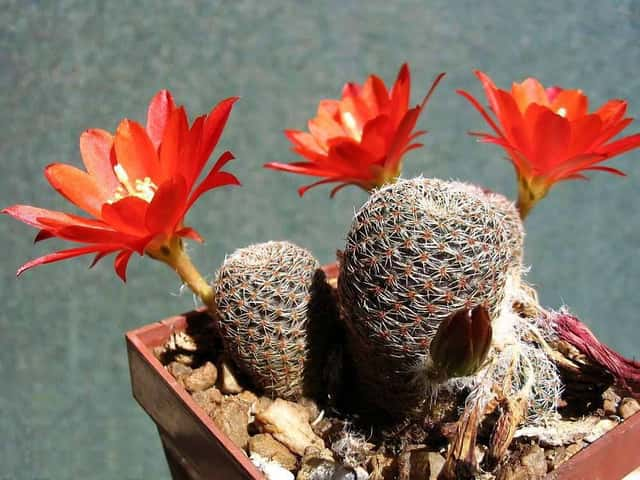
Aylostera albopectinata, still sold as Rebutia albopectinata, is a tiny cactus from southern Bolivia, where it grows on dry slopes at 3,000-3,500 m in the Chuquisaca region. The body is a grey-green ball about 1.5 cm across, usually solitary, with a thick, beet-like root. The spines are short, white and lie flat on the body, arranged like the teeth of a comb, hence the name albopectinata ("white comb"). In spring it opens red or orange flowers with a pink or white throat that can be larger than the plant itself. In the wild it is endangered.
How to Propagate White-spined crown cactus?
Offsets
Solitary plants are slow to make offsets. Don't water right after separating to avoid rot.
- 1 Gently twist a side offset off the mother plant
- 2 Let it dry in the shade for 1-2 weeks until the base calluses
- 3 Set the base on dry mineral mix, keeping the offset upright
- 4 Start watering lightly once roots appear
Materials needed:
Seed
Seed is rare: cultivated plants seldom set fruit, possibly because they are all one clone.
- 1 Sow on fine, moist sandy mix without covering
- 2 Cover the pot with clear plastic to hold humidity
- 3 Keep in a bright, warm spot out of direct sun
- 4 Remove the plastic gradually once seedlings appear
Materials needed:
How Big Does White-spined crown cactus Grow?
TLDR: White-spined crown cactus can reach up to 4cm tall with Slow growth rate.
Max height
4cm
Growth rate
Slow
Foliage
Evergreen
Plant Uses
Ornamental
Great for decoration
Is your plant showing symptoms?
Click on the symptom to discover possible causes:
What Diseases Commonly Affect White-spined crown cactus?
TLDR: White-spined crown cactus is susceptible to 2 known diseases. Monitor regularly for early detection.
Root Rot
Root rot is a serious fungal disease that affects the root system of plants, causing them to decay and die. It is primarily caused by overwatering, poor drainage, or soil-borne fungi such as Pythium, Phytophthora, Rhizoctonia, and Fusarium. The disease thrives in waterlogged conditions where roots are deprived of oxygen, making them susceptible to fungal infection.
Spider Mites
Spider mites are tiny arachnids (less than 1/20 inch long) related to spiders and ticks that feed on plant sap. They thrive in hot, dry conditions and can cause significant damage to ornamental and vegetable plants. During severe infestations, crop losses can reach 14% or higher as these pests disrupt vital plant processes including photosynthesis, carbon dioxide absorption, and transpiration.
Fun Facts
Albopectinata means white comb, after the way the spines lie flat.
The flower can be 5 cm long, more than three times the width of the plant body.
In the wild it lives only in a small area of Chuquisaca, Bolivia, and is endangered.
Frequently asked questions
Why won't my Rebutia albopectinata bloom?
Why is it soft and dark at the base?
What are these tiny specks and webs?
Can it take cold?
Compare with similar plants
| Attribute | Difficulty | Light | Watering | Pet Safe |
|---|---|---|---|---|
| Field Maple | Easy | Bright indirect | 14d | ✓ |
| Iberian Houseleek | Easy | Direct sun | 14d | ✓ |
| Silver Birch | Easy | Direct sun | 14d | ✓ |
| Common Blanketflower | Easy | Direct sun | 10d | ✓ |





