Amaryllidaceae
Wild Daffodil Care Guide
Narcissus pseudonarcissus
Wild daffodils are low-maintenance bulbs best grown outdoors in beds, borders, or naturalized in grass. Plant bulbs in autumn, water generously through the growing and flowering period, then let the soil dry out naturally once the foliage yellows. Leave the leaves in place after flowering until they die back on their own, since they replenish the bulb for next year's bloom. Handle bulbs with gloves, as the sap can irritate skin, and keep away from pets and children due to its toxicity.
Every 7 days
Bright indirect
-15° - 24°C
40% - 60%
Categories
What is Wild Daffodil?
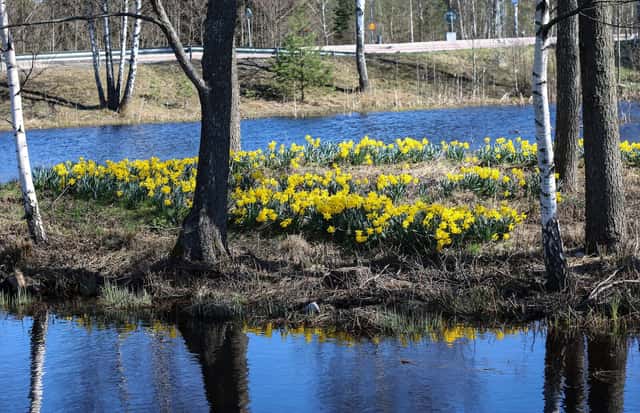
Wild Daffodil (Narcissus pseudonarcissus) is a easy-care plant from the Amaryllidaceae family. Narcissus pseudonarcissus, commonly called the wild daffodil or Lent lily, is a bulbous perennial in the Amaryllidaceae family native to Western Europe, including Britain. It produces a single nodding flower per stem with pale yellow outer petals surrounding a deeper yellow trumpet-shaped corona, bl...
Wild Daffodil grows up to 30cm, spread of 15cm, watering every 7 days, -15°C – 24°C, 40–60% humidity. It is suitable for indoor environments and not safe for pets.
Unlike many tropical plants, Wild Daffodil tolerates watering mistakes. Best for beginners. Without precautions, ingestion can cause irritation in pets. Keep out of reach of cats and dogs. Without adequate drainage, root rot can develop within 14 days.
How to Care for Wild Daffodil?
TLDR: Wild Daffodil needs Bright indirect, watering every 7 days, and temperatures between -15-24°C with 40-60% humidity.
How Often Should You Water Wild Daffodil?
Water regularly and keep the soil consistently moist from planting through the end of flowering. Once the foliage begins to yellow after bloom, reduce watering and allow the bulb to dry out during its summer dormancy to prevent rot.
How Much Light Does Wild Daffodil Need?
Grow in full sun to light partial shade. At least six hours of direct light daily produces the strongest flowering; too much shade reduces bloom and weakens the bulb over time.
What Is the Best Soil for Wild Daffodil?
Plant in average, well-draining soil enriched with organic matter. The species tolerates a range of soils but flowers best in slightly acidic to neutral, moisture-retentive ground that never becomes waterlogged.
What Pot Should You Use for Wild Daffodil?
Not typically pot-grown long-term; if forcing indoors, use a wide, shallow terracotta bulb pan with drainage holes, then transplant to the garden after flowering.
Care Schedule
Fertilize
Every 180 days
Repot
Every 1460 days
What Is Wild Daffodil and Where Does It Come From?
Narcissus pseudonarcissus, commonly called the wild daffodil or Lent lily, is a bulbous perennial in the Amaryllidaceae family native to Western Europe, including Britain. It produces a single nodding flower per stem with pale yellow outer petals surrounding a deeper yellow trumpet-shaped corona, blooming from late winter into early spring. The strap-like grey-green leaves emerge before the flower and die back completely by early summer as the bulb enters dormancy. All parts of the plant, especially the bulb, contain toxic alkaloids, most notably lycorine, making it unsafe for humans and pets to ingest.
How to Propagate Wild Daffodil?
Bulb offset division
Divide clumps every 3-5 years when flowering declines from overcrowding. Always wear gloves when handling bulbs since the sap is a skin irritant.
- 1 Wait until foliage has completely died back in early summer
- 2 Lift the parent bulb clump carefully with a fork
- 3 Gently separate the small offset bulbs (bulbils) from the mother bulb by hand
- 4 Replant offsets immediately at the same depth as the parent bulb, about 3 times the bulb height
- 5 Water in well and mulch lightly
Materials needed:
Seed propagation
Seed propagation is slow and mainly used by breeders; division is far more practical for home gardeners.
- 1 Collect ripe seed pods after flowering in early summer
- 2 Sow seed fresh in trays of gritty, well-draining compost
- 3 Keep in a cold frame or sheltered outdoor spot over winter
- 4 Grow on for several years before transplanting to final position
Materials needed:
How Big Does Wild Daffodil Grow?
TLDR: Wild Daffodil can reach up to 30cm tall with Medium growth rate.
Max height
30cm
Spread
15cm
Growth rate
Medium
Foliage
Deciduous
Warning: Toxic Plant
This plant can be toxic if ingested. Keep out of reach of:
Plant Uses
Ornamental
Great for decoration
Medicinal
Medicinal properties
Medicinal Uses
- Source of galantamine, an alkaloid extracted from the bulbs and used in prescription medication for Alzheimer's disease
Is your plant showing symptoms?
Click on the symptom to discover possible causes:
What Diseases Commonly Affect Wild Daffodil?
TLDR: Wild Daffodil is susceptible to 7 known diseases. Monitor regularly for early detection.
Fusarium Wilt
Fusarium is a soil-borne fungus that primarily attacks the roots and vascular tissues of plants. It enters through small wounds or stressed roots, is favored by warm temperatures and waterlogging, and then obstructs the flow of sap. Symptoms include yellowing, often on only one side of the plant, wilting even with moist soil, stunted growth, and, when cutting the stem, internal brown streaks. It frequently affects tomatoes, peppers, eggplants, basil, cucumbers, and zucchini, as well as ornamentals like carnations and cyclamen. In potted plants, it can manifest as root rot with a darkened crown.
Root-Knot Nematodes
Root-knot nematodes (Meloidogyne species) are microscopic roundworms that parasitize plant roots, causing characteristic galls or knots. These soil-borne pests are among the most economically damaging plant pathogens worldwide, affecting a wide range of ornamental and edible plants. The nematodes inject enzymes into root cells, causing abnormal swelling and disrupting water and nutrient uptake.
Mosaic Virus
Mosaic virus is a group of plant viruses that cause mottled, patchy patterns on leaves and can affect a wide variety of plants. The virus creates characteristic yellow, white, and green mosaic patterns, often accompanied by stunted growth and deformed plant parts. This highly contagious disease spreads rapidly through insect vectors and contaminated tools.
Grey Mould
Meaning & Symbolism
The wild daffodil symbolizes rebirth, new beginnings, and the arrival of spring; in English folklore it is known as the Lent Lily, blooming during Lent as a symbol of hope and renewal, famously celebrated in Wordsworth's poem "Daffodils".
Fun Facts
The wild daffodil is the plant traditionally identified as the flower in William Wordsworth's famous poem "I Wandered Lonely as a Cloud".
Narcissus pseudonarcissus bulbs are commercially farmed in Wales to extract galantamine, a drug used to treat Alzheimer's disease.
A single daffodil bulb can multiply into a dense clump of dozens of bulbs over just a few years if left undisturbed.
Frequently asked questions
Is Narcissus pseudonarcissus toxic to cats and dogs?
How often should I water wild daffodils?
When should I cut back daffodil leaves?
Can wild daffodils be grown in pots?
Compare with similar plants
| Attribute | Difficulty | Light | Watering | Pet Safe |
|---|---|---|---|---|
| Field Maple | Easy | Bright indirect | 14d | ✓ |
| Silver Birch | Easy | Direct sun | 14d | ✓ |
| Common Blanketflower | Easy | Direct sun | 10d | ✓ |
| Cushion Bush | Easy | Direct sun | 14d | ✓ |
Choose & Compare
Sources & References
- Narcissus pseudonarcissus: Complete care and characteristics guide
- Narcissus pseudonarcissus (Wild Daffodil) - Gardenia.net
- Toxic and Non-toxic Plants: Narcissus - ASPCA
- Narcissus Are Toxic To Pets - Pet Poison Helpline
- Narcissus Basal Rot: How to Prevent - RHS
- Diseases & Pests - American Daffodil Society
- Daffodil (Narcissus)-Bulb fly - PNW Handbooks





