Brassicaceae
Wild Rocket (Diplotaxis tenuifolia)
Diplotaxis tenuifolia
Easy and fast: full sun or light shade, well-drained soil and steady moisture. Harvest by cutting above the base and it regrows in 1 to 2 weeks. Handles light frost and summer heat better than salad rocket. Protect seedlings from flea beetles with fine mesh, and water at the base to avoid downy mildew.
Every 3 days
Bright indirect
° - °C
% - %
Categories
What is Wild rocket?
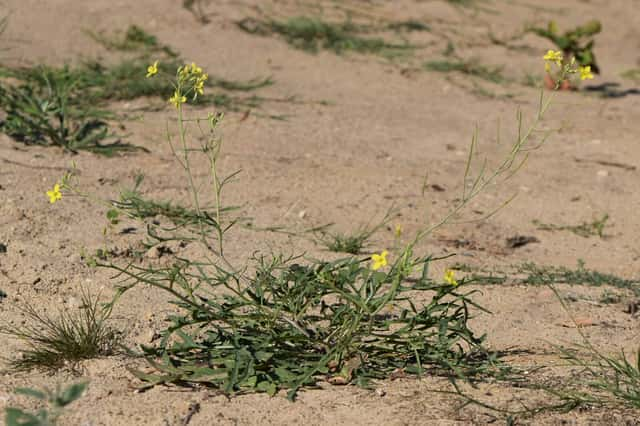
Wild rocket (Diplotaxis tenuifolia) is a easy-care plant from the Brassicaceae family. Wild rocket (Diplotaxis tenuifolia) is a perennial in the cabbage family (Brassicaceae), native to the Mediterranean and western Asia and now grown worldwide as a salad green. It forms a clump of narrow, deeply lobed leaves with a peppery bite stronger than salad rocket (Eruca vesicaria). Plants rea...
Wild rocket grows up to 60cm, spread of 60cm, watering every 3 days. It is not suitable for indoor environments and safe for pets.
Unlike many tropical plants, Wild rocket tolerates watering mistakes. Best for beginners. Unlike many popular species, Wild rocket is safe to keep around pets.
How to Care for Wild rocket?
TLDR: Wild rocket needs Bright indirect, watering every 3 days, and temperatures between 15-30°C with 40-70% humidity.
How Often Should You Water Wild rocket?
Keep the soil lightly moist, watering every 2 to 4 days in warm weather. Mature plants tolerate drought, but dry spells make leaves tougher and hotter and bring early flowering. Water at the base, not over the leaves.
How Much Light Does Wild rocket Need?
Full sun or dappled light, at least 4 to 6 hours a day. In very hot summers, a little afternoon shade keeps the leaves tender.
What Is the Best Soil for Wild rocket?
Light, well-drained, moderately fertile soil; it copes with sandy, rocky or clay soils and a wide pH range. In containers, use a free-draining vegetable potting mix.
What Pot Should You Use for Wild rocket?
A trough or pot at least 20 cm deep with drainage holes; long window boxes let you sow in rows and harvest in succession.
What Is Wild rocket and Where Does It Come From?
Wild rocket (Diplotaxis tenuifolia) is a perennial in the cabbage family (Brassicaceae), native to the Mediterranean and western Asia and now grown worldwide as a salad green. It forms a clump of narrow, deeply lobed leaves with a peppery bite stronger than salad rocket (Eruca vesicaria). Plants reach 10–60 cm and, from spring to autumn, send up thin stems of four-petalled yellow flowers that are also edible and draw pollinators. It is the "wild rocket" or "rucola selvatica" sold in bags of baby leaves. Being perennial, it regrows for several years after cutting and self-seeds freely.
How to Propagate Wild rocket?
Seed
The seed is very fine, so mix it with sand to spread it evenly. Resow every 2-4 weeks for a steady supply. Remove flowers if you do not want it to self-seed.
- 1 Sow very shallowly, about 0.5 cm deep, direct in the bed or in pots
- 2 Keep moist (not wet) at around 20 °C
- 3 Thin seedlings to about 15 cm apart
- 4 Start picking baby leaves after about 5 weeks
Materials needed:
Division
Handy for refreshing plants older than 2-3 years that have slowed down.
- 1 Lift a mature clump
- 2 Split it into pieces, each with roots and shoots
- 3 Replant in prepared soil
- 4 Water well until established
Materials needed:
How Big Does Wild rocket Grow?
TLDR: Wild rocket can reach up to 60cm tall with Fast growth rate.
Max height
60cm
Spread
60cm
Growth rate
Fast
Foliage
Deciduous
Plant Uses
Edible
Can be consumed
Medicinal Uses
- Used in traditional Mediterranean medicine; the leaves are rich in glucosinolates, vitamin C and antioxidant flavonoids, with no proven therapeutic use.
Culinary Uses
- Raw leaves in salads, sandwiches and on pizza
- Pesto and sauces
- Wilted into pasta or sautéed
- Edible yellow flowers as a garnish
Is your plant showing symptoms?
Click on the symptom to discover possible causes:
What Diseases Commonly Affect Wild rocket?
TLDR: Wild rocket is susceptible to 5 known diseases. Monitor regularly for early detection.
Downy Mildew
Downy mildew is a fungal-like disease caused by oomycetes (water molds) that thrives in cool, wet conditions. It affects a wide range of plants, causing yellowing leaves with fuzzy white-gray growth underneath, leading to defoliation and reduced yields if left untreated.
Flea beetle damage
Flea beetles are small, jumping insects that feed on the leaves of many vegetable crops. They chew numerous small, circular holes, creating a characteristic 'shothole' appearance. While established plants can often tolerate the damage, young seedlings are highly susceptible and can be stunted or killed if the infestation is severe.
Slugs and Snails
Slugs and snails are mollusks that feed on plant tissue, causing irregular holes in leaves and damage to young seedlings. They are most active at night and in moist conditions, leaving characteristic silvery slime trails. These pests can quickly devastate gardens, especially during wet seasons.
Aphids
Aphids are small, soft-bodied, pear-shaped insects (1/16 to 1/8 inch long) that feed by sucking nutrient-rich sap from plants. They reproduce rapidly and can quickly weaken plants, causing distorted growth and transmitting plant viruses. Aphids come in various colors including green, black, red, yellow, brown, and gray. They secrete honeydew, a sticky substance that attracts ants and encourages sooty mold growth.
Fun Facts
Much of the bagged "rocket" sold in Europe is actually wild rocket, Diplotaxis tenuifolia
The name wall-rocket comes from its habit of growing on old walls and rubble
Its peppery taste comes from glucosinolates, the same compounds behind mustard and wasabi
Frequently asked questions
What is the difference between wild rocket and salad rocket?
Does wild rocket grow back after cutting?
Why does my rocket have tiny holes in the leaves?
Can I grow wild rocket in a pot?
Are wild rocket flowers edible?
Compare with similar plants
| Attribute | Difficulty | Light | Watering | Pet Safe |
|---|---|---|---|---|
| Field Maple | Easy | Bright indirect | 14d | ✓ |
| Iberian Houseleek | Easy | Direct sun | 14d | ✓ |
| Silver Birch | Easy | Direct sun | 14d | ✓ |
| Common Blanketflower | Easy | Direct sun | 10d | ✓ |
Choose & Compare
Sources & References
- RHS — Diplotaxis tenuifolia (wild rocket)
- NC State Extension Plant Toolbox — Diplotaxis tenuifolia (wild arugula)
- Johnny's Selected Seeds — Sylvetta wild arugula (Diplotaxis tenuifolia) growing info
- Caruso et al. 2018, Agriculture — Crop Systems, Quality and Protection of Diplotaxis tenuifolia
- Gardens Online — Diplotaxis tenuifolia, perennial (wild) rocket
- Univ. Algarve — Downy mildew resistance in a wild rocket germplasm collection





