Rosaceae
Winter-flowering cherry (Prunus × subhirtella)
Prunus × subhirtella
An easy tree for temperate gardens: plant it in full sun in fertile, moist, well-drained soil, away from frost pockets and waterlogged spots. Water well for the first few years. Prune only when needed, in midsummer.
Every 7 days
Bright indirect
° - °C
% - %
Categories
What is Winter-flowering cherry?
Winter-flowering cherry (Prunus × subhirtella) is a easy-care plant from the Rosaceae family. Prunus × subhirtella is an ornamental cherry in the Rosaceae family, a natural hybrid between two Japanese cherries (Prunus incisa and Prunus itosakura). It comes from Japan but is known only in cultivation, never in the wild. It is a small deciduous tree, 4 to 8 m tall with a crown as wide. The flo...
Winter-flowering cherry grows up to 8.0m, spread of 800cm, watering every 7 days. It is not suitable for indoor environments and not safe for pets.
Unlike many tropical plants, Winter-flowering cherry tolerates watering mistakes. Best for beginners. Without precautions, ingestion can cause irritation in pets. Keep out of reach of cats and dogs.
How to Care for Winter-flowering cherry?
TLDR: Winter-flowering cherry needs Bright indirect, watering every 7 days, and temperatures between 15-30°C with 40-70% humidity.
How Often Should You Water Winter-flowering cherry?
For the first two years after planting, water deeply every 7 days in dry weather. Once established it only needs water in long droughts. Never let the soil stay waterlogged.
How Much Light Does Winter-flowering cherry Need?
Full sun, at least 6 hours of direct sun a day. In shade it flowers poorly.
What Is the Best Soil for Winter-flowering cherry?
Moderately fertile, moist, well-drained soil; chalk, clay, loam or sand all work, ideally at pH 6 to 7. Avoid low spots where water sits.
What Pot Should You Use for Winter-flowering cherry?
Best planted in the ground. In a container it will only do for a few years, in a large, deep pot of 60 litres or more with good drainage.
What Is Winter-flowering cherry and Where Does It Come From?
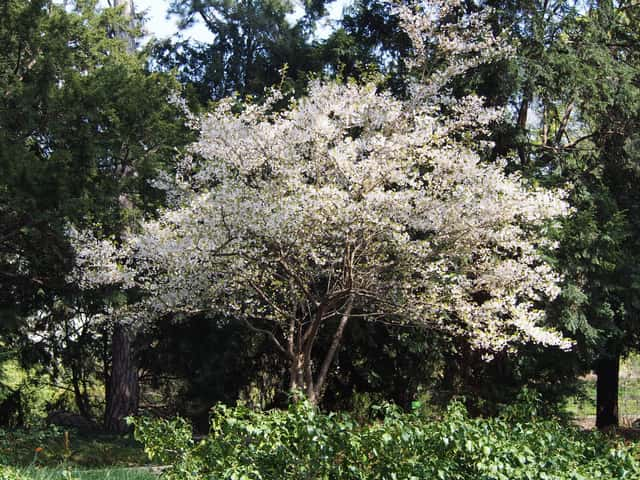
Prunus × subhirtella is an ornamental cherry in the Rosaceae family, a natural hybrid between two Japanese cherries (Prunus incisa and Prunus itosakura). It comes from Japan but is known only in cultivation, never in the wild. It is a small deciduous tree, 4 to 8 m tall with a crown as wide. The flowers are small and five-petalled, pale pink to white, in little clusters along the branches. The species flowers in early spring, and the cultivar 'Autumnalis' opens flowers a few at a time from autumn to spring whenever the weather turns mild, hence the name winter-flowering cherry. The fruit is a pea-sized black drupe. The leaves turn yellow in autumn, and the bark is shiny reddish brown.
How to Propagate Winter-flowering cherry?
Grafting
This is how nurseries propagate this cherry; if you have no experience, buying a grafted tree is the safest route.
- 1 Choose a healthy, rooted cherry rootstock
- 2 Take a bud or a shoot from the winter-flowering cherry
- 3 Fit the bud or shoot into a cut in the rootstock, matching the bark layers
- 4 Wrap with grafting tape and wait for the bud to grow before cutting back the rootstock top
Materials needed:
How Big Does Winter-flowering cherry Grow?
TLDR: Winter-flowering cherry can reach up to 8.0m tall with Medium growth rate.
Max height
8.0m
Spread
8.0m
Growth rate
Medium
Foliage
Deciduous
Warning: Toxic Plant
This plant can be toxic if ingested. Keep out of reach of:
Plant Uses
Ornamental
Great for decoration
Is your plant showing symptoms?
Click on the symptom to discover possible causes:
What Diseases Commonly Affect Winter-flowering cherry?
TLDR: Winter-flowering cherry is susceptible to 5 known diseases. Monitor regularly for early detection.
Caterpillars
Caterpillars are the larval stage of moths and butterflies that feed voraciously on plant foliage, stems, flowers, and fruits. Common species include cabbage loopers, tomato hornworms, armyworms, and cutworms. These pests can cause extensive damage by consuming large amounts of plant tissue in a short time. They vary in size from small (1/4 inch) to large (5 inches), with colors ranging from green to brown, often featuring stripes or spots. Caterpillars are highly mobile and can quickly spread throughout gardens, making them one of the most destructive common pests.
Leafminers
Leafminers are the larvae of various insects including flies, moths, sawflies, and beetles that tunnel between leaf surfaces, creating distinctive serpentine trails or blotchy patches. While primarily cosmetic, severe infestations can weaken plants by reducing photosynthesis capacity and making them susceptible to secondary infections.
Peach Leaf Curl
Taphrina deformans is a fungal disease that primarily affects peaches and nectarines (commonly known as peach leaf curl). The fungus overwinters on twigs and in bud scales, infecting young leaves during damp, cool weather in early spring. It is characterized by thickened, puckered, red-to-yellow discolored, and severely curled leaves. Shoots may become distorted and leaves may drop prematurely; fruits can also develop spots or deformities. Apricots and almonds can occasionally be affected, though less frequently.
Bacterial Canker
Serious bacterial disease affecting stone fruits and tomatoes caused by Pseudomonas syringae or Clavibacter michiganensis. Creates sunken lesions that ooze sap.
Fun Facts
It is unknown in the wild and exists only in cultivation.
The cultivar Autumnalis flowers a little at a time from autumn to spring, on mild days.
Its flowers feed bees in late winter, when little nectar is around.
Frequently asked questions
Are the fruits of Prunus × subhirtella edible?
Is the winter-flowering cherry toxic to dogs and cats?
When should I prune a winter-flowering cherry?
Compare with similar plants
| Attribute | Difficulty | Light | Watering | Pet Safe |
|---|---|---|---|---|
| Field Maple | Easy | Bright indirect | 14d | ✓ |
| Iberian Houseleek | Easy | Direct sun | 14d | ✓ |
| Silver Birch | Easy | Direct sun | 14d | ✓ |
| Common Blanketflower | Easy | Direct sun | 10d | ✓ |
Choose & Compare
Sources & References
- POWO (Kew) - Prunus × subhirtella Miq.
- Wikipedia - Prunus × subhirtella
- RHS - Prunus × subhirtella
- RHS - Prunus × subhirtella 'Autumnalis'
- NC State Extension - Rosebud cherry (Prunus × subhirtella)
- Caragh Nurseries - Prunus × subhirtella 'Autumnalis'
- ASPCA - Cherry (Prunus spp., cyanogenic glycosides)





