Ericaceae
Erica carnea (Winter Heath) Care Guide
Erica carnea
An easy, cold-hardy ground-cover shrub. Plant in free-draining soil in sun or light shade, water regularly while establishing (it becomes drought-tolerant once mature), and trim lightly after flowering to keep it compact.
Every 7 days
Bright indirect
° - °C
% - %
Categories
What is Winter Heath?
Winter Heath (Erica carnea) is a easy-care plant from the Ericaceae family. Erica carnea is a low, mat-forming evergreen shrub native to the mountains of central, eastern and southern Europe. Unlike most heaths, it tolerates neutral to slightly alkaline soil, making it one of the few ericas suited to chalky gardens. Its needle-like foliage stays green year-round and it prod...
Winter Heath grows up to 30cm, spread of 60cm, watering every 7 days. It is not suitable for indoor environments and safe for pets.
Unlike many tropical plants, Winter Heath tolerates watering mistakes. Best for beginners. Unlike many popular species, Winter Heath is safe to keep around pets.
How to Care for Winter Heath?
TLDR: Winter Heath needs Bright indirect, watering every 7 days, and temperatures between 15-30°C with 40-70% humidity.
How Often Should You Water Winter Heath?
Water regularly during the first growing season to establish roots; once established it tolerates short dry spells. Avoid waterlogged soil, and only water on frost-free days in winter.
How Much Light Does Winter Heath Need?
Prefers a sunny, open position but tolerates partial shade; too much shade reduces flowering.
What Is the Best Soil for Winter Heath?
Needs free-draining soil; unusually for an erica it tolerates neutral to slightly alkaline (chalky) conditions as well as acidic soil, provided drainage is good.
What Pot Should You Use for Winter Heath?
If containerized, use a wide, shallow pot with a free-draining, humus-rich mix and excellent drainage holes.
What Is Winter Heath and Where Does It Come From?
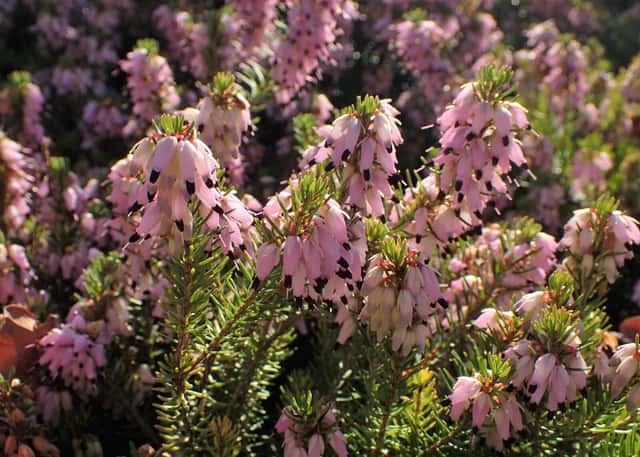
Erica carnea is a low, mat-forming evergreen shrub native to the mountains of central, eastern and southern Europe. Unlike most heaths, it tolerates neutral to slightly alkaline soil, making it one of the few ericas suited to chalky gardens. Its needle-like foliage stays green year-round and it produces masses of small urn-shaped flowers in shades of pink, magenta or white from December through April, providing color in the garden during the coldest months.
How to Propagate Winter Heath?
Semi-ripe stem cuttings
Keep compost just moist, not wet, and provide bottom heat if possible to speed rooting.
- 1 Take 5-8cm semi-ripe side-shoot cuttings in mid-to-late summer
- 2 Strip the lower leaves and dip the cut end in rooting hormone
- 3 Insert into a free-draining mix of sand and ericaceous compost
- 4 Keep in a shaded cold frame or propagator with high humidity until rooted
Materials needed:
How Big Does Winter Heath Grow?
TLDR: Winter Heath can reach up to 30cm tall with Slow growth rate.
Max height
30cm
Spread
60cm
Growth rate
Slow
Foliage
Evergreen
Plant Uses
Ornamental
Great for decoration
Ground Cover
Soil coverage
Is your plant showing symptoms?
Click on the symptom to discover possible causes:
What Diseases Commonly Affect Winter Heath?
TLDR: Winter Heath is susceptible to 3 known diseases. Monitor regularly for early detection.
Phytophthora Root Rot
Disease caused by fungus-like organisms (oomycetes) that live in soil and can survive for years. It affects roots, stem, and crown of plants, being especially severe in waterlogged or poorly drained soils. It is the second most common cause of root rot in trees and shrubs.
Powdery Mildew
Powdery mildew is a common fungal disease caused by various fungi species including Erysiphe, Podosphaera, Oïdium, and Leveillula. It affects over 10,000 plant species worldwide. The disease thrives in warm, dry climates with high humidity and appears as a distinctive white powdery coating on plant surfaces.
Rust
Rust is a common fungal disease caused by fungi in the order Pucciniales that affects a wide variety of plants. The disease gets its name from the characteristic orange, yellow, or reddish-brown pustules that appear on leaves, resembling metal rust. This obligate fungal parasite requires living plants to survive and can cause significant economic losses in agricultural crops.
Meaning & Symbolism
In European folklore heather symbolizes protection, good luck and admiration; white-flowered sprigs were traditionally carried for safe passage and to grant wishes, a custom popularized by Queen Victoria.
Fun Facts
One of the few heaths that tolerates alkaline (chalky) soil, unlike most acid-loving Ericas.
Its winter blooms are an important early nectar source for bees on mild days.
Queen Victoria helped popularize heather, especially white sprigs, as a good-luck charm.
Frequently asked questions
Does Erica carnea need acidic soil like other heathers?
When does winter heath flower?
Is Erica carnea toxic to pets?
How do I keep winter heath compact?
Compare with similar plants
| Attribute | Difficulty | Light | Watering | Pet Safe |
|---|---|---|---|---|
| Azalea | Medium | Partial shade | 3d | ⚠️ |
| Field Maple | Easy | Bright indirect | 14d | ✓ |
| Silver Birch | Easy | Direct sun | 14d | ✓ |
| Common Blanketflower | Easy | Direct sun | 10d | ✓ |
Choose & Compare
Sources & References
- How to grow erica - RHS Growing Guide
- Erica carnea (alpine heath) - RHS
- Erica carnea - NC State Extension Gardener Plant Toolbox
- Erica carnea: cultivation & care for winter heath - Plantura
- Erica carnea - Wikipedia
- Erica sp. (Heath) - Root Rot - Pacific Northwest Plant Disease Handbook
- Erica carnea Springwood Pink - Missouri Botanical Garden Plant Finder
- Heather: The Flower That Symbolizes Wishes, Devotion, and Quiet Resilience - Petal Republic





