Euphorbiaceae
Wood Spurge (Euphorbia amygdaloides) Care Guide
Euphorbia amygdaloides
Plant in part shade or dappled shade, in well-drained soil of average fertility. Once established it needs little water and tolerates dry shade under trees. Cut flowered stems to the base to encourage new shoots and keep its spread in check by lifting the excess in spring. Wear gloves when handling it because of the sap.
Every 7 days
Partial shade
-20° - 30°C
40% - 70%
Categories
What is Wood Spurge?
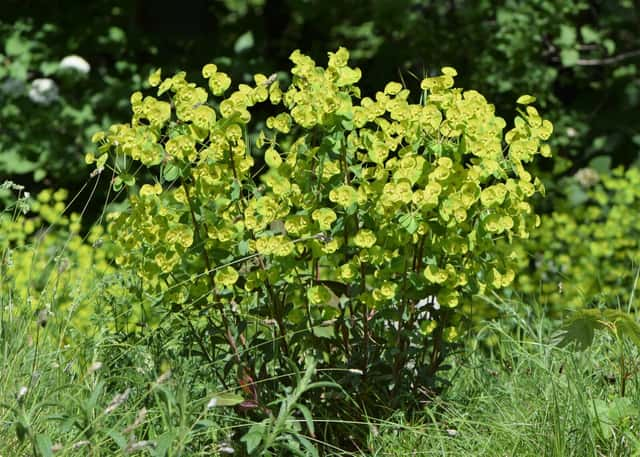
Wood Spurge (Euphorbia amygdaloides) is a easy-care plant from the Euphorbiaceae family. Euphorbia amygdaloides is an evergreen perennial in the family Euphorbiaceae, native to the woodlands of Europe, the Caucasus and Turkey. It forms clumps of upright stems with narrow leaves that are dark green or purplish, depending on the form. In spring it carries showy lime-green flower heads mad...
Wood Spurge grows up to 80cm, spread of 60cm, watering every 7 days, -20°C – 30°C, 40–70% humidity. It is not suitable for indoor environments and not safe for pets.
Unlike many tropical plants, Wood Spurge tolerates watering mistakes. Best for beginners. Without precautions, ingestion can cause irritation in pets. Keep out of reach of cats and dogs.
How to Care for Wood Spurge?
TLDR: Wood Spurge needs Partial shade, watering every 7 days, and temperatures between -20-30°C with 40-70% humidity.
How Often Should You Water Wood Spurge?
Water once a week for the first months after planting. After that, only in long dry spells. Avoid waterlogged soil in winter.
How Much Light Does Wood Spurge Need?
Prefers part shade or the dappled shade of trees. It takes sun if the soil does not dry out too much; 'Purpurea' colours better with some sun.
What Is the Best Soil for Wood Spurge?
Grows in clay, loam or sandy soils, from slightly acidic to chalky, as long as they drain well.
What Pot Should You Use for Wood Spurge?
Medium, deep pot with good drainage; in the garden it does best in beds under trees.
What Is Wood Spurge and Where Does It Come From?
Euphorbia amygdaloides is an evergreen perennial in the family Euphorbiaceae, native to the woodlands of Europe, the Caucasus and Turkey. It forms clumps of upright stems with narrow leaves that are dark green or purplish, depending on the form. In spring it carries showy lime-green flower heads made by the bracts. It copes with shade and dry soil better than most garden plants and spreads by rhizomes or seed. Its milky sap is toxic and irritates the skin.
How to Propagate Wood Spurge?
Clump division
Dividing also keeps vigorous forms such as var. robbiae from spreading too far.
- 1 Wearing gloves, lift the clump or a section of rhizomes
- 2 Separate pieces that have roots and shoots
- 3 Replant at the same depth in well-drained soil
- 4 Water well until the plant settles
Materials needed:
Basal cutting
Rinsing the cut makes the sap set and helps prevent rot. Never touch your eyes while working.
- 1 Cut a young basal shoot 8-10 cm long
- 2 Dip the cut end in lukewarm water to stop the sap
- 3 Plant in moist, sandy potting mix
- 4 Keep in shade until rooted
Materials needed:
How Big Does Wood Spurge Grow?
TLDR: Wood Spurge can reach up to 80cm tall with Medium growth rate.
Max height
80cm
Spread
60cm
Growth rate
Medium
Foliage
Evergreen
Warning: Toxic Plant
This plant can be toxic if ingested. Keep out of reach of:
Plant Uses
Ornamental
Great for decoration
Ground Cover
Soil coverage
Is your plant showing symptoms?
Click on the symptom to discover possible causes:
What Diseases Commonly Affect Wood Spurge?
TLDR: Wood Spurge is susceptible to 6 known diseases. Monitor regularly for early detection.
Aphids
Aphids are small, soft-bodied, pear-shaped insects (1/16 to 1/8 inch long) that feed by sucking nutrient-rich sap from plants. They reproduce rapidly and can quickly weaken plants, causing distorted growth and transmitting plant viruses. Aphids come in various colors including green, black, red, yellow, brown, and gray. They secrete honeydew, a sticky substance that attracts ants and encourages sooty mold growth.
Gray Mold (Botrytis Blight)
Gray mold, caused by the fungus Botrytis cinerea, is a widespread necrotrophic pathogen affecting over 1,400 plant species. It thrives in cool, humid conditions and attacks weakened or aging plant tissues, causing soft rot and characteristic gray fuzzy growth.
Powdery Mildew
Powdery mildew is a common fungal disease caused by various fungi species including Erysiphe, Podosphaera, Oïdium, and Leveillula. It affects over 10,000 plant species worldwide. The disease thrives in warm, dry climates with high humidity and appears as a distinctive white powdery coating on plant surfaces.
Root Rot
Root rot is a serious fungal disease that affects the root system of plants, causing them to decay and die. It is primarily caused by overwatering, poor drainage, or soil-borne fungi such as Pythium, Phytophthora, Rhizoctonia, and Fusarium. The disease thrives in waterlogged conditions where roots are deprived of oxygen, making them susceptible to fungal infection.
Fun Facts
The name amygdaloides means almond-like, after the shape of the leaves.
The true flowers are tiny; the showy part is the lime-green bracts.
Var. robbiae reached England in the 19th century in Mrs Robb's hatbox, which gave it the name Mrs Robb's bonnet.
Frequently asked questions
Is wood spurge toxic to cats and dogs?
How often should I water wood spurge?
Does wood spurge grow in shade?
When should I prune Euphorbia amygdaloides?
Compare with similar plants
| Attribute | Difficulty | Light | Watering | Pet Safe |
|---|---|---|---|---|
| Field Maple | Easy | Bright indirect | 14d | ✓ |
| Iberian Houseleek | Easy | Direct sun | 14d | ✓ |
| Silver Birch | Easy | Direct sun | 14d | ✓ |
| Common Blanketflower | Easy | Direct sun | 10d | ✓ |





