Malvaceae
Woolly Pyramidbush: Full Sun Plant
Melochia tomentosa
This is a low-maintenance plant, ideal for xeriscaping: it requires full sun, moderate and spaced watering, and a well-drained substrate to prevent root rot. It tolerates heat and drought well once established and responds favorably to occasional pruning to maintain its pyramidal shape.
Every 7 days
Direct sun
° - °C
% - %
Categories
What is Woolly Pyramidbush?
Woolly Pyramidbush (Melochia tomentosa) is a easy-care plant from the Malvaceae family. The Woolly Pyramidbush (Melochia tomentosa) is a perennial shrub in the Malvaceae family, native to arid and semi-arid regions of tropical and subtropical America, ranging from the southwestern United States to South America. It reaches between 0.3 and 2.5 meters in height, with stems and ovate leav...
Woolly Pyramidbush grows up to 2.5m, spread of 250cm, watering every 7 days. It is suitable for indoor environments and safe for pets.
Unlike many tropical plants, Woolly Pyramidbush tolerates watering mistakes. Best for beginners. Unlike many popular species, Woolly Pyramidbush is safe to keep around pets. Without adequate drainage, root rot can develop within 14 days.
How to Care for Woolly Pyramidbush?
TLDR: Woolly Pyramidbush needs Direct sun, watering every 7 days, and temperatures between 15-30°C with 40-70% humidity.
How Often Should You Water Woolly Pyramidbush?
Water only when the top layer of the substrate is dry to the touch, approximately once a week. Avoid waterlogging: its roots are prone to rotting in excessively wet soils.
How Much Light Does Woolly Pyramidbush Need?
Prefers full sun or at least several hours of direct light per day; indoors, place it next to a south-facing window to ensure sufficient lighting.
What Is the Best Soil for Woolly Pyramidbush?
Use a well-drained substrate with a pH between 5.5 and 7.5. Adding perlite or sand improves drainage and helps prevent root rot in compact or clayey soils.
What Pot Should You Use for Woolly Pyramidbush?
Choose terracotta or clay pots with good drainage, which promote the evaporation of excess moisture and reduce the risk of waterlogged roots.
What Is Woolly Pyramidbush and Where Does It Come From?
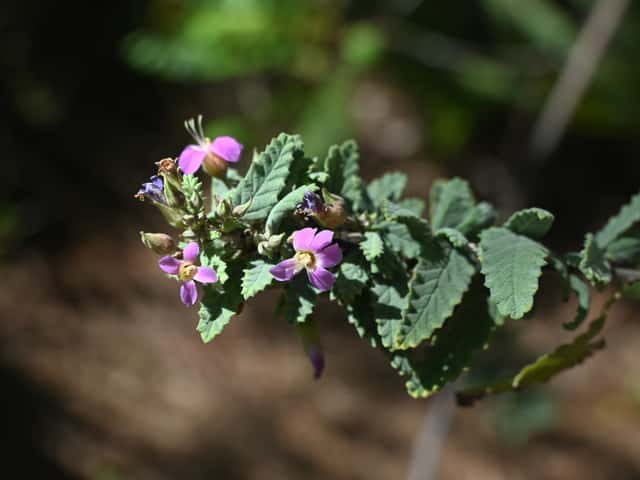
The Woolly Pyramidbush (Melochia tomentosa) is a perennial shrub in the Malvaceae family, native to arid and semi-arid regions of tropical and subtropical America, ranging from the southwestern United States to South America. It reaches between 0.3 and 2.5 meters in height, with stems and ovate leaves covered in a dense, whitish stellate pubescence that gives it a velvety appearance. It produces small pink to purple flowers clustered in the leaf axils, with a blooming period extending primarily from spring to fall, attracting abundant pollinators such as butterflies and native bees. Its fruits are winged pyramidal capsules, a distinctive characteristic of the genus. It grows naturally along roadsides, rocky slopes, xerophytic scrublands, and dry forests, from sea level up to 1,600 meters in altitude.
How to Propagate Woolly Pyramidbush?
How Big Does Woolly Pyramidbush Grow?
TLDR: Woolly Pyramidbush can reach up to 2.5m tall with Medium growth rate.
Max height
2.5m
Spread
2.5m
Growth rate
Medium
Foliage
Evergreen
Plant Uses
Ornamental
Great for decoration
Medicinal
Medicinal properties
Medicinal Uses
- Traditional use in infusions to relieve colds
- Eye washes in traditional folk medicine
- Caution: preliminary studies suggest possible toxicity, so medicinal use is not recommended without supervision
Is your plant showing symptoms?
Click on the symptom to discover possible causes:
What Diseases Commonly Affect Woolly Pyramidbush?
TLDR: Woolly Pyramidbush is susceptible to 4 known diseases. Monitor regularly for early detection.
Root Rot
Root rot is a serious fungal disease that affects the root system of plants, causing them to decay and die. It is primarily caused by overwatering, poor drainage, or soil-borne fungi such as Pythium, Phytophthora, Rhizoctonia, and Fusarium. The disease thrives in waterlogged conditions where roots are deprived of oxygen, making them susceptible to fungal infection.
Aphids
Aphids are small, soft-bodied, pear-shaped insects (1/16 to 1/8 inch long) that feed by sucking nutrient-rich sap from plants. They reproduce rapidly and can quickly weaken plants, causing distorted growth and transmitting plant viruses. Aphids come in various colors including green, black, red, yellow, brown, and gray. They secrete honeydew, a sticky substance that attracts ants and encourages sooty mold growth.
Caterpillars
Caterpillars are the larval stage of moths and butterflies that feed voraciously on plant foliage, stems, flowers, and fruits. Common species include cabbage loopers, tomato hornworms, armyworms, and cutworms. These pests can cause extensive damage by consuming large amounts of plant tissue in a short time. They vary in size from small (1/4 inch) to large (5 inches), with colors ranging from green to brown, often featuring stripes or spots. Caterpillars are highly mobile and can quickly spread throughout gardens, making them one of the most destructive common pests.
Cold Damage
Cold damage, also known as frost injury, occurs when plants are exposed to freezing or near-freezing temperatures. This environmental stress can cause cellular damage as ice crystals form within plant tissues, rupturing cells and disrupting normal plant functions. Chilling injury can also occur in sensitive species at temperatures between 32-55°F (0-10°C), even without actual freezing.
Meaning & Symbolism
Due to its ability to bloom and thrive in arid, rocky terrains with scarce nutrients, the Woolly Pyramidbush is associated with resilience, adaptability, and quiet strength.
Compare with similar plants
| Attribute | Difficulty | Light | Watering | Pet Safe |
|---|---|---|---|---|
| Field Maple | Easy | Bright indirect | 14d | ✓ |
| Silver Birch | Easy | Direct sun | 14d | ✓ |
| Common Blanketflower | Easy | Direct sun | 10d | ✓ |
| Cushion Bush | Easy | Direct sun | 14d | ✓ |





